
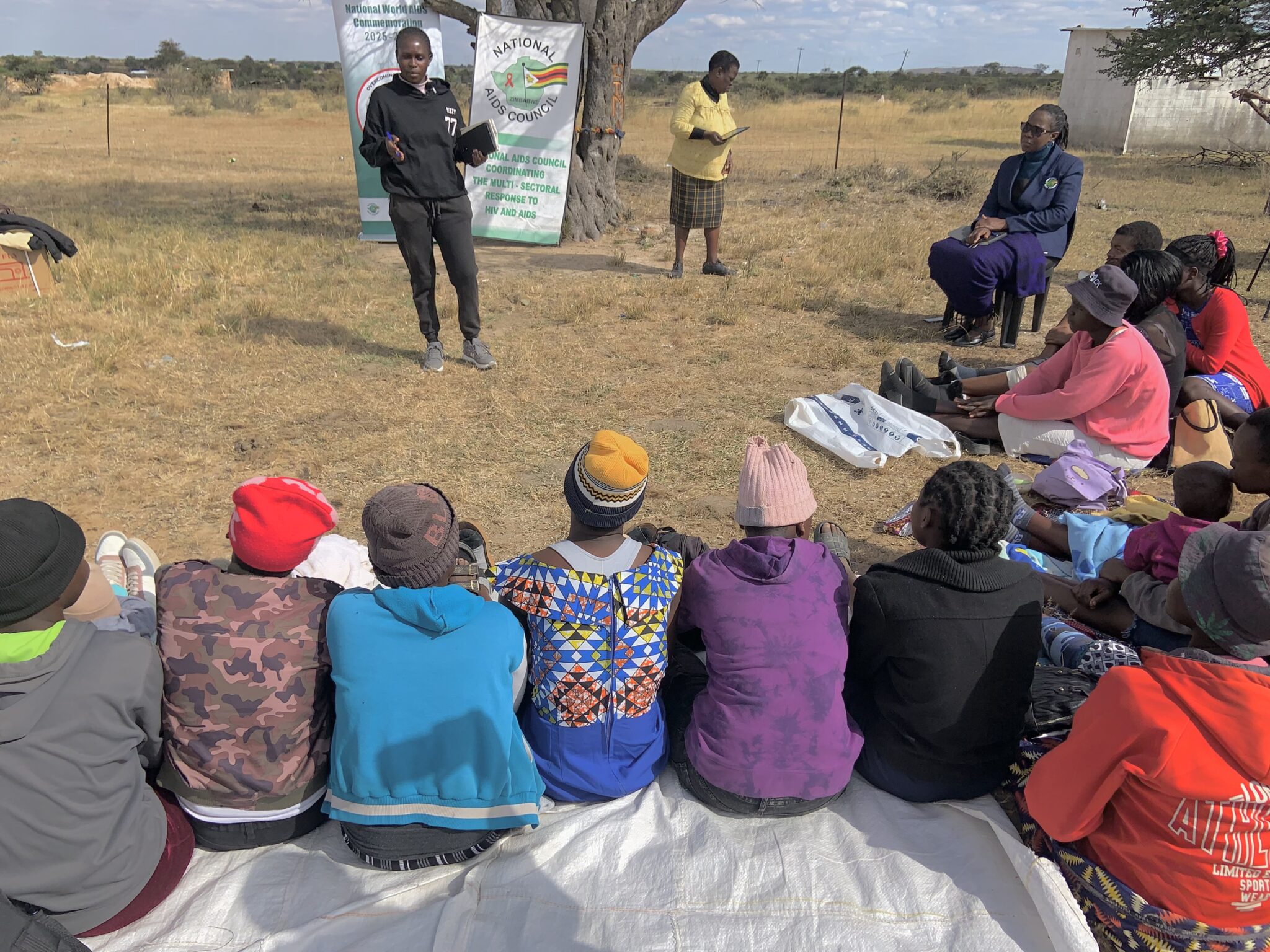
Adolescent girls and young women in Umguza District have received sewing machines under the National AIDS Council’s (NAC) Sister-to-Sister (Sista2Sista) programme, a development expected to helpthem produce reusable sanitary pads, sew school uniforms and generate income while strengthening efforts to reduce HIV infections and gender-based violence.
The peer mentorship programme, supported by the Global Fund, is equipping girls aged between 10 and 24 with life skills, financial literacy, sexual and reproductive health knowledge and mentorship to help them make informed decisions while reducing their vulnerability to HIV and gender-based violence (GBV).
Supported by the Global Fund and implemented by NAC, the Sista2Sista programme has become a lifeline for many young women in Heany Junction Ward 6 in Umguza, where 16 of the district’s 19 wards have been identified as HIV hotspots.
The latest intervention under the programme has seen mentors receive sewing machines and materials so they can produce reusable sanitary pads, school uniforms and other clothing, creating opportunities for income generation while addressing menstrual health challenges.
On this topic
Speaking during a site visit at Heany Junction on Wednesday, ZNNP+ Umguza District Focal Person, Thembeni Sithole, said the Sista2Sista programme works closely with several partners to support vulnerable girls and young women.
“We work with other stakeholders including SASA, ZACH and ARDA. We do not separate ourselves from NAC and the Ministry of Health because as ZNNP+ we are implementers of the programme,” she said.
Sithole said the programme focuses on equipping girls with knowledge and life skills that reduce their risk of HIV infection.
“We offer psychological support and help girls understand more about HIV. We target adolescent girls and young women because many of them are at risk due to experimentation and other vulnerabilities associated with their age,” she said.
“The programme seeks to contribute towards Zimbabwe’s goal of ending HIV infections and AIDS-related deaths by 2030.
“We encourage them to form support groups and teach them how to conduct themselves responsibly. We want them to grow into responsible adults who can make informed decisions about their lives.”
Alongside the Sista2Sista programme, Umguza is also implementing the SASA programme, which specifically focuses on addressing vulnerabilities faced by women and girls and reducing new HIV infections.
For some participants, the programme has been life-changing.
Ward 6 mentor for Sista2Sista, Shantel Chigumbu, (22), who earns a living through hairdressing and poultry production, joined the programme as a mentee before becoming a mentor herself.
“In 2025 I was a mentee. The programme transformed my outlook on life and gave me confidence to make better decisions,” she said.
“Today I teach girls about HIV prevention, positive behaviour, menstrual hygiene and the dangers of drug and substance abuse. I want them to become responsible citizens who can achieve their goals.”
Chigumbu said economic empowerment was a critical component of the programme.
“We also provide financial literacy training so that young women can learn how to generate their own income. When girls are economically empowered, they are less vulnerable to transactional sex and gender-based violence,” she said.
The programme’s impact is also reflected in the experiences of the mentees.
Michelle Moyo (22) who is now married, said the sessions helped her develop confidence to discuss sexual health issues openly with her partner.
“The programme taught me about my rights and the importance of protecting my health. I learnt how to negotiate for safer sex and communicate openly with my partner. My husband (26) understands and supports those decisions,” she said.
Winisai Munsaka (23), a mother of one, said the programme helped her better understand family planning options.
“I learnt about contraceptives and reproductive health. The information has helped me about my future,” she said.
For Minenhle Ngwenya (15), the lessons on HIV prevention have been particularly important.
“I now understand how HIV is transmitted. The programme has given us knowledge,” she said.
Some participants live with their in-laws, yet none reported resistance from family members, a development which NAC officials attributed to extensive community mobilisation efforts.
The programme’s economic empowerment component is expected to receive a major boost through the sewing project funded by the Global Fund.
Sithole said Umguza has 16 mentors, each receiving three sewing machines and materials for pad production.
“Each mentor manages two clubs of 25 girls, meaning 50 girls will be trained under each mentor. We are also inviting other girls from the community to participate because we have enough materials for training,” she said.
She said the training programme would begin once additional materials, particularly waterproof fabric required for sanitary pad production, are delivered.
Bulawayo NAC Provincial Manager, Sinatra Nyathi, said the initiative was designed to address both menstrual health needs and economic vulnerabilities among young women.
“The girls received sewing machines so they can learn how to make reusable sanitary pads, carry out sewing repairs and even produce uniforms for pre-schools, primary schools and secondary schools in their communities,” she said.
“We want to make sure adolescent girls are trained to use these sewing machines in ways that benefit them economically and socially.”
Nyathi noted the project would create both health and economic benefits.
“After training, the girls will make sanitary pads for themselves and can also sell them within their communities. This creates an income-generating opportunity while girls have access to affordable menstrual products,” she said.
The programme comes at a time when adolescent girls and young women remain disproportionately affected by HIV.
According to NAC statistics, Matabeleland North has an estimated 84 842 people living with HIV.
Tsholotsho accounts for the largest share at 19 percent, followed by Hwange at 18 percent and Umguza at 17 percent.
The province’s HIV incidence among people aged 15 to 49 years stands at 0.13.
Tsholotsho records the highest incidence rate at 0.21, followed by Umguza at 0.17 and Lupane at 0.16.
NAC officials said adolescent girls and young women aged between 15 and 24 years continue to record the highest HIV incidence rates in the province, underscoring the importance of targeted interventions such as the Sista2Sista programme.
Officials added Matabeleland North has generally witnessed declining HIV prevalence and incidence across districts due to sustained prevention and treatment efforts, more work remains necessary in high-burden districts such as Tsholotsho, Lupane and Umguza.
Support CITE’s fearless, independent journalism. Your donation helps us amplify community voices, fight misinformation, and hold power to account. Help keep the truth alive. Donate today







Leave a Reply