
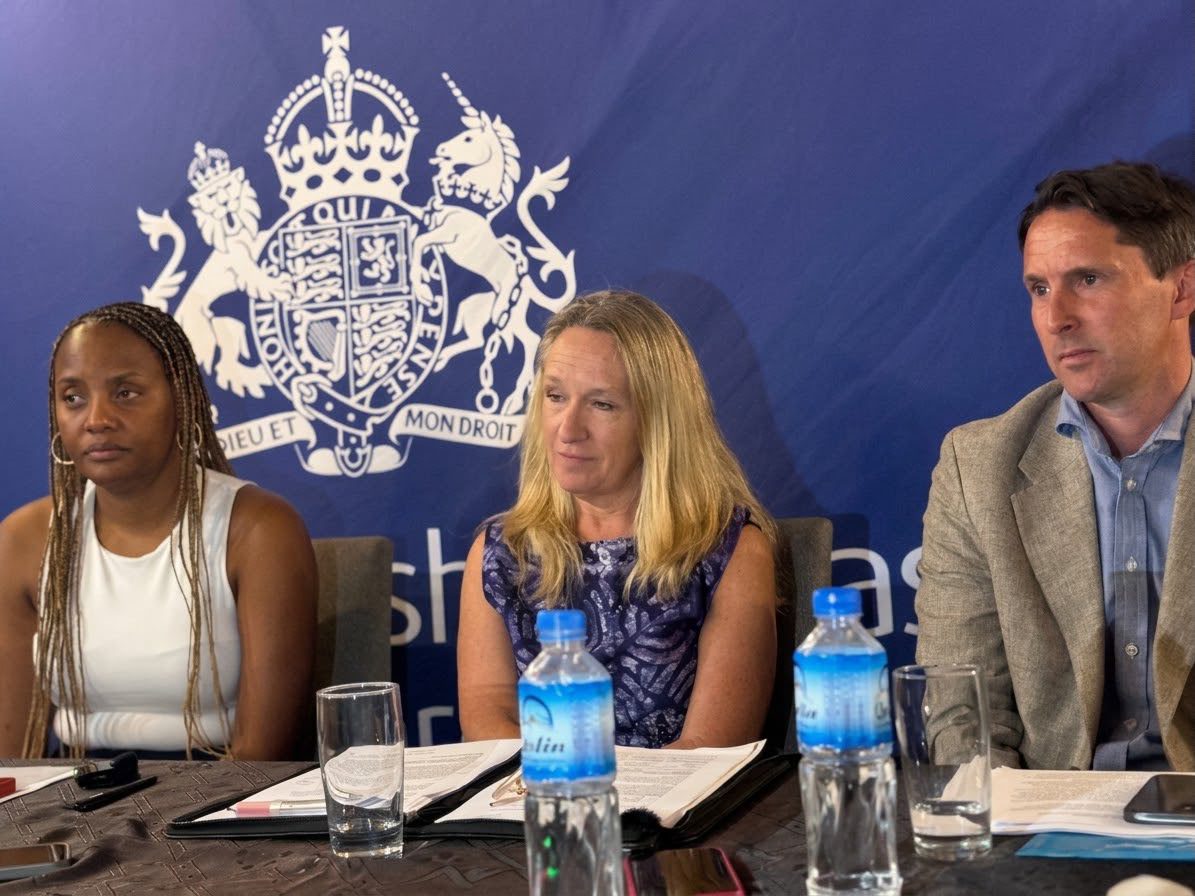
The United Kingdom has committed an additional £500 000 to support drought preparedness programmes in Zimbabwe, as concerns grow over the potential impact of El Niño-related dry spells on food security and vulnerable communities.
UK Ambassador to Zimbabwe, Gill Lever, said the British government was concerned about the possibility of a severe drought this year and next, warning that reduced rainfall could deepen food insecurity and place climate-affected communities at greater risk.
Lever made the remarks on Monday during her first-ever visit to Bulawayo, where she was accompanied by members of the British Embassy’s development and trade teams.
“It’s something we’re very concerned about, the effects of El Niño on Zimbabwe,” she said responding to questions from CITE.
On this topic
“You’re quite right that the drought could be very severe this year and next year. There could be some very climate-affected communities and food insecurities could grow as an issue.”
The British government is working with humanitarian partners to strengthen preparedness and help communities withstand the anticipated effects of reduced rainfall.
Sam Thompson, the embassy’s Development Counsellor, said the UK had already released £1.27 million to five lead agencies under the Start Network, a global network of humanitarian organisations, with the British Embassy in Harare providing an additional £500 000.
The programmes are expected to reach approximately 100 000 people in Beitbridge, Gwanda and Matobo in Matabeleland South, as well as Mwenezi and Masvingo Rural in Masvingo Province.
“Tomorrow (Tuesday) we are actually meeting some of the partners who are based in this region to talk about resilience, to look at what could be done in terms of preparedness for El Niño,” Thompson said.
He said the interventions included climate-smart agriculture training and providing agricultural inputs to help communities manage reduced rainfall.
“Climate-smart agriculture is something which we’ve previously been investing in and we’re looking again at how we can continue to support those who are on the front line to be able to manage the reduced rainfall,” he said.
Thompson said the embassy would continue monitoring the programmes and engaging partners to assess how the interventions were working.
The support comes amid wider international efforts to prepare Zimbabwe for the anticipated drought.
UN Under-Secretary-General for Humanitarian Affairs and Emergency Relief Coordinator, Tom Fletcher, recently said the United Nations had allocated US$4 million from its Central Emergency Response Fund (CERF) for anticipatory action in Zimbabwe.
In a post on X, Fletcher said the funding would help deliver food, health and nutrition assistance before the drought struck.
“In Zimbabwe, the forecasts are in. Prolonged dry spells are coming. El Niño is bearing down. $4M from UN’s Global Emergency Fund CERF for anticipatory action will help get food, health and nutrition in before the drought arrives, not after it destroys,” he said.
Canada has also expressed support for CERF’s efforts, saying early action could save lives, protect livelihoods and strengthen the resilience of vulnerable communities.
The UK interventions reflect a growing emphasis on anticipatory humanitarian action, where assistance is provided ahead of a predicted crisis rather than waiting until communities have already been affected.
Meanwhile, Lever said strengthening trade and investment between Zimbabwe and the UK was another priority, with opportunities to expand economic cooperation, including in Bulawayo, historically regarded as the country’s industrial hub.
She said bilateral trade currently stood at approximately £300 million, but there was considerable scope to grow it.
One of the areas of cooperation is supporting Zimbabwe’s efforts to clear its debt and arrears, which Lever said was important for restoring investor confidence and improving access to international finance.
The UK is also working with Zimbabwean institutions on sustainable debt management, financial regulation and revenue administration.
Lever said Britain had been supporting small-scale farmers and agricultural businesses to export horticultural produce, including blueberries and sugar snap peas, to the UK market.
She also highlighted the Vungu solar power project in Midlands Province, saying increased energy generation could help businesses meet their power needs and create opportunities for investment and employment.
Thandekile Muringa, Trade and Investment Adviser at the Foreign, Commonwealth and Development Office, said British International Investment had provided trade finance facilities through NMB and CABS to support businesses, particularly manufacturers.
She said the facilities would enable businesses to borrow for periods ranging from six months to three years, helping them access the initial capital needed to expand operations.
“We’re giving facilities for people who are in the manufacturing space, they’re able to borrow for between six months to three years. What’s always the gap for a lot of manufacturers is acquiring that first capital to get going and once they get going, it’s a revolving cycle,” she said.
Muringa said the facilities could be particularly beneficial to Bulawayo’s manufacturing sector, while other initiatives were aimed at improving regional trade corridors and helping Zimbabwean manufacturers meet international export standards.
“We have Trademark Africa supporting building trade corridors. Most of you are aware that Beitbridge is a trade corridor. We want to make the movement of goods much easier. We all recall maybe 15 years ago, how much of a nightmare it was to be at the border, you could spend days there. That’s some of the work that we’re doing. When we make the trade corridors open, it facilitates trade between Zimbabwe, the region and if we can trade within the region, it means we can trade internationally as well.”
Tafadzwa Chirinda, the embassy’s Private Sector Development Officer, said the UK was also working to raise awareness of the Eastern and Southern Africa Economic Partnership Agreement, which allows qualifying Zimbabwean exports to enter the UK duty-free and quota-free.
He said the embassy was keen to explore opportunities to support economic development in Bulawayo, including the city’s technology start-up sector.








Leave a Reply