
By Dr Shame Mugova
When Zimbabwe reports economic growth, an important question deserves greater attention: where is that growth taking place, and how many people are participating in it?
According to the 2022 Population and Housing Census, 61.4% of Zimbabweans lived in rural areas. That means more than six out of every ten people live in communities whose productive potential should be central to national development.
Yet economic performance is often discussed through GDP growth, mining output, investment and government revenue, without sufficiently examining opportunities available to rural households.
On this topic
An economy can record rising GDP while millions remain dependent on subsistence agriculture, informal trading and support from relatives elsewhere.
This does not make growth unreal. But it raises questions about its inclusiveness and capacity to transform livelihoods.
How can Zimbabwe achieve broad based prosperity while the communities housing most of its population remain economically underdeveloped?
Development that never became an economy
Consider Chiendambuya in Manicaland.
Near the former commercial farming area of Virginia lies a dam associated with Royal Visit Farm, constructed during the 1990s. According to local accounts, the reservoir continues to support fishing and livestock watering. Some residents have contemplated using its water for community irrigation.
But who would finance the pumps, pipelines and electricity? Who would manage the infrastructure? Would the additional agricultural production generate sufficient income to sustain it?
These questions capture a much bigger problem.
Zimbabwe has redistributed agricultural land, established resettlement villages, constructed dams, designated growth points and supported numerous development initiatives.
Yet these investments have not consistently developed into functioning local economies generating sustainable incomes and employment.
The problem is not always that development never arrived. Sometimes development arrived, but its components never became a functioning economic system.
Forty years of growth points
Zimbabwe’s growth point policy sought to decentralise economic activity, attract investment and create employment beyond established towns.
In the early 1980s, planners identified 55 potential growth points and district centres, alongside approximately 450 rural service centres.
But the weaknesses were recognised early.
In 1985, researcher Backson Sibanda questioned the prospects of growth points lacking adequate infrastructure, finance and productive economic foundations. Other researchers emphasised connecting rural industries to agriculture, markets and household incomes.
More than four decades later, these concerns remain relevant.
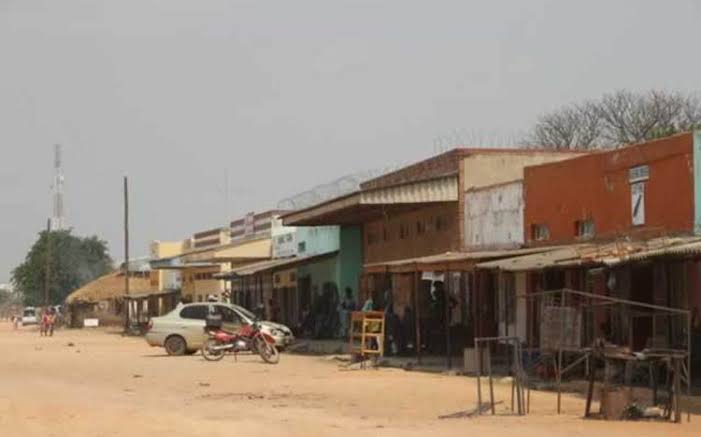
A growth point can have shops, residential stands and government offices without becoming a significant economic centre.
A supermarket needs customers with purchasing power. A grain processor needs reliable supplies and buyers. An equipment supplier needs commercially active farmers.
Buildings alone do not create these conditions.
Land redistributed, economies unfinished
Chiendambuya’s history illustrates the challenge.
The surrounding region includes communal lands, older resettlement villages established after independence and farms redistributed through subsequent reforms.
The Mayo Resettlement Scheme, established in 1981, initially comprised 42 villages. Research by John Blessing Karumbidza records its expansion to approximately 80 villages and 2,400 households by 2002.
This represented important progress in expanding agricultural land access.
But productive farming requires more than land allocation. Farmers need finance, machinery, technical support, irrigation where viable, transport and markets.
Karumbidza documented that Mayo had only one full time agricultural extension officer serving 80 villages during his research.
There is also an intergenerational challenge. The children and grandchildren of original beneficiaries now require employment and economic opportunities beyond the land allocated to their parents.
Land reform has generated genuine gains for some farmers, but results vary considerably.
The relevant question is not simply how much land has been redistributed. It is what productive economy has developed around that land.
When institutions lose momentum
Chiendambuya also has a history of rural enterprise development.
Weya Community Training Centre, established in 1982 with German development support, offered vocational skills including sewing and carpentry. Some trainees struggled to establish businesses because they could not afford the necessary equipment.
Weya subsequently developed an internationally recognised artistic tradition, with local women producing embroidery and appliqué works reaching buyers beyond Zimbabwe.
The tradition survived, with ZimTrade supporting Weya artists through export development activities in 2023.
Another institution, Wensleydale Agricultural Training Centre, officially opened in 1991, later became the subject of reported land disputes and allegations of deteriorating facilities.
These experiences raise questions about institutional continuity.
Training should create productive opportunities. Infrastructure should support continuing economic activity. Development should generate benefits that survive beyond the original funding.
Producing more does not guarantee prosperity
Rural entrepreneurship is frequently encouraged, but the economic conditions facing entrepreneurs receive less attention.
A person may raise chickens or grow vegetables successfully yet struggle to sell them profitably.
A 2023 study of small scale broiler producers in Mutare District found an average gross margin of approximately US$65 per batch of 100 chickens. Transport and other expenses could further reduce returns.
Horticultural farmers face similar difficulties. Produce may deteriorate before reaching buyers, while transport costs and weak bargaining power reduce incomes.
Zimbabwe’s Competition and Tariff Commission has identified inadequate storage, poor market information and expensive transport among the challenges facing smallholder vegetable producers.
Increasing production therefore does not automatically increase prosperity.
Farmers need reliable buyers, affordable logistics, working capital and equipment services.
A functioning growth point could organise these activities through machinery hire, produce collection, storage, transport and commercially justified processing.
Such enterprises could also create employment beyond farming.
Rural development as a fiscal investment
There is another dimension to rural underdevelopment, particularly when the Minister of Finance presents national budgets.
Rural communities are often discussed primarily as recipients of public expenditure on schools, clinics, agricultural inputs and infrastructure.
But this overlooks their potential contribution to future GDP and government revenue.
Rural residents already contribute taxes through consumption and other taxable activities. However, low incomes and limited commercial opportunities constrain the wider tax base.
Imagine, hypothetically, if rural households could consistently earn US$1,000 monthly through productive farming, employment and enterprise.
Higher purchasing power would support shops, transport, housing, agricultural suppliers and financial services. Expanding businesses could create employment, generate taxable profits and increase government revenue.
Not every household would necessarily become liable for PAYE. But greater economic activity could broaden the tax base through consumption, enterprise development and formal employment.
This changes how rural development expenditure should be evaluated.
Government investment in rural infrastructure should not be viewed only as a cost of supporting communities. Well selected capital expenditure can expand productive capacity, national income and future tax revenues.
A road connecting farmers to markets can reduce business costs. Electricity can enable processing and refrigeration. Viable irrigation can support more reliable agricultural production.
These investments can generate economic returns extending beyond their immediate beneficiaries.
Of course, schools and clinics do not need to generate tax revenue to justify their existence. Their social value is sufficient.
But productive rural investment offers an additional opportunity: expanding the economic base that helps finance future public services.
Why people move to cities to become vendors
Rural migration presents another dimension.
People move to Harare, Bulawayo and other towns seeking economic opportunities. Migration is normal and often beneficial.
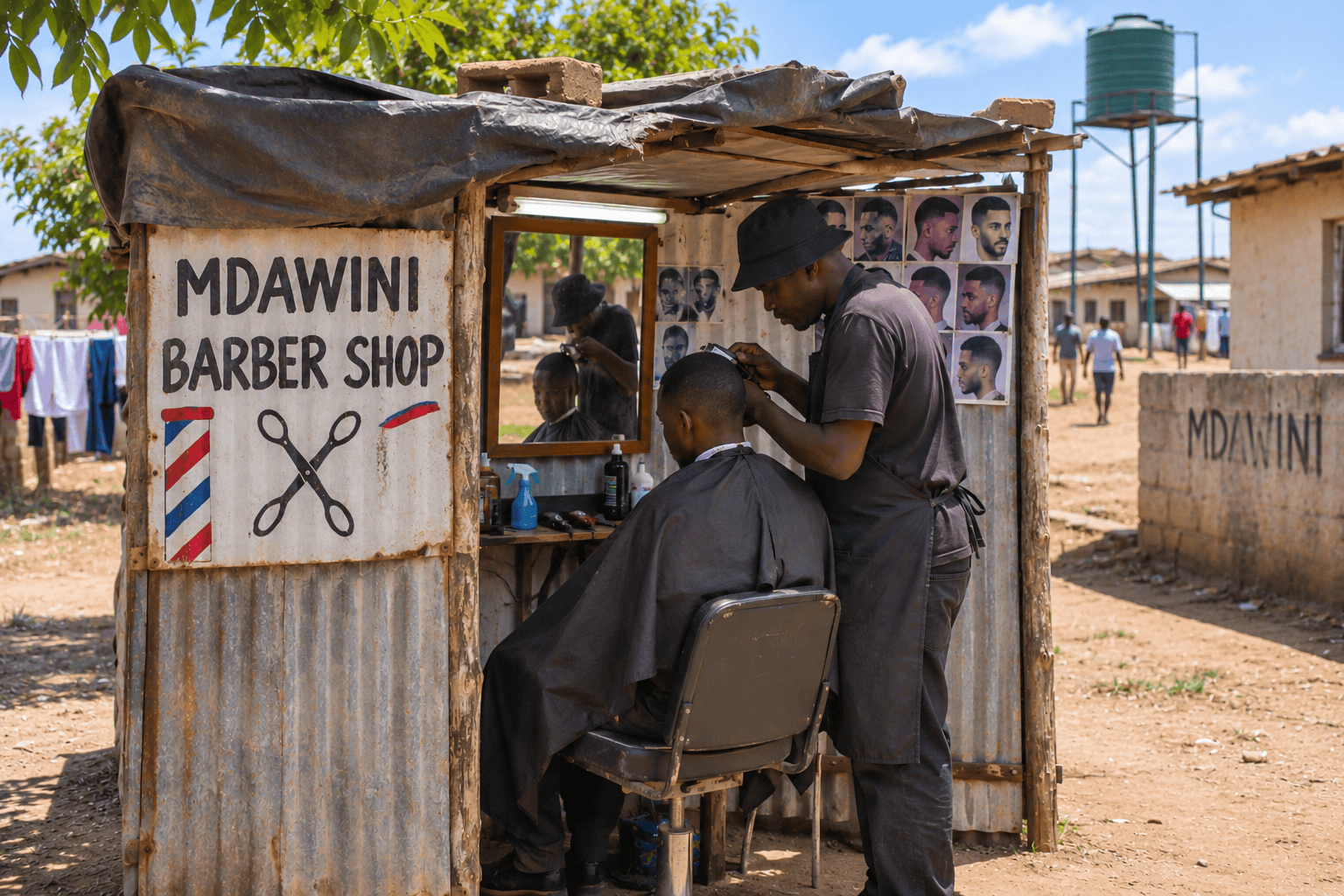
But when people leave agricultural communities only to struggle as vendors in congested urban markets, we should question whether they are moving towards better opportunities or escaping the absence of viable livelihoods.
Some economic activities could potentially be more productive if developed around rural resources.
Agricultural processing, machinery services, horticulture, livestock enterprises, logistics and technical services could create employment closer to production areas.
This does not mean everyone should remain a farmer.
Young people need diverse opportunities, including skilled occupations and businesses serving agriculture without necessarily cultivating land.
The objective is not to prevent urbanisation. It is to make migration a choice rather than an economic necessity.
Building productive rural economies
Zimbabwe has examples of what is possible.
Research on Mvurwi shows how agricultural earnings stimulated housing, transport, shops and other businesses. Maphisa developed through livestock, commerce and mining, while Chatsworth demonstrates how weakening economic connections can undermine earlier growth.
The lesson is that rural towns develop when productive activities generate incomes supporting surrounding enterprises.
Zimbabwe should strengthen connections between villages, business centres, growth points and regional markets.
Government should prioritise infrastructure that enables production and market access, alongside essential public services.
Private investors, farmers, financial institutions and development partners can finance commercially viable enterprises.
Diaspora capital could also contribute where governance is transparent and investment arrangements are credible.
Existing assets such as Royal Visit Dam deserve proper feasibility assessment rather than assumptions about their potential.
Investment success should be measured through outcomes: higher farm incomes, viable enterprises, employment, functioning infrastructure and improved market access.
The real test of national growth
Zimbabwe cannot achieve broadly shared prosperity while the productive potential of communities housing most of its population remains insufficiently developed.
The 61.4% rural population figure is not the rural contribution to GDP. Indeed, the difference between where people live and where economic activity is concentrated is precisely why this question matters.
National growth should create opportunities for more households to participate in production, investment and employment.
Rural development must therefore move from the margins to the centre of Zimbabwe’s economic growth and fiscal strategy.
Zimbabwe does not need every village to become a town. But rural communities should offer more than subsistence agriculture and dependence on income earned elsewhere.
Zimbabwe has built growth points. The unfinished task is building the rural economies that give those growth points a reason to grow.
Until that happens, rising GDP will remain an incomplete measure of how widely Zimbabwe’s economic progress is being experienced.






Leave a Reply