
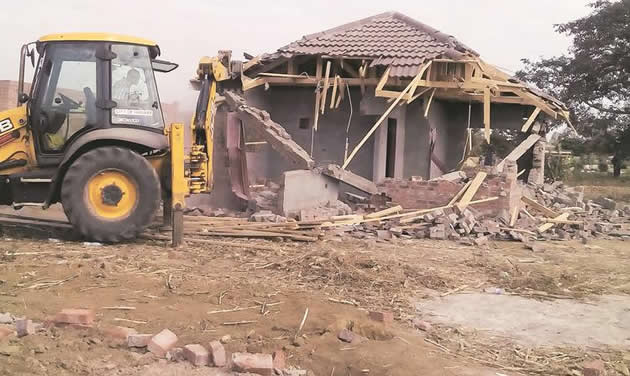
The Zimbabwe Human Rights Commission (ZHRC) has urged the Government and local authorities to accelerate the provision of affordable residential stands and take action against land barons, warning that demolitions alone will not resolve the country’s illegal settlements crisis.
The commission said authorities must address housing shortages and improve access to legally allocated land to protect desperate home seekers from exploitation.
In a statement issued on Thursday, the ZHRC called on local authorities to speed up the development and allocation of designated residential land while introducing transparent and equitable systems to reduce housing waiting lists.
“Local authorities should adopt a more proactive and anticipatory approach to housing provision within their respective jurisdictions,” read the statement.
On this topic
The commission also recommended that councils strengthen development control and monitoring mechanisms to prevent the emergence of unlawful settlements.
It urged local authorities to provide prospective homeowners with reliable information on approved housing schemes and designated residential areas, as well as establish platforms through which residents can raise concerns and seek information on housing delivery and land allocation.
The ZHRC called on the Government to strengthen national housing delivery strategies, supported by measurable targets, realistic implementation timelines and better coordination with local authorities.
“Housing delivery programmes should be supported by measurable targets, realistic implementation timelines and effective coordination with local authorities,” read the statement.
It also urged law enforcement agencies to investigate allegations of fraudulent land sales, unlawful land allocations and corruption, and ensure those responsible are held accountable.
“Law enforcement agencies should investigate allegations of fraudulent land sales, unlawful land allocations, corruption and other related criminal conduct, ensuring that those responsible are held accountable in accordance with the law.”
On the ongoing demolitions of unlawful structures, the commission said authorities should follow established legal and administrative procedures when enforcing planning, municipal and environmental laws, while respecting the rights and dignity of affected people.
It added that where displacement was unavoidable, authorities should consider measures to ease the hardship faced by affected households, particularly vulnerable groups.
The commission also urged prospective homeowners to verify land allocations, establish whether land is designated for residential use and consult local authorities before purchasing stands or starting construction.
It warned against informal land transactions and encouraged home seekers to use recognised and legally established housing delivery channels.
The ZHRC acknowledged the Government’s and local authorities’ responsibility to enforce planning laws and protect public spaces, including wetlands, from unlawful occupation and development.
However, it said demolitions had wider consequences for affected communities, including emotional distress, financial hardship and social disruption, particularly for children, older people and other vulnerable groups.
“We acknowledge the responsibility of government and local authorities to enforce planning laws and protect public spaces, including wetlands, from unlawful occupation and development. However, demolitions have consequences beyond the physical removal of structures, including emotional distress, financial hardship and social disruption, particularly for children, older persons and other vulnerable members of society,” the statement read.
The commission said orderly human settlements, environmental protection and respect for human rights should be pursued together.
“We reiterate that the pursuit of orderly human settlements, environmental sustainability and the protection of human rights are not mutually exclusive objectives, While the enforcement of the law remains an essential responsibility of the State, equal attention must be directed towards ensuring that citizens have realistic and accessible opportunities to secure housing through lawful channels.”








Leave a Reply