
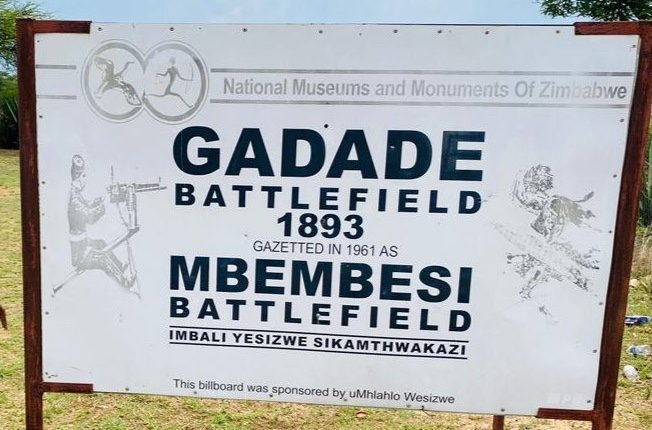
The 15th edition of the Gadade Battle Commemorations will seek to broaden understanding of the 1893 Anglo-Ndebele War by highlighting the experiences of communities whose land, kingdom and way of life were affected by the conflict.
The commemorations will be held on 7 November at the Gadade Memorial Site in Ntabazinduna, under the theme “Gadade 2026 — Honouring Our Past, Building Unity Through Truth and Remembrance”.
uMhlahlo weSizwe sikaMthwakazi communications representative Greater Sibanda said the organisers wanted historical accounts to reflect the perspectives of the people affected by the war, alongside narratives traditionally presented by colonial writers.
“We need to tell the story from the perspectives of the people whose land, kingdom and way of life were affected, alongside the accounts traditionally given by colonial writers,” he said.
On this topic
Sibanda said the organisers wanted to draw on Ndebele oral histories, knowledge preserved by families and communities, contributions from local historians and other available historical records.
He said the defeat at Gadade should not define the entire history of the conflict, adding that it was also important to examine what Ndebele forces were defending and how the war changed their communities.
“The outcome at Gadade was a defeat, but the story should not end there. We must also understand what our people were defending, what they experienced and how the events changed their communities and the kingdom,” Sibanda said.
The commemorations are intended to promote historical reflection, healing and unity rather than glorify war or deepen divisions.
“Our theme, ‘Honouring Our Past, Building Unity Through Truth and Remembrance,’ captures the message we want to share. We must be willing to learn about our past honestly, honour those who came before us and use that understanding to bring people together,” he said.
Sibanda said the organisers expected white Zimbabweans to attend this year’s event, reflecting their view that the conflict forms part of a shared history involving the descendants of people who fought on different sides.
“Today, it is a shared history that we must acknowledge and learn from together,” he said.
The annual commemorations began in 2011. This year’s programme will include visits to historical landmarks at the memorial site, followed by contributions from traditional leaders, historians and veterans, as well as cultural performances.
Preparations are underway, with organisers engaging traditional leaders, historians, veterans, churches, businesses and community organisations. They are also mobilising resources to provide transport, food, water, tents and chairs.
Sibanda said the organisers hoped for a strong turnout but could not yet provide reliable attendance projections because arrangements were still being finalised.
Beyond the annual event, the organisers want Gadade developed into a permanent heritage and educational site where schoolchildren, researchers and visitors can learn about the conflict and its wider historical significance.
They are calling on the government, through the National Museums and Monuments authorities, to work with traditional leaders and other stakeholders to protect and develop the site.
“The commemorations are not about glorifying war or encouraging division. They are about remembrance, learning, healing and unity,” Sibanda said.








Leave a Reply