
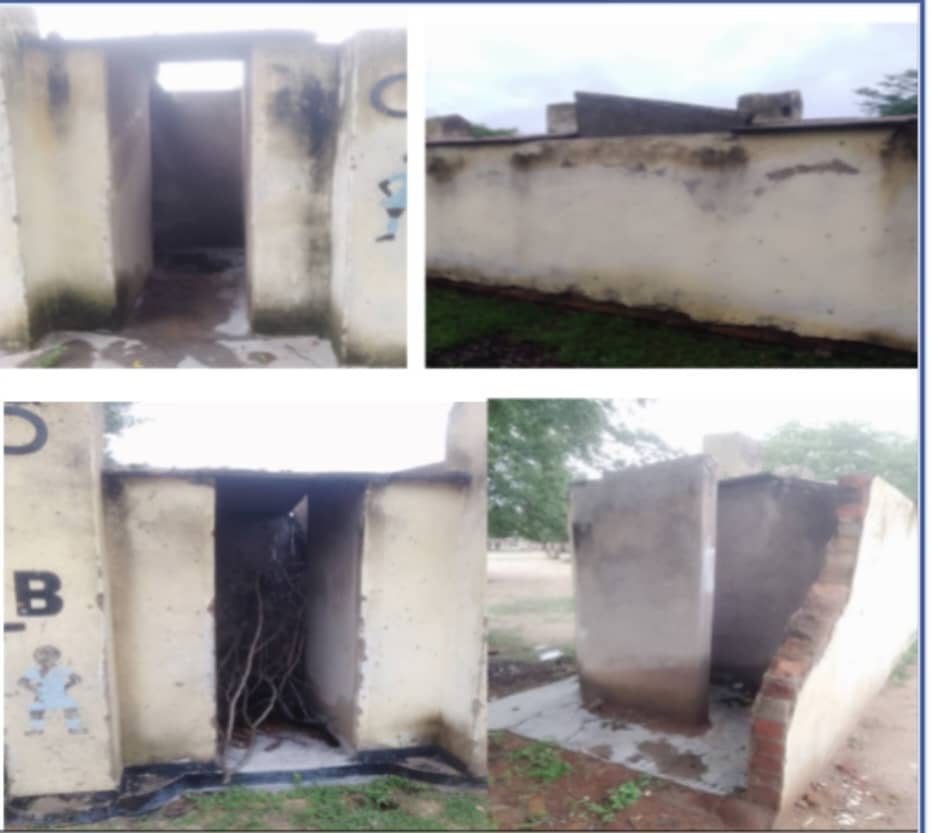
Bantwana Zimbabwe is seeking US$1 700 to rebuild a toilet block at Mayobodo Primary School in Mangwe District, Matabeleland South, after heavy rains destroyed the Early Childhood Development (ECD) facility, leaving hundreds of learners without adequate sanitation.
The school, located in Ward 16, has more than 800 learners who have been affected by the loss of the toilet block.
Bantwana Zimbabwe, registered in 2020 as a Private Voluntary Organisation, works with children, young people and families affected by HIV, AIDS, poverty and humanitarian crises.
The toilet reconstruction is part of the Acting Together for Responsive and Integrated Systems for Children’s Access to Education in Emergencies (ARISE) project, which supports schools and communities to maintain safe learning environments during climate-related emergencies.
On this topic
The community has already mobilised local resources and is nearing completion of making 10 500 bricks, while residents have pledged labour for the construction work.
However, the community needs financial assistance to purchase essential materials that are not readily available locally, including cement and other building supplies.
Speaking to CITE, Bantwana Zimbabwe Head of Programmes, Banele Mandaza, said the destruction of the toilet block had created an urgent sanitation and child-protection challenge.
“The destroyed toilet block left more than 800 learners with inadequate sanitation, threatening their health, dignity, attendance and learning. Restoring safe toilets is therefore an urgent education and child-protection priority,” Mandaza said.
He noted the school and community had already started preparing the site, with local residents contributing materials and labour.
“Bantwana Zimbabwe is mobilising funders and well-wishers. The school has prepared the site, dug the foundations and gathered bricks, while community members have pledged non-technical labour,” he said, adding the community had also contributed sand and quarry stone, but several materials and technical services were still required to complete the project.
“Planning began after the toilet block was lost during the 2025/2026 rainy season. The community has prepared the site, produced bricks and offered labour, sand and quarry stone. The school still needs cement, barbed wire, brick reinforcement, fly screen, roofing materials and technical services.”
The project will involve constructing a replacement toilet block for ECD learners and staff, with Bantwana Zimbabwe responsible for mobilising donor support while the community contributes local materials and labour.
Mandaza said the project was expected to directly benefit 849 people, comprising 826 learners, 21 teachers and two non-teaching staff.
Of the 826 learners, 427 are girls and 399 are boys.
“The wider Ward 16 community will also benefit. Construction of the toilet block is expected to take place between October and November 2026,” he said.
“Support can be made through africagiving.org/organisations/402”.
Mandaza said Mayobodo Primary School was among 20 schools selected for support under the ARISE project because of their exposure to climate-related hazards such as drought, flooding, storms, strong winds and heatwaves.
He said the ARISE project was supporting schools in Mangwe to remain operational during climate-related emergencies.
“The ARISE project combines Education in Emergencies, child protection and mental health and psychosocial support through locally led preparedness and response,” Mandaza said.
He said communities were also equipped to identify risks and respond to emergencies through preparedness measures.
“Communities develop early-action protocols, map hazards and risks, and identify authorities and service providers that can respond during crises,” he said.
However, Mandaza said the main obstacle to completing the Mayobodo toilet block was funding because the ARISE programme did not cover construction costs.
“The main challenge is a funding gap. ARISE funds do not cover construction. The community has mobilised local resources but cannot finance the toilet block, particularly after El Niño further strained household capacity,” he said.
The ARISE project is funded by the European Union Civil Protection and Humanitarian Aid Operations, with Save the Children International supporting implementation.
Separate funding is needed for the Mayobodo toilet reconstruction.
Mandaza said completing the project would restore safe sanitation while helping protect learners’ health and dignity and minimise disruptions to school attendance and learning.
“The new toilet block will also strengthen community support for safe, inclusive education,” he said.
Bantwana Zimbabwe works across four areas: child protection, health, education and economic strengthening and Mandaza said the organisation also implemented programmes aimed at improving education services and supporting learners.
“With UNICEF support, the Teacher Effectiveness and Equitable Access for All Children (TEACH) project helps communities monitor education services and improve accountability, access and learning outcomes. The First Mutual Scholarship Fund also supports students from primary to tertiary level,” he said.
“Bantwana Zimbabwe was founded on the belief that protecting children and supporting their education helps them become healthy, responsible adults who strengthen their families and communities,” he said.
Mandaza said Bantwana Zimbabwe had also solarised a borehole at Matole Primary School, funded classroom door and window repairs at three Mangwe schools and supported gender-based violence response rooms in other provinces.
“These projects showed that sustained cooperation among learners, parents, teachers and traditional leaders is critical to lasting results,” he said.
Looking ahead, Mandaza said Bantwana Zimbabwe would continue working with education and social-development authorities while seeking partnerships to expand its support to other communities.
“We are working with the Confederation of Zimbabwe Industries to support the school reintegration of repatriated children and remains open to partnerships that expand support to other communities,” he said.




Leave a Reply