
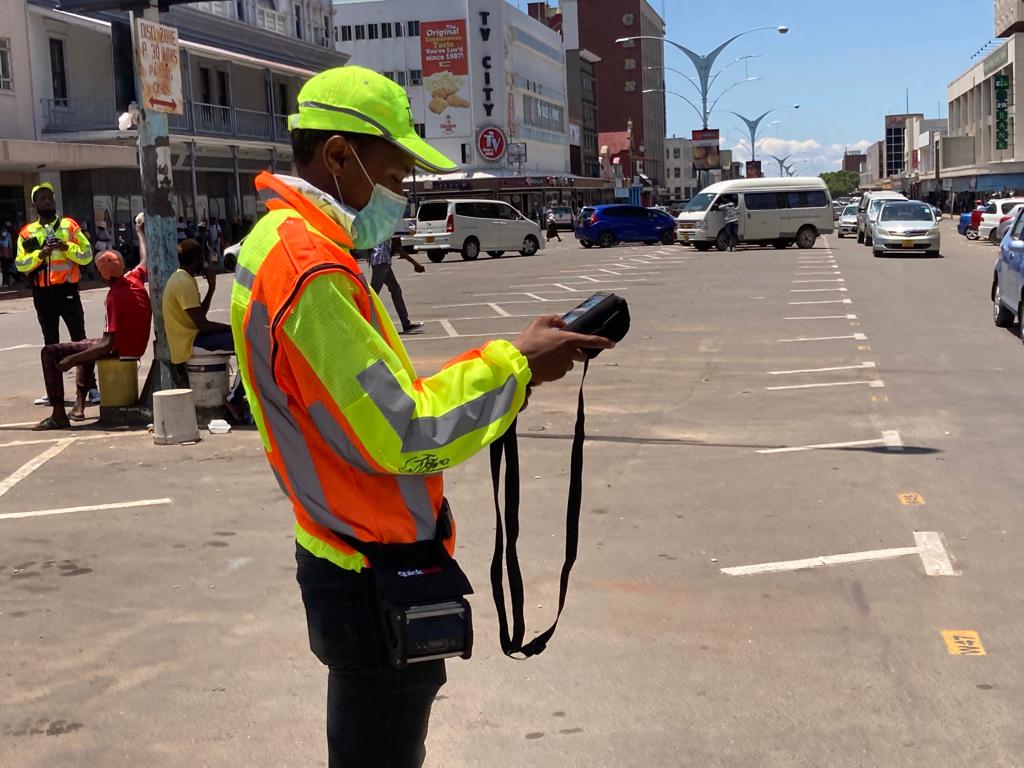
The Bulawayo City Council (BCC) says it cannot reduce the city’s US$1 hourly parking fee despite calls from the business community to align it with national regulations, citing an existing six-year contract with Tendy Three Investments (TTI) and pending government approval.
The issue came under scrutiny during a Zimbabwe National Chamber of Commerce (ZNCC) engagement with the council on Tuesday, where business representatives urged the local authority to comply with Statutory Instrument (SI) 41 of 2026, which caps municipal parking fees at US$0.50 per hour.
However, Bulawayo continues to operate under SI 220 of 2023, which governs its parking management partnership with TTI.
Responding to the concerns, Town Clerk Christopher Dube said the council had already approached the Ministry of Finance after the statutory instrument was announced, explaining that Bulawayo was bound by a government-approved contract with TTI.
On this topic
“On the issue of the US$1 parking fee, when SI 41 of 2026 was first announced in Cabinet by the Minister of Finance, we wrote and made a representation to the Minister of Finance,” Dube said.
“I sat down with him and explained that we have a six-year running contract which was approved by the Government. While reducing tariffs to improve the ease of doing business is a good idea, it would affect the contract (with TTI).”
The town clerk said the council had expected Bulawayo to be exempted when SI 41 of 2026 came into effect but that did not happen.
“The Minister of Finance asked us to put our concerns in writing and we did. I thought that when SI 41 of 2026 came into effect it would exclude Bulawayo, but unfortunately we were not excluded. We then submitted another representation explaining our predicament,” Dube said.
He added the Urban Councils Association of Zimbabwe (UCAZ) had also petitioned the Government, arguing that reducing parking fees would undermine urban traffic management.
“We have made a representation as the Urban Councils Association of Zimbabwe to say that the issue of US$0.50 is too little for urban parking. We would rather maintain our US$1 charge because it is not only about collecting revenue, it is also a deterrent measure to discourage people from over-parking in the city centre and to reduce congestion,” he said.
He said the council would only review the tariffs once the government had responded to its submissions.
“For now, that cannot be changed until the Government comes back to us and tells us the outcome of our representations. We will then comply,” Dube said.
He revealed that the matter is already before the courts after a resident challenged the council’s failure to implement the statutory instrument.
“One of the residents has taken us to court for non-compliance. We have complied with the statutory instrument in all other areas except parking. We are a local authority subordinate to the government and we are not defying the government,” he said.
Although acknowledging that residents wanted lower parking fees, the town clerk maintained retaining the current tariff was in the city’s interest.
“I know people want the fees reduced, but as your council we believe it is not in your interest to reduce them at this stage. We may do so if the government insists or once the court has made a determination,” Dube said.
Under SI 41 of 2026, commonly known as the Model Fees By-laws, urban parking fees are capped at US$0.50 per hour, clamping penalties are limited to US$20 per incident and tow-away fees are reduced by 50 percent.
However, the Bulawayo City Council continues to rely on SI 220 of 2023, under which motorists pay for parking between 8am and 5pm on weekdays and 9am to 1pm on Saturdays.
Although paid parking ends at those times, enforcement officers patrol from 6am to 7pm daily, with motorists who violate the city’s parking by-laws liable to be fined, clamped or have their vehicles towed.
Vehicles may be clamped or towed for unpaid parking fees or traffic violations, with owners liable for towing and storage charges.
Presenting findings from the Improving the Ease of Doing Business in Bulawayo report, ZNCC Executive Board member, Jermaine Chapfiwa, urged the council to bring its parking regime into line with national regulations.
“In parking and clamping, stakeholders are asking that SI 41 of 2026 also be applied to our city partner, TTI. TTI is charging US$1 an hour, but according to the statutory instrument we are supposed to be paying US$0.50,” said Chapfiwa.
He questioned how the agreement between the council and TTI was implemented following the gazetting of the statutory instrument.
“If motorists are supposed to be paying only US$2 for a full day, then from the time the SI 41 of 2026 came into effect, TTI could owe the city millions. Yes, there is an agreement between TTI and the council, but where is the council’s 30 percent share going? That contract was entered into with the people in mind,” he said.
Chapfiwa also called for clamping penalties to be reduced from US$40 to US$20 in line with SI 41 of 2026 and urged the council to stop clamping vehicles over relatively small outstanding debts.
“Our specific request is for council and TTI to reduce parking fees to US$0.50 an hour and ensure there is no clamping for debts below US$50,” he said.
He argued that motorists should not be penalised immediately over minor arrears.
“I don’t think it’s fair for someone to be clamped because they have three unpaid tickets. People are facing different financial challenges. At least consider whether they have a history of paying before clamping them,” he said.
Chapfiwa also raised concerns about motorists whose vehicles had been clamped after insurance discs slipped from their windscreens.
“There have been people who were clamped because their insurance papers fell off the windscreen. That is unfair and something the council should address if it wants to improve the ease of doing business,” he said.
Bulawayo Mayor, David Coltart, acknowledged the concerns but said the council remained bound by the current legal framework.
“On TTI and clamping, there is a statutory instrument currently in force and we are governed by it,” he said.
However, Coltart said he wanted parking enforcement officers to exercise greater discretion and compassion.
“Where I agree with you is not so much on the law but on policy. I would like to see the principle of Ubuntu respected by the marshals. We have consistently encouraged TTI not to clamp automatically but to consider the circumstances before taking action,” he said.








Leave a Reply