
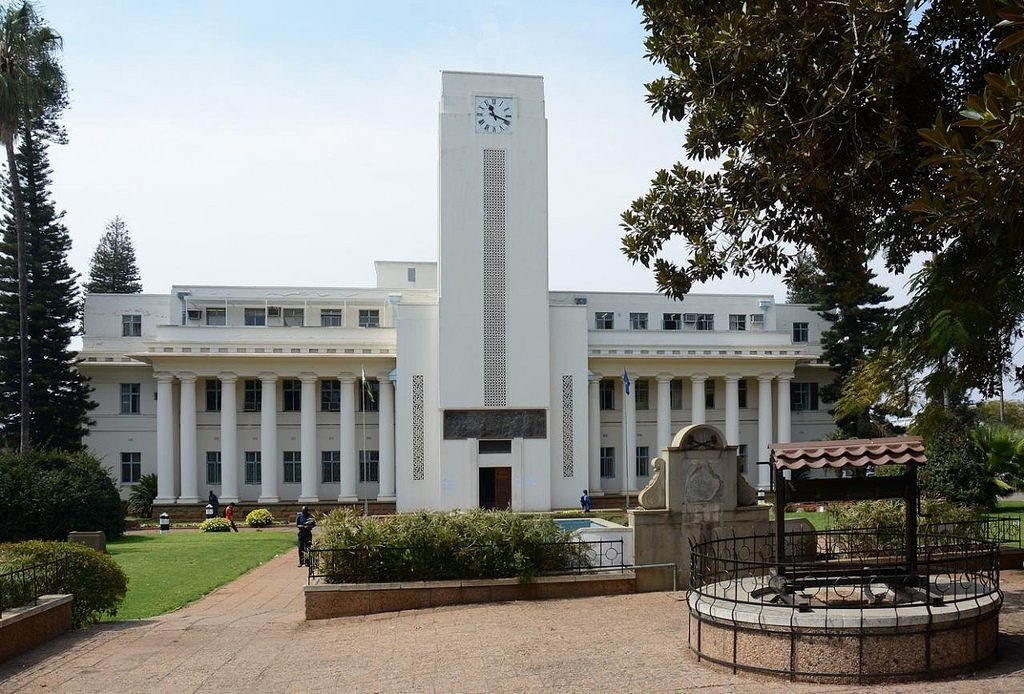
Bulawayo City Council (BCC) has moved to channel road and water levies introduced last year towards purchasing more than US$2 million worth of service delivery vehicles, citing the deteriorating state of its ageing fleet.
The Bulawayo City Council (BCC) introduced the special water levy and road levy as part of its 2025 budget. The levies were first proposed during the 2025 budget consultations in September 2024 and were approved for implementation in the 2025 financial year.
Under the approved tariffs, Domestic properties were charged US$1 per month for the water levy and US$1 per month for the road levy. Commercial and non-domestic properties were charged US$10 per month for each levy.
Council said the funds would be ring-fenced to rehabilitate water infrastructure and roads. At the time, then Finance and Development Committee chairperson Councillor Mpumelelo Moyo said the levies were necessary to address Bulawayo’s worsening water crisis and deteriorating road network.
On this topic
However, Bulawayo City Council’s special road and water levies are now set to finance the purchase of more than US$2 million worth of service delivery vehicles and plant equipment, according to council minutes.
According to a report presented by Acting Director of Works on 19 May 2026, the local authority currently has a fleet of 327 vehicles and plant equipment, but only 194 are operational, representing 59.3 percent of the total fleet.
The remaining 133 vehicles, accounting for 40.7 percent, are out of service and awaiting spare parts, repairs or are undergoing maintenance.
“A significant portion of the Council’s fleet had exceeded its economic lifespan and was now obsolete. In order to meet the minimum service delivery standards set for 2026, the department needed to strengthen and expand its existing road maintenance fleet,” read Council minutes.
Council said strengthening and expanding its road maintenance fleet had become necessary to meet minimum service delivery standards for 2026.
“Accordingly, the Works, Water and Sanitation Departments proposed to utilise their respective Road and Water Levies to finance the procurement of service delivery vehicles Acquisition of Vehicles,” read the minutes.
The local authority said tenders for various vehicles and plant equipment had already been completed and contracts awarded to successful bidders, but implementation had stalled due to a lack of funding.
“The replacement programme was intended to improve service delivery efficiency, reduce downtime caused by frequent mechanical breakdowns, minimise expenditure on repairs and equipment hire, and enhance operational reliability across Council departments. The tender processes were successfully concluded and contracts awarded to the successful bidders. However, implementation of the contracts was currently pending the allocation of funding.”
Council minutes show that the Road Levy account has a balance of ZWG29.44 million, while the Water Levy account holds ZWG30.38 million.
Under the proposal, US$1.39 million from the Road Levy would be used to acquire four tipper trucks under one contract, four additional tipper trucks, two three-tonne trucks, three seven-tonne trucks, 14 one-tonne trucks and two double-cab vehicles.
A further US$611,140 from the Water Levy would finance the purchase of three three-tonne trucks, 14 one-tonne trucks, two Toyota Land Cruisers and two double-cab vehicles.
The combined value of the planned purchases amounts to US$2 003 519.45.
Council minutes show that councillors resolved to recommend that authority be granted for the utilisation of road and water levies towards the procurement of the vehicles and plant equipment.
The proposal comes a year after BCC introduced the two levies, a move that was justified as a means of improving road maintenance and water service delivery.
Support CITE’s fearless, independent journalism. Your donation helps us amplify community voices, fight misinformation, and hold power to account. Help keep the truth alive. Donate today








Leave a Reply