
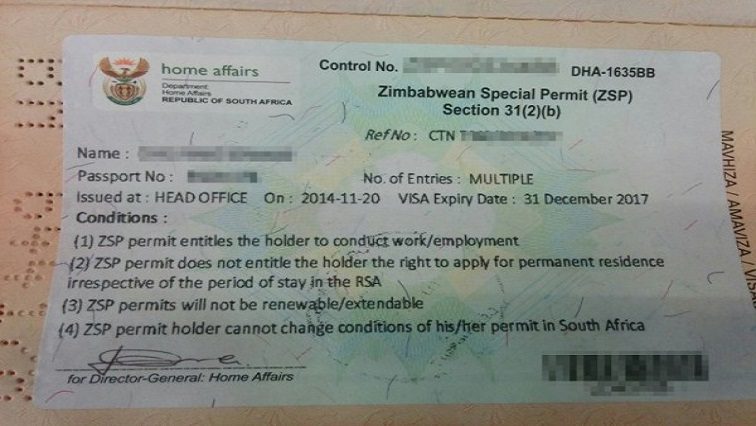
Zimbabweans living in South Africa under the Zimbabwe Exemption Permit (ZEP) are intensifying calls for a permanent immigration solution, urging their host government to end years of uncertainty that have left thousands unsure about their future.
The appeals have come during a series of public consultations organised by South Africa’s Department of Home Affairs (DHA) across all provinces on the ZEP and Lesotho Exemption Permits, where affected communities are making submissions that could influence whether South Africa’s government reverses its earlier decision to terminate the permits or provide permanent residency.
The current Home Affairs consultation process will run up to 5 June 2026.
South Africa’s latest position on ZEP allows permit holders to remain in the country until 29 May 2027, buying time for the government to review policy and consider public input.
On this topic
However, this latest decision offers no clarity on what happens thereafter.
At a recent consultation meeting in Bloemfontein, representatives of the Zimbabwean community said the extension, though welcome, falls short of addressing long-standing concerns about stability, dignity and legal security.
Secretary of the African Diaspora Forum (ADF) and chairperson of the Zimbabwe Community in South Africa, Ngqabutho Nicholas Mabhena, said the community would be submitting formal proposals calling for a permanent framework that allows ZEP holders to live and work without recurring disruptions.
“We are calling for a permanent solution to holders of the Zimbabwe Exemption Permit,” Mabhena said.
“Our position is based on the understanding under which the programme was introduced and the realities that have unfolded over time.”
Mabhena argued that when the permits were introduced in 2010, many Zimbabweans did not understand them to be strictly temporary, noting that this was not clearly communicated during initial engagements.
“The first time many holders realised the permit was temporary was through a letter from the Director General of Home Affairs in December 2021,” he said.
Mabhena cited statements made at the time by then Home Affairs Minister Nkosazana Dlamini-Zuma, who described the programme as a mechanism to allow Zimbabweans to comply with immigration laws and live normal lives without fear of deportation.
“This process was presented as a way to end the misery of living under constant fear and to allow people to integrate within the legal framework,” Mabhena said.
He added that a joint statement issued in September 2010 by stakeholders from both Zimbabwe and South Africa acknowledged most Zimbabweans in the country were law-abiding and sought to regularise their stay.
According to Mabhena, the ZEP programme was also widely understood as a pilot initiative that could be extended to other nationalities, rather than a strictly time-bound intervention.
“This is why we are saying the expectation from the beginning was not that this would be temporary in the way it is now being handled,” he said.
The current consultation process by South Africa’s DHA follows a significant legal development in 2023, when the constitutional court ruled that the government’s initial decision to terminate the permits was unconstitutional.
The case, brought by the Helen Suzman Foundation and the Consortium for Refugees and Migrants in South Africa, found that the decision lacked adequate consultation and failed to consider the impact on affected individuals.
The ruling forced the South African government to revisit its approach and initiate broader stakeholder engagement, leading to the current nationwide hearings.
For many Zimbabweans in South Africa, these consultations are a critical opportunity to secure long-term stability.
“These consultations are our last chance,” Mabhena told CITE in an interview.
“If we do not make a strong case now, it will be difficult to rely on legal interventions again because previous rulings, especially the case filed by the Helen Suzman Foundation were based on lack of consultation. Now the government is consulting, and we must respond.”
Mabhena urged Zimbabweans across South Africa to attend the meetings and share their experiences, saying broad participation would strengthen their case.
“We need many voices. These physical meetings give us an opportunity not only to speak to the government but also to engage South African organisations so they understand our situation,” he said.
Mabhena also highlighted practical challenges faced by permit holders, including difficulties transitioning to other visa categories.
While some Zimbabweans have been able to move onto general work visas with the help of waivers, he said these options are not sustainable.
“Once those visas expire, there is no guarantee of another waiver. People are again left in uncertainty,” he said.
He also pointed to cases where applications for alternative permits had been rejected, leaving individuals vulnerable despite years of lawful residence in South Africa.
For Zimbabweans who have built lives in South Africa over more than a decade, the stakes are particularly high.
Many are employed, have families and contribute to the economy, making the prospect of returning to an uncertain future in Zimbabwe a source of anxiety.
Read:https://cite.org.zw/for-whom-the-bell-tolls-end-of-permits-to-affect-more-than-zep-holders/
Mabhena acknowledged the support the community has received from the South African government over the years, describing the initial 2010 programme as a “gesture of goodwill.”
“We want to thank the South African government for what it did in 2010,” he said.
“But now we must move forward and find a lasting solution that reflects the realities on the ground.”
He expressed hope that the outcome of the consultation process would be guided by the principle of ubuntu and the long-standing historical ties between Zimbabwe and South Africa.
“Our two countries are linked through history and shared struggles. We believe that spirit must guide the decision that will be taken,” he said.







Leave a Reply