
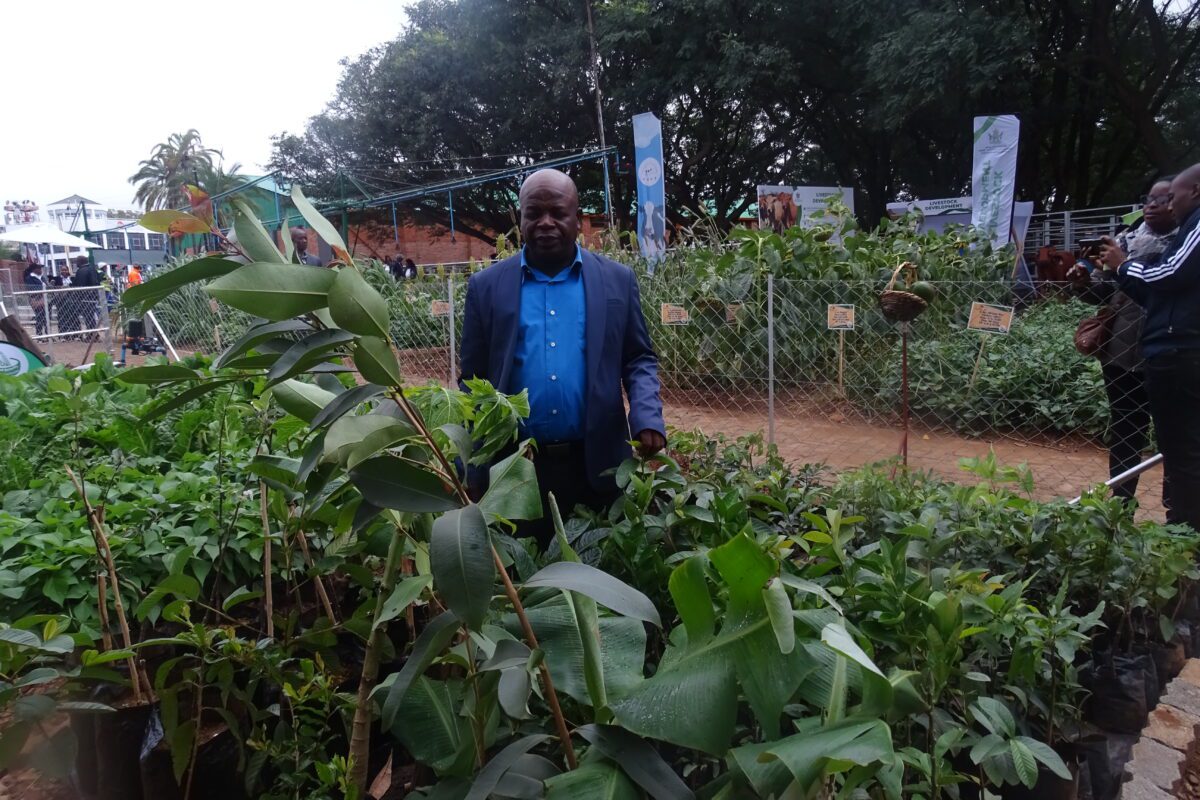
For Dr Preacherd Donga, an agronomist and plant breeding specialist, the future of Zimbabwe’s agriculture may well lie in the hands of its young people and in the trees they plant today.
As the founder of Dayise Tree Nursery, Donga is spearheading an ambitious initiative that blends commercial fruit production, environmental sustainability and education.
While his work spans decades and continents, including 23 years with the United Nations working on agricultural projects, his current focus is firmly rooted in Zimbabwe where he sees fruit trees as a powerful engine for economic transformation.
“Fruit trees are game changers in Zimbabwe. There is a huge opportunity in tree growing and fruit production. Farmers can create employment, build industries and add value to what they produce,” said Donga in an interview with CITE.
On this topic
Yet, he notes, Zimbabwe continues to lose potential revenue by exporting raw fruits without processing them.
According to Donga, local industrialisation particularly in fruit processing could significantly boost incomes.
“As farmers, we are exporting fruits without processing them while other countries are making more money from our produce. We need to start producing juices and other products locally for both domestic and export markets,” he noted.
At his nursery, a wide variety of fruit trees are being cultivated to support this vision.
These include apples sourced from Kenya, citrus varieties grown locally and mangoes from West Africa.
Among the standout varieties is the “apple mango,” which Donga describes as highly lucrative with yields that can produce two peak harvests and fetch up to US$7 per kilogram.
The nursery also promotes less common but high-value crops such as sugar apples, noted for their medicinal properties.
However, beyond production and profits, Donga places particular emphasis on education and skills development especially among young people.
“We believe schools are critical in transforming agriculture,” he said. “We are training learners in tree propagation and turning schools into centres of excellence with their own business units.”
The programme has already been piloted in more than 30 schools and colleges in Bulawayo, including Milton High School, the National University of Science and Technology, Bulawayo Polytechnic and Hillside Teachers College.
Through these initiatives, students are not only learning agricultural skills but are also being equipped to run income-generating projects.
“This is about empowering the next generation.We want young people to see agriculture as a viable business and a pathway to employment,” Donga explained.
The initiative is being implemented in collaboration with key stakeholders, including the Ministry of Agriculture, the Ministry of Education and the Forestry Commission.
Tree planting campaigns, training sessions and school-based exhibitions form part of the coordinated effort.
Local authorities have also come on board. Partnerships with the Bulawayo City Council and Bubi Rural District Council are ensuring that farmers at the grassroots level are integrated into the programme.
Donga’s efforts align with Zimbabwe’s broader Vision 2030 goals, particularly a national tree-planting target that has recently been increased from 18 million to 30 million trees by the year 2030.
He believes that widespread participation, from farmers to students is essential to achieving this goal.
“We need many nurseries and many people involved. This is how we complement government efforts and scale up impact,” he said.
In addition to economic benefits, the initiative also addresses environmental concerns, particularly climate change.
Increased tree planting, Donga says, is vital in mitigating environmental degradation and building resilience.
“Climate change is affecting us all. Tree planting is one of the practical ways we can respond to these challenges,” he said.
To make participation accessible, seedlings are priced between US$5 and US$7, depending on the type, variety and size.






Leave a Reply