
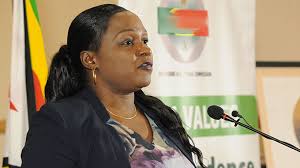
Zimbabwe’s Attorney-General, Virginia Mabhiza, is facing backlash after dismissing calls for a national referendum on proposed constitutional changes, with critics arguing that her interpretation of the law ignores key provisions designed to protect democratic accountability.
The Constitution of Zimbabwe Amendment Bill No. 3 (CA3), has sparked nationwide controversy largely due to provisions that could extend the terms of elected officials, including the President and Members of Parliament, from five to seven years.
As the attorney general, Mabhiza rejected demands for a referendum, insisting that such calls are not grounded in law but are instead politically motivated and framed the issue as a procedural matter, while those opposed have argued that the substance and impact of the amendments demand direct public approval.
She argued that the Constitution clearly defines when a referendum is required and that the amendment bill does not meet that threshold.
On this topic
“Section 328(6) is deliberate and precise in that it reserves the ultimate democratic veto, the national referendum, for only three narrowly defined categories of amendment,” she was quoted saying..
According to Mabhiza, these categories are limited to amendments affecting the Declaration of Rights (Chapter 4), agricultural land (Chapter 16), or Section 328 itself.
“In every other case, once a Constitution Bill secures the required two-thirds majority in both Houses of Parliament, it must be forwarded to the President for assent,” Mabhiza said.
Her remarks have, however, triggered a sharp rebuke from the Movement for Democratic Change (MDC), led by Douglas Mwonzora, which argues that the Attorney-General is deliberately sidestepping both the political origins and constitutional implications of the Bill.
MDC presidential spokesperson, Lloyd Damba, said Mabiza’s position “must not go unanswered,” accusing her of selectively interpreting Zimbabwe’s Constitution while ignoring provisions that support the need for a referendum.
“She is forgetting that the amendment, which proposes extending presidential and parliamentary terms from five to seven years, was initially passed at a Zanu PF political conference,” said Damba.
“They sang it in their meetings and in the streets, wearing party regalia. This was a political resolution, and it must be opposed by political actors.”
Damba argued the amendment is inherently political in both origin and effect, as it directly extends the tenure of current office bearers, including President Emmerson Mnangagwa and legislators across the political divide.
“The amendment seeks to extend the political lifespan of the current leadership by two years. It is not an economic or business resolution, it is a political one,” he said.
He further contended that Zimbabwe’s Constitution was crafted precisely to guard against unchecked political power, stressing that public involvement through a referendum is a fundamental safeguard.
“The Constitution was written because of the mistrust of political actors in office. Hence, everything must go back to the people,” Damba said.
Damba also rejected Mabhiza’s characterisation of opposition to the Bill as “premature and speculative,” noting that the legislative process has already advanced significantly.
“The Bill was gazetted, and parliamentary consultations were conducted after people had read and understood it. The public is now demanding a referendum because they know what is at stake,” he said.
The opposition official added that some citizens felt unable to freely express their views during consultations, alleging that the meetings were dominated by ruling party supporters.
“The so-called consultations were pure Zanu PF rallies, where dissenting voices were met with disruptions and intimidation,” he said.
Beyond political opposition, legal voices have also challenged Mabiza’s interpretation of the Constitution, arguing that her reliance on Section 328(6) overlooks critical subsections that address amendments affecting incumbency.
Bulawayo mayor and lawyer, David Coltart, described the Attorney-General’s opinion as flawed, saying it ignores subsections 328(7), (8) and (9).
“The Attorney-General focuses on Section 328(6) but ignores the subsections which follow, which make it abundantly clear that a referendum is required if the effect of any amendment is to extend the length of time an incumbent holds office,” Coltart said.
He pointed specifically to subsection 328(9), which requires that amendments affecting incumbency be treated as if they fall under Chapter 4, thereby triggering the referendum requirement.
“The effect of these amendments is to extend the length of time in office of the incumbent President, MPs and councillors. A referendum is clearly required and there is no way around that,” Colart said.
An analyst, Patrick Ndlovu weighed in that the amendment bill posed broader questions about constitutionalism in Zimbabwe, questioning the legitimacy of Parliament alone to determine changes that affect the tenure of elected leaders.
“People are saying that such national decisions must be subjected to the will of the people, not to a few or one political party,” he said.
“This is why the push for a referendum is greater now and far from over.”








Leave a Reply