
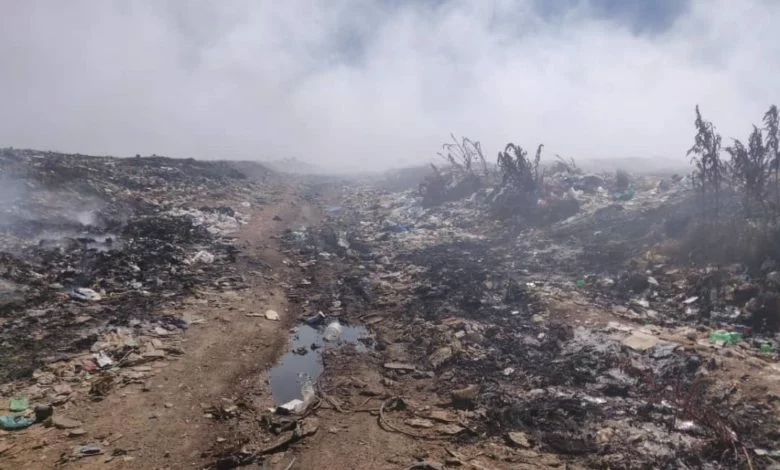
Cowdray Park residents say toxic smoke from the Richmond landfill, commonly known as the Ngozi Mine dumpsite, is beginning to return to residential areas as the rainy season comes to an end.
For months, the rains had brought rare relief, dampening fires that had turned daily life into a battle for breath.
Now, as the dry conditions set in, residents say the choking fumes and ash that once defined their nights are already reappearing, raising fears of another prolonged period of suffering.
Families living within a kilometre of the dumpsite describe how smoke seeps into their homes, clinging to walls, furniture and clothing.
On this topic
Some say the air becomes so heavy that they are forced to keep doors and windows open throughout the day and night in a desperate attempt to breathe, even as soot continues to settle inside.
During previous hot months, the landfill burned almost continuously, sending thick, dark plumes across the suburb and affecting hundreds of households.
Nearby schools, including Tategulu Primary School and Cowdray Park Secondary School, were not spared, with lessons frequently disrupted when the smoke intensified.
Residents say the fires, some lasting around the clock, have left them feeling trapped in their own neighbourhood.
Cowdray Park residents’ representative Michael Ndlovu who spoke to Cite said the situation had reached intolerable levels and demanded urgent relocation of the landfill.
“To be precise and straight to the point, as Cowdray Park residents, we want to see that landfill relocated out of Cowdray like yesterday. The smoke issue is a big problem here. We have primary schools and a secondary school a stone’s throw from that site. On serious days, classes are forced to stop,” he said.
Ndlovu warned that the health consequences could worsen over time, particularly for those already vulnerable.
“Many people with various ailments are being seriously affected. With time, people are going to have diseases that we don’t even know.
” If this go unattended, trust me there will be a time when people will be giving birth to deformed babies as a result, because we dont know how the smoke will eventually affect us. Since the rainy season is almost over, most people here will not stay in their houses because of that smoke,” he added.
Landfill fires are notoriously difficult to control. While surface fires can sometimes be managed, underground fires burn deep within decomposing waste, often fuelled by methane gas produced during decomposition.
The mix of organic material, plastics and hazardous substances creates unpredictable burning conditions and releases toxic fumes, while poorly compacted waste allows oxygen to feed the flames.
Even attempts to extinguish the fires with water can worsen environmental risks by creating contaminated runoff and damaging protective barriers.
Ward 28 councillor Ntando Ndlovu acknowledged the community’s concerns, noting that the rains had only offered temporary relief.
“The persistent fires at Ngozi Mine remain a serious concern for us as a community, and I fully share the frustrations being expressed by residents of Cowdray Park. Over the past few months, the rains provided temporary relief by naturally suppressing the fires,” he said.
“However, with the end of the rainy season, we are already seeing conditions that could lead to a resurgence. When these fires intensify, the smoke blankets large parts of the suburb, disrupting daily life and placing a heavy burden on vulnerable groups, particularly the elderly, young children, those with underlying health conditions, and even learners whose schooling is affected by the poor air quality.”
He said the local authority must act with urgency and consider new approaches to managing the site.
“Our long-standing position has been clear: the landfill site must be properly managed to prevent these recurring fires. If the City lacks the capacity to effectively handle this internally, then it is both prudent and necessary to explore partnerships with capable private players who can bring in the required expertise and resources.”
Ndlovu warned that the greatest risk lies in the long-term health impact of continued exposure to the smoke.
“We cannot afford to normalise a situation that compromises the well-being of our residents, and decisive, sustainable action is now required.”
Support CITE’s fearless, independent journalism. Your donation helps us amplify community voices, fight misinformation, and hold power to account. Help keep the truth alive. Donate today





Leave a Reply