

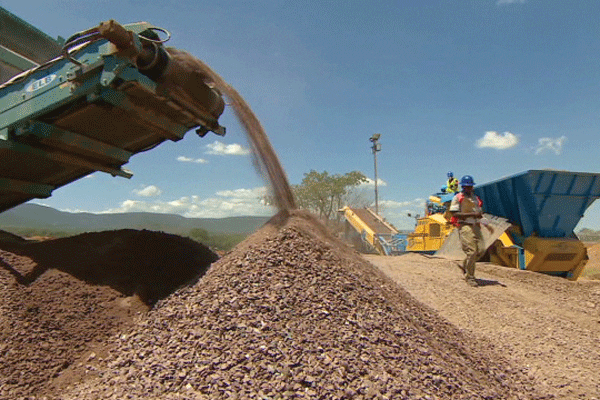
The Zimbabwean government has been urged to equip local miners with machinery and financial support to enable broader participation in the country’s mining sector.
Raising a point of national interest in the Senate on Tuesday, Irene Zindi said recent policy moves to curb the export of raw minerals should be matched with efforts to empower Zimbabweans to benefit from the country’s resources.
Her remarks follow a decision by the Ministry of Mines and Mining Development on 25 February 2026 to suspend the export of raw minerals and lithium concentrates.
“This is a welcome development because Zimbabwe was exporting wealth and jobs to other countries,” she said.
Senator Zindi said the move had already had an impact on global markets, with lithium prices rising, highlighting the strategic importance of the mineral.
She urged authorities to use the export ban as leverage to negotiate technology transfer agreements with investors, aimed at establishing local processing and beneficiation plants.
“In light of this ban, government should begin in earnest to negotiate with investors for the transfer of technology,” she said.
Zimbabwe has more than 40 known mineral resources, including gold, diamonds, lithium and platinum group metals. However, much of the country’s mineral output is exported in raw form, limiting local economic benefits.
Senator Zindi said a clear policy on value addition could help drive industrialisation, create jobs and retain more revenue within the country.
She also raised concerns about the continued use of the Mines and Minerals Act, describing it as outdated and rooted in colonial-era priorities.
“The law was crafted for the benefit of the colonial power,” she said, adding that Zimbabwe’s resources had historically been exploited for the industrial growth of other countries.
The senator pointed to the processing of platinum group metals in neighbouring South Africa, questioning whether Zimbabwe was fully benefiting from its exports.
“The concern of our citizens is whether the minerals processed in South Africa are fully accounted for,” she said.
She called for final-stage processing of platinum and other minerals to be done locally to maximise economic returns.
Senator Zindi also highlighted opportunities in the renewable energy sector, particularly in lithium beneficiation. She said local production of lithium batteries could reduce import costs and generate export revenue.
“The growth of the renewable energy sector is critical as the world transitions from fossil fuels to clean energy,” she said.
To support local participation, she proposed reducing licensing fees and providing equipment to miners through structured government programmes.
“Government should support locals through the provision of equipment and machinery… province by province,” she said, adding that similar support was being extended to foreign investors entering Zimbabwe’s mining sector.
She said such measures would help empower more Zimbabweans to take part in mining and ensure the country derives greater value from its natural resources.