

The Zimbabwe Environmental Law Organisation (ZELO) has called for the creation of inclusive and transparent grievance redress systems to protect workers and communities affected by the country’s mining activities.
In a statement, ZELO said both judicial and non-judicial mechanisms were urgently needed to address the growing number of human rights violations, labour disputes, and environmental harms linked to mining operations.
“Access to remedy is a fundamental human right,” the organisation said. “This includes state-based judicial remedies such as courts and non-judicial mechanisms such as company grievance policies and procedures. Mining companies should develop grievance registers to handle complaints fairly and transparently.”
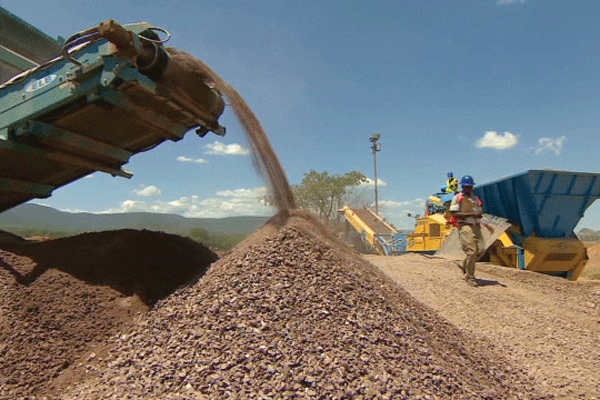
Zimbabwe’s mining sector, a cornerstone of the national economy, has been plagued by reports of unsafe working conditions, environmental degradation, and violent clashes between mining firms and local communities.
ZELO said it had developed a model grievance redress mechanism and register tailored to Zimbabwe’s mining context, which it hopes will guide both government and private sector actors in improving accountability.
The organisation also welcomed a recent statement from the Chinese Embassy in Zimbabwe, which reaffirmed the importance of upholding human rights and lawful conduct by Chinese enterprises operating in the country.
“Such engagement is vital in reinforcing accountability and promoting responsible investment practices. Foreign investment should contribute positively to Zimbabwe’s sustainable development while respecting community rights,” ZELO noted.
ZELO commended the government’s ongoing efforts to strengthen governance in the extractive sector, particularly the progress made on the Mines and Minerals Amendment Bill, which introduces community benefit frameworks, environmental safeguards, and transparency in licensing through a computerized mining cadastre system.
However, the group said the Bill must go further to include clear compensation and grievance-handling provisions.
“This legislation is a cornerstone for building a just and inclusive mining economy,” the statement read. “But it must strengthen the issue of compensation, grievance handling and redress mechanisms.”
ZELO further expressed support for initiatives such as Responsible Mining Audits and enhanced Environmental and Social Impact Assessments (ESIAs) to ensure that companies adhere to both national and international standards.
It also urged the Ministry of Public Service to align the forthcoming Occupational Health and Safety Bill with the Labour Act and the Mines and Minerals Amendment Bill, ensuring consistency across laws that protect workers.
Concluding its statement, ZELO said transparency, inclusivity, and social justice must be at the heart of Zimbabwe’s mining future.
“We continue to advocate for responsible mining practices that empower government entities and communities to advance environmental, economic, social, and cultural rights,” ZELO said. “Corporate accountability and sustainable investment must go hand in hand.
Support CITE’s fearless, independent journalism. Your donation helps us amplify community voices, fight misinformation, and hold power to account. Help keep the truth alive. Donate today
Leave a comment