

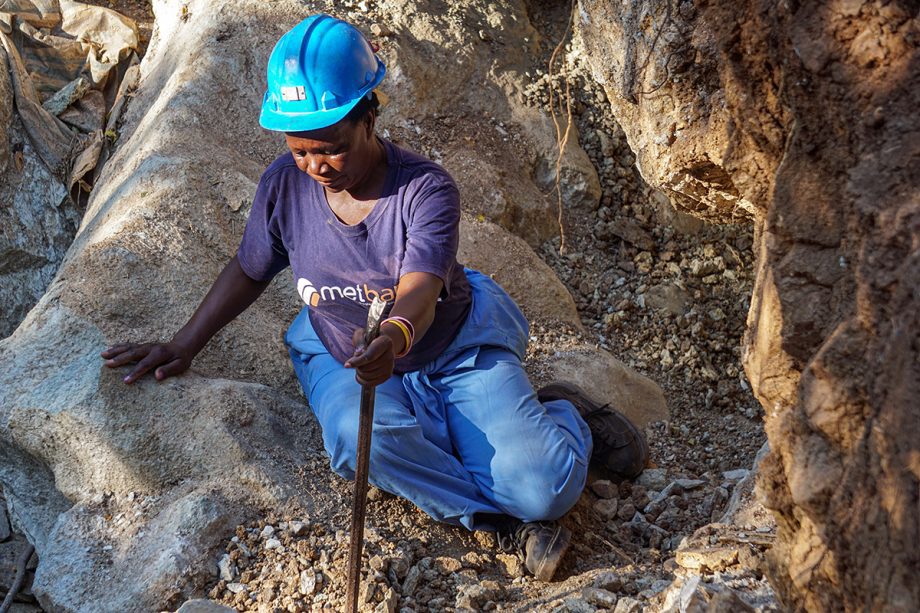
Civil society groups in Zimbabwe have been urged to push for stronger gender equality provisions in reforms to the country’s mining laws, amid concerns that women remain marginalised in the sector despite policy changes.
The call is contained in a Gender Impact Assessment Report released by the Zimbabwe Environmental Law Organisation (ZELO), which examines the effects of lithium mining on women working in both large-scale and artisanal mining operations.
The report, presented to the media last week, focuses on how mining activities affect men and women differently across economic, environmental and social dimensions.
Researchers studied two large-scale lithium projects in Kamativi and Insiza District, where the Kamativi Lithium Mining Company and Zulu Lithium Mining Company operate. It also assessed artisanal and small-scale mining activities in Insiza and Mberengwa District.
ZELO said the findings highlight persistent structural barriers that limit women’s participation in mining, despite proposed reforms to the Mines and Minerals Act.
While the proposed Mines and Minerals Amendment Bill introduces measures such as promoting gender balance on mining boards and recognising artisanal and small-scale miners, the organisation said significant gaps remain.
“Women face bureaucratic barriers in obtaining mining licences and navigating complex regulatory processes,” the report said. “Environmental and Social Impact Assessments are inconsistently applied and rarely integrate gendered perspectives.”
According to ZELO, existing laws governing the mining sector largely use gender-neutral language that fails to address the specific challenges women face.
The organisation said this is particularly problematic in an industry where women often struggle with limited access to financing, technical training and decision-making opportunities.
“For instance, the outdated legislation governing Zimbabwe’s mining sector, particularly the Mines and Minerals Act of 1961, fails to reflect contemporary realities and actively restricts women’s participation,” the report said.
It added that the law does not include specific provisions aimed at promoting women’s participation or protecting their rights within the sector, effectively sidelining their experiences.
ZELO also raised concerns about the Environmental Management Act, saying that while it emphasises environmental assessments and community consultations, it does not incorporate a gender-sensitive approach.
As a result, the report said, it becomes difficult to fully understand how mining activities affect women differently from men, particularly in areas such as land use, access to natural resources and exposure to health risks.
The organisation warned that the continued reliance on gender-neutral language in proposed mining legislation could undermine efforts to achieve meaningful equality.
“The over-reliance on gender-neutral language throughout the Bill poses a substantial risk of overlooking the specific needs and perspectives of women and other marginalised groups,” the report said.
ZELO also expressed concern that the proposed reforms appear to prioritise business interests and large-scale mining operations, while paying less attention to the challenges faced by small-scale miners, particularly women.
It said many artisanal and small-scale mining companies lack policies addressing women’s rights, including measures to prevent sexual exploitation and ensure fair hiring practices.
The report further highlights gaps within mining companies themselves. While larger firms often have internal policies, ZELO said these are not always sufficiently gender-responsive.
“This means that despite frameworks aimed at promoting gender equality, they fail to effectively address issues such as workplace safety, harassment prevention and support for female employees,” the report said.
Women who participated in focus group discussions said the processes for obtaining mining permits, environmental clearances and licences were complex and difficult to navigate.
Many also reported limited access to information and training on mining regulations, which reduces their confidence to participate in formal mining activities.
The report warns that without targeted support, women may continue operating informally or withdraw from the sector altogether.
ZELO said simplifying permit procedures, providing clear guidelines and introducing training programmes for women could improve participation in the mining industry.
It also highlighted shortcomings in the Environmental Impact Assessment consultation process, which is meant to involve affected communities.
“In practice, these consultations often fall short, particularly in ensuring the participation of women and marginalised groups,” the report said.
Women who took part in the discussions said consultations are often dominated by men or community leaders who may not represent the interests of the broader community.
The report says this exclusion risks reinforcing existing gender inequalities and could lead to decisions that overlook the needs and rights of women in mining communities.
Support CITE’s fearless, independent journalism. Your donation helps us amplify community voices, fight misinformation, and hold power to account. Help keep the truth alive. Donate today