

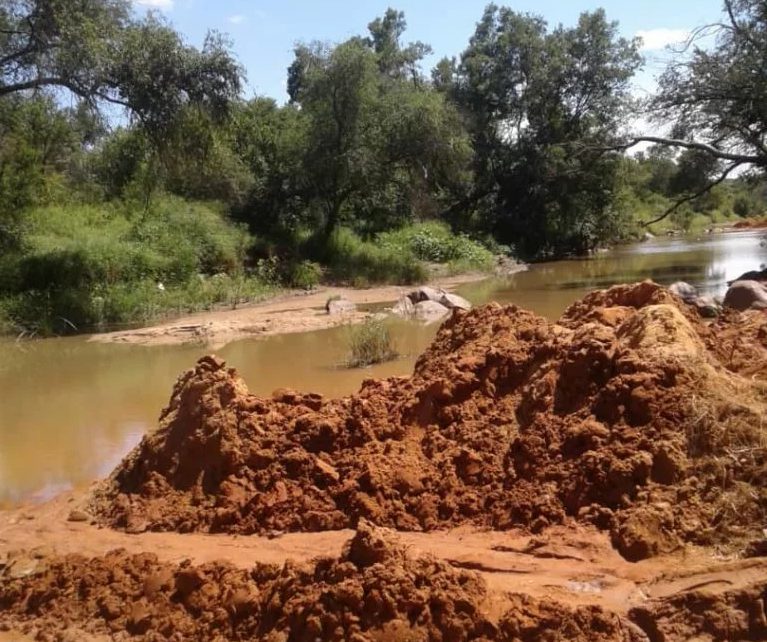
Environmental activists have warned that Zimbabwe is facing an escalating environmental and public health crisis driven by unregulated mining, with some describing the situation as an “environmental Armageddon” that now poses a national security threat.
The concerns were raised during This Morning on Asakhe, a programme that examined the depth of Zimbabwe’s environmental crisis.
Speaking on the scale of environmental degradation, the Executive Director of the Centre for Natural Resource Governance (CNRG), Farai Maguwu, said the country’s mining boom had reached crisis levels, fuelled by economic collapse and the loss of formal employment.
“It has reached a crisis level. When you look at what is happening in Zimbabwe today regarding mining, it is like we have discovered minerals for the first time — everybody is getting into mining,” Maguwu said.
“There are push factors where the economy has failed to take off, factories and industries have closed, and many people have lost formal employment. There is now a consensus that the only place where you can get rich quickly is mining.”
Maguwu warned that governance in the mining sector had significantly weakened, allowing mining activities to spread into ecologically sensitive and protected areas.
“We have seen the weakening of governance to the extent that ecologically sensitive areas are no longer spared. Mountains are disappearing, and rivers are being destroyed, even though there is a policy banning mining in rivers, it is simply not being respected,” he said.
He cited mining activities at UNESCO heritage sites and protected areas such as Mavuradona Wilderness, as well as destruction in areas including Shurugwi and Poterekwa Mountain.
“What is even more worrying is that those who should be enforcing the law are now part of the syndicates destroying the environment,” Maguwu said.
He added that in areas such as Penhalonga in Mutare, some police officers, soldiers, senior government officials and Central Intelligence Organisation (CIO) operatives were allegedly involved in mining activities.
“This has gone beyond being an environmental crisis, it has become a national security threat,” he said.
Maguwu further warned that mining was taking place beneath roads and residential areas, increasing the risk of disasters.
“They are digging massive holes in mountains, creating underground dams. When these collapse, they will cause flash floods, and people will be washed away,” he said.
He expressed concern over what he described as the government’s apparent lack of urgency in addressing destructive mining.
“The level of environmental destruction taking place in Zimbabwe should be alarming to the government if it is concerned about the people and the future of this country,” Maguwu said.
Maguwu also noted that the shift from underground mining to open-cast mining had accelerated environmental damage.
“Before 2000, mining in Zimbabwe was largely underground and did not disturb the surface as much. Today, forests are being cleared over one, two or even three kilometres. Agricultural land is being turned into mining land, undermining food sovereignty,” he said.
He warned about the uncontrolled use and disposal of toxic substances such as mercury and cyanide, particularly during the rainy season.
“There are no punitive measures to prevent irresponsible disposal of these substances. Mercury and cyanide are being dumped indiscriminately,” Maguwu said.
He explained that gold processing methods such as heap leaching were worsening contamination.
“When the rains fall, these chemicals are washed into rivers, streams and dams,” he said.
Maguwu expressed particular concern for rural communities that rely on untreated water from shallow wells, especially in areas such as Marange and Matabeleland North.
“The majority of Zimbabweans live in rural areas where people drink water from shallow wells. All that water is contaminated,” he said.
“What comes from irresponsible mining is something we cannot fully comprehend at this stage, but many Zimbabweans are dying, and will die prematurely, because of this. That is why I call it environmental Armageddon. No one is safe.”
Echoing similar concerns, the Executive Director of the Centre for Environmental and Corporate Accountability Research (CECAR), Nkosikhona Sibanda, said the crisis was widespread, with Matabeleland North experiencing a surge in mining activities, particularly by Chinese-owned companies.
“The crisis is similar across the country. In Matabeleland North, we have seen an influx of Chinese mining companies in areas such as Hwange, Kamativi in Binga, and other parts of the province,” Sibanda said.
“When you hear about foreign investment, you expect development, but for communities in these areas it has been the opposite. Mining has come with severe environmental degradation.”
Sibanda said studies conducted between 2024 and 2025 revealed alarming levels of air pollution in Hwange.
“The outcomes were shocking. The air residents are breathing is far beyond safe levels. People are essentially walking corpses because they are inhaling toxic gases,” he said.
He added that health facilities had reported a sharp increase in respiratory and chronic diseases.
“This shows that it is not only the environment that is being damaged, people’s lives are at risk as well,” Sibanda said.
Support CITE’s fearless, independent journalism. Your donation helps us amplify community voices, fight misinformation, and hold power to account. Help keep the truth alive. Donate today
Leave a comment