

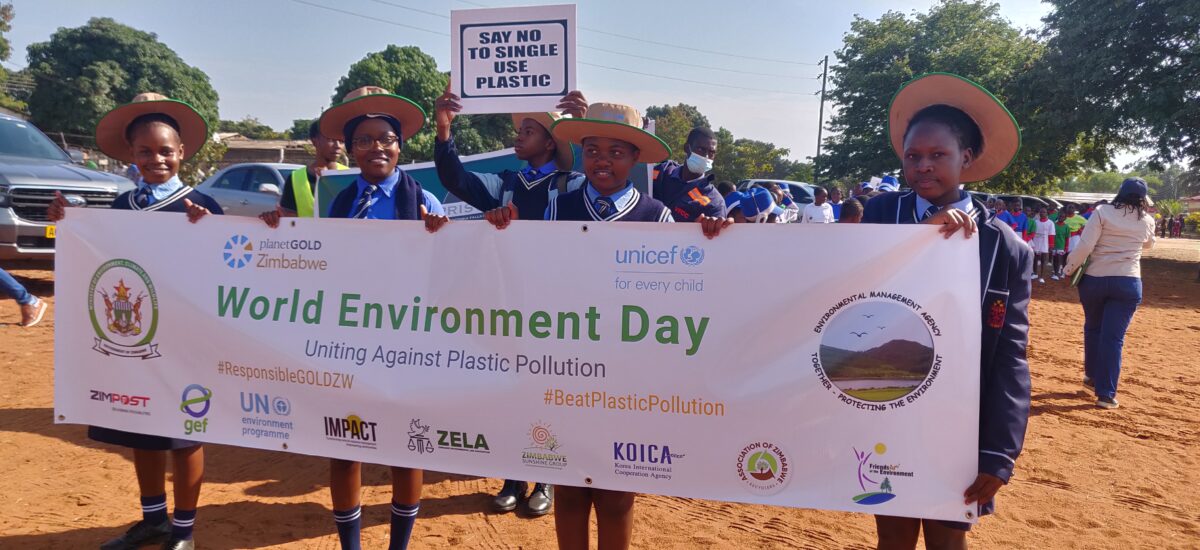
UNICEF has urged greater involvement of young people in climate and environmental action, warning that children are among the most vulnerable to the health risks posed by plastic pollution and environmental degradation.
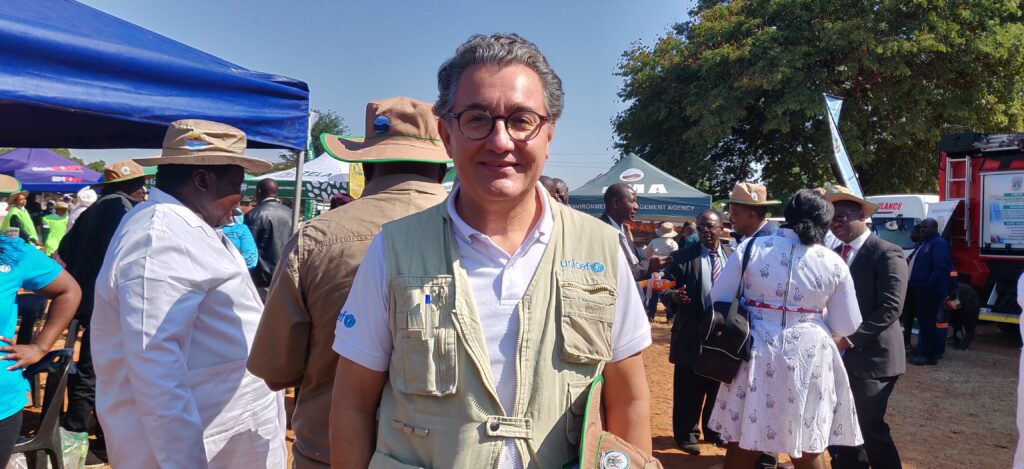
Speaking at World Environment Day commemorations held Thursday at Chamabondo Primary School near Victoria Falls, UNICEF’s Chief of WASH, Carlos Vasquez, said youth-led innovations are essential in addressing Zimbabwe’s growing plastic waste crisis and restoring critical ecosystems such as wetlands.
“Children are more vulnerable to toxins found in plastics because their bodies, including their gut, immune system, and brain, are still developing,” Vasquez said, reading a message on behalf of UNICEF Representative Etona Ekole. “Research links plastic exposure to developmental problems such as reduced IQ and memory impairment in children.”
Zimbabwe produces more than 300,000 tonnes of plastic waste annually, much of which ends up littering streets, playgrounds, and open spaces, areas where children live and play. According to the Environmental Management Agency (EMA), the resulting pollution clogs sewers and contaminates the environment, threatening water security and food safety.
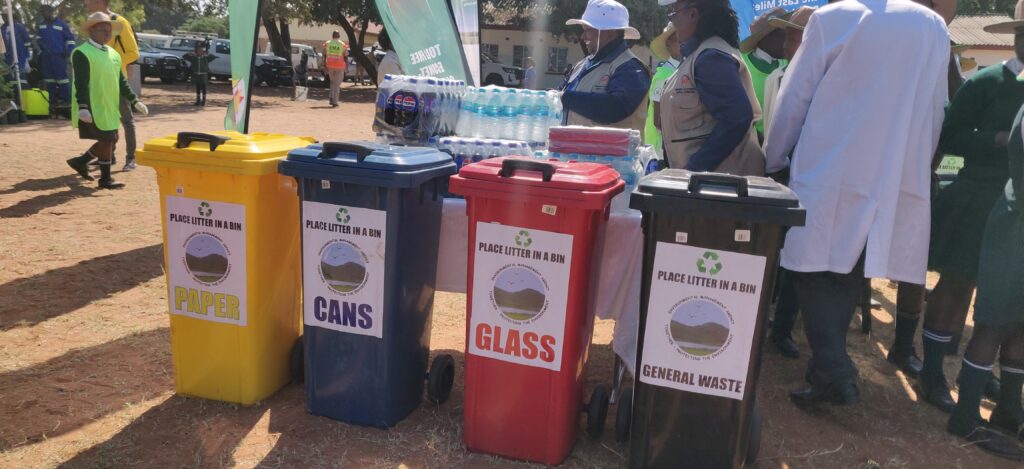
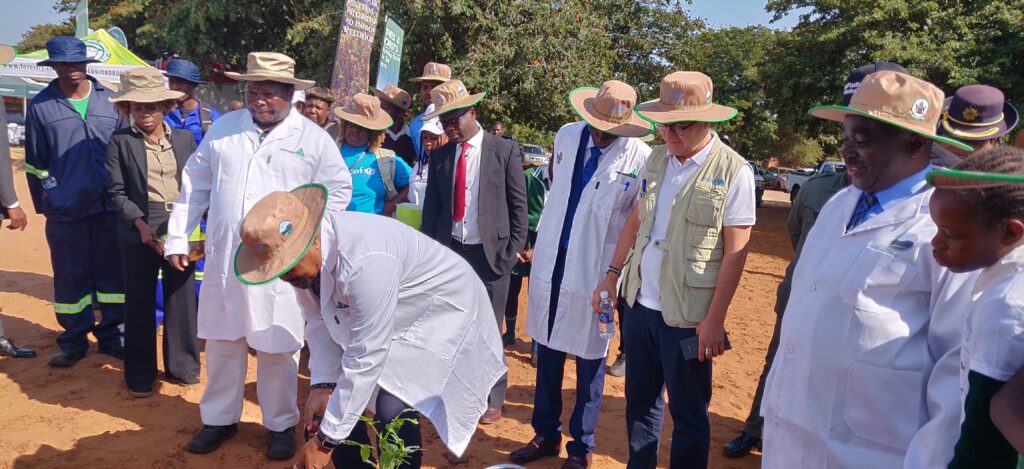
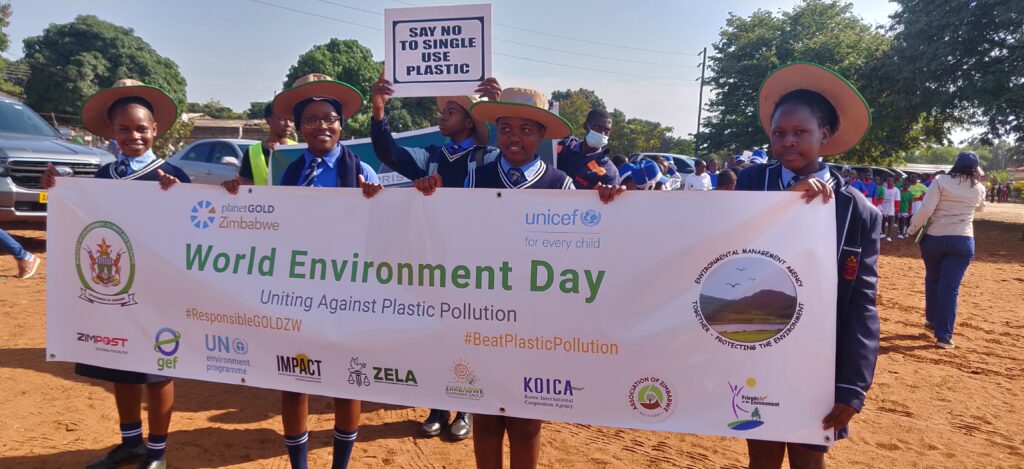
This year’s World Environment Day theme,“Uniting Against Plastic Pollution: Protecting Wetlands for Future Generations” aligns with Zimbabwe’s preparations to host the 15th Conference of the Parties (COP15) to the Ramsar Convention on Wetlands in July 2025.
Vasquez said initiatives such as UNICEF’s Clean Green Zimbabwe programme are examples of how communities can be empowered to restore degraded land and build climate-resilient services, especially for young people.
“There is a duty to involve youth in defining solutions that secure a green and healthy future,” he said. “Their ideas and innovations are key to addressing land restoration and climate action.”
Edward Samuriwo, Director of Environment and Natural Resources in the Ministry of Environment, Climate and Wildlife, also stressed the importance of youth engagement as Zimbabwe prepares to showcase its conservation efforts at COP15.
“Our wetlands are biodiversity hotspots vital for water security, tourism, and livelihoods,” Samuriwo said. “We must empower youth as environmental stewards and ensure communities lead the fight against plastic waste.”
He called on individuals to reduce single-use plastic consumption and for industry to redesign packaging and invest in sustainable materials.
“Simple actions, properly disposing of waste, participating in clean-up campaigns, and advocating for policy change, can make a profound impact,” he said.
The event was organised by EMA in collaboration with the ministry, with funding from the Korea International Cooperation Agency (KOICA) and implementation support from UNICEF, the Zimbabwe Environmental Law Society (ZELA), and the Recyclers Association.
At CITE, we dig deep to preserve the stories that shaped us—ZPRA Liberation Archives, the DRC War, and more. These are not just stories—they’re our roots. We don’t hide them behind paywalls. We rely on you to keep them alive. Click here to donate: https://cite.org.zw/support-local-news/