

By Mandlenkosi Mpofu
The attempt to forge the Zimbabwe People’s Army (ZIPA) in the mid-1970s, ostensibly to forge a formidable liberation force combining the Zimbabwe African People’s Union’s (ZAPU) ZPRA and the Zimbabwe African National Union’s (ZANU) ZANLA stands out not as a heroic unification of Zimbabwe’s freedom fighters but as a deeply flawed and tragic episode marked by factional domination, humiliation, and outright abuse of ZPRA cadres.
From the outset, ZIPA was doomed by inevitable internal power politics emanating from mistrust between the two organisations, which had intensified since the formation of ZANU by a break-way group led by Ndabaningi Sithole in 1963.
ZIPA was designed under the guidance of the Organisation of African Unity (OAU), which was desperate to re-establish a united resistance against the Rhodesian Front, to restore the unity that existed prior to 1963. The main goal was therefore to end internecine divisions and strengthen the liberation war. Collaboration between ZPRA and ZANLA was also ideal as it could lead to more effective operations and reduce potential clashes that could undermine the two movements’ work.
However, the united army became an instrument of marginalisation and brutality against ZPRA fighters. Rather than mutual respect or combined strategy, ZPRA fighters encountered systematic intimidation, neglect, and deliberate humiliation at the hands of ZANLA commanders who dominated the ZIPA command structure.
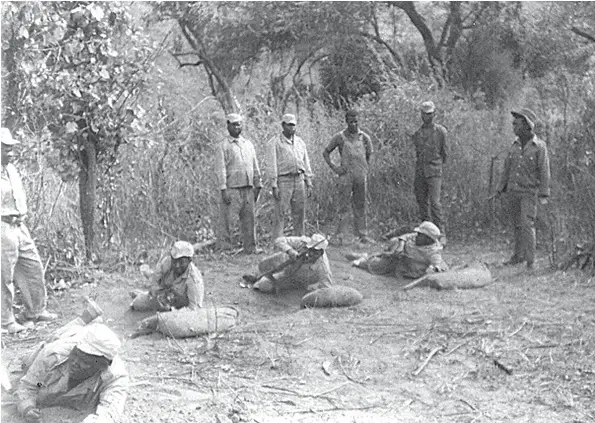
ZPRA cadres arriving in training camps, located mainly in Mozambique under the supervision of FRELIMO, were met not with solidarity but with degrading treatment: verbal denigration, coercive chants against ZAPU leadership, forced compliance with political rituals, and even cruel disciplinary practices such as public flogging and degrading confinement. Food was withheld or arbitrarily rationed. Cadres were denied basic dignity and rights and were often thrown into the front without weapons, away from their own ZPRA comrades, often without the knowledge of their commanders.
The consequences were stark. Many ZPRA fighters disappeared, were incarcerated in Mozambican or Botswana prisons, or were subjected to torture and even outrightly executed. Others were abandoned in remote border outposts with no support or coordination, left to face the elements and enemy forces alone, as ZPRA also took too long to get a grip on the situation.
In one of his articles on what he called the disastrous ZIPA experiment, retired former ZPRA commander, Rtd Colonel Irvine Sibhona (nom de guerre Barbetone Muzwambira), recalls how ZANLA commanders intentionally separated ZPRA fighters from their own commandand thrust them to the front without back-up. One of these cases led to the death of a senior ZPRA commander, Njenjema, after his unit fled upon contact with Rhodesian forces, leaving him exposed. This case is also a vivid illustration of the incoherence of ZIPA’s command structure, and the grim for ZPRA combatants.
ZIPA’s institutionalised marginalisation of ZPRA fighters was not incidental but a reflection of more profound political and ethnic tensions within the liberation movement, which dated back to the 1963 split. ZPRA’s units within ZIPA were composed of disciplined, experienced soldiers, many of whom had trained rigorously under international instructors. Despite their experience against Rhodesian security forces, these cadres were treated as lesser or even enemy elements within ZIPA. They were further subjected to intimidation, contempt, and humiliation, as if to break their spirits.
ZPRA fighters paid a terrible price for what was marketed as an inclusive liberation front. Thet faced humiliation, starvation, torture, imprisonment, and even death, while leaders held up the experiment as a show of unity.
More importantly however, the failure of ZIPA did not just underscore how factionalism and power struggles punctured the liberation struggle. It gave highlights of what was to happenedbut post-independence Zimbabwe, where ex-ZPRA fighters became even more marginalised and in some cases were hunted down like enemies.