

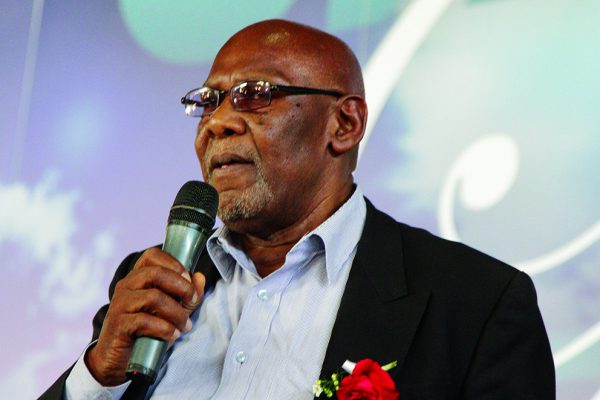
By Irvine Sibhona aka Barbetone Muzwambira
In every war, intelligence plays a crucial role in ensuring the success of planned operations and securing victory in the battles that follow. From the very beginning of the struggle for independence, one ZAPU’s first priorities was training intelligence operatives.
This is how figures like Dumiso Dabengwa, Ethan Dube, Lookout Masuku and others became liberation war folk heroes. These operatives were responsible for gathering and providing vital intelligence to the military, enabling strategic planning and the effective pursuit of the ultimate goal – winning independence.
ZAPU’s military wing was established in 1964 under the name Special Affairs. It was renamed Zimbabwe People’s Revolutionary Army or ZPRA in 1971, when the party implemented a major transformation of its military and intelligence units, following a spate of events that threatened to derail the liberation movement.
In the 1960s, as the war gathered pace and ZAPU tried to formalise the structures of the guerrilla movement, military intelligence was mainly concerned with gathering information about the Rhodesia Security forces’ modus operandi. However, unbeknown to ZAPU at least at the time, the Rhodesian Security infrastructure was similarly engaged in gathering intelligence on ZAPU and its military wing’s plans.
From the time of reorganisation of the force in 1971 and the formation of ZPRA as a new military wing of the party, the Rhodesian Special Branch embarked on a serious campaign of creating a network of spies to keep up with developments. These efforts received a boost in the early 1970s, when ZAPU experienced a series of crises. In October 1971, internal fissures that had been building up within the movement culminated in the formation of the breakaway FROLIZI party by James Chikerema and other rebels. During the same period, the then Zambian Minister of Home Affairs, Aaron Milner, deported over 100 ZAPU recruits back to Southern Rhodesia .
These developments created further opportunities for intelligence infiltration by Rhodesian special forces. By the time ZPRA realised, a sizeable number among the deported recruits who managed to return to the camps were actually doing so with assistance from the Rhodesian Special Forces, who had recruited them into their ranks as spies. On the other hand, the short-lived FROLIZI had a debilitating impact on ZAPU’s military wing, with some detachments losing significant numbers within their ranks. Some of these disgruntled members were similarly recruited by the enemy after the dissipation of FROLIZI.
It was partly because of these major crises that ZAPU decided on a major revamping of the Special Affairs Unit, which led to the formation of ZPRA in 1971.
The transformation of the military wing also necessitated the reorganisation of the party, with Intelligence being at the forefront to spearhead the operations. Initially, two intelligence units were formed, for the party and for the military. The party intelligence wing was head by Ethan Dube. It had a more national focus, with an eye for information of national strategic importance, in order to assist the party in its planning. On the other hand, military intelligence, which was headed by Gordon Munyanyi (a.k.a. ‘Terror’) was designed meant to support ZPRA military strategies and operations.
Strengthening the intelligence unit
The need to strengthen the party’s intelligence unit grew stronger as the war intensified and it became important to intensify counter-intelligence operations. In 1971 , ZAPU established the Zimbabwe Intelligence Service (ZIS) headed by Ethan Dube. The Military Intelligence (MI) was headed by Gordon Munyanyi.
In 1974, Ethan Dube was captured by the Selous Scouts during an operational visit to Botswana. He was taken to Rhodesia where he was killed after presumably being tortured; his position as head of party intelligence meant that he was a valuable asset, whose capture was a real coup for the Rhodesian forces. In response, the intelligence unit was renamed Public Relations office ( PRO ) , as part of a major revamp in order to minimise the damage of the circumstances of Dube’s tragic assassination.
After Nikita Mangena’s tragic death in 1978, PRO was renamed National security order ( NSO) and the military intelligence was put under the control of the NSO, headed by Dumiso Dabengwa.
Strategic planning
1974, like 1971, has to go down in history as a watershed year for ZPRA’s military intelligence (not least because it is the year that Ethan Dube was captured and killed, with major effects on the party’s intelligence structures and operations). In response to Dube’s tragic passing and to the intensification of the war, the military intelligence also started planning to get more information about the enemy. Foremost in this effort was to acquire intelligence that would advance ZPRA’s strategic operations.
In line with this strategic vision, ZPRA’s intelligence training extended into the cities. For the duration of the war until this time, military intelligence in particular had not seriously incorporated urban areas. Following this decision, many comrades were trained to operate within the cities to collect vital information that would benefit the ZPRA intelligence for purposes of operations especially in relation to urban warfare. First among this group of elite cadres was Kembo Mohadi, the current Vice-President, together with Sekuru Mandu, and Moyana Ndebele. These comrades had been trained in the Soviet Union. They were immediately assigned intelligence tasks in major urban centres, in particular Salisbury and Bulawayo (although Moyana was to remain in Lusaka; he was later assigned to Mozambique following that country’s independence, where he became one of ZAPU’s representatives in the structures of ZIPA, about which we will write another day).
These are the developments that triggered the urban operations that ensued in 1975. The two cadres who were initially deployed, Kembo Mohadi and Sekuru Mandu, became central to the operations that followed although the former was unfortunately captured. He was to remain in jail until independence in 1980 and the rest, as they say, is history.
Sekuru Mandu remained Salisbury, where he did some sterling work albeit behind the shadows, until his redeployment to Mozambique in 1976. Mandu’s time in Salisbury was also opportune; there was much political upheaval triggered by the Rhodesian Front’s decision to release political prisoners, which made enabled him to hide within the chaos. Sekuru Mandu collected a lot of information that became useful beyond 1976. ZPRA also received established many useful contacts who helped with intelligence about the Salisbury city and its environs. When ZIPA was formed, it was decided that Sekuru Mandu had rode his luck, it was time to move him on. With the capture of Mohadi in mind and increasing insecurity in the cities, he was redeployed to Maputo. Sekuru Mandu later moved on to Zambia and, among others, he is credited with paving the way for ZPRA urban operations particularlyin Salisbury. In the next instalment, we explore ZPRA intelligence exploits in urban centres.
with Sekuru Mandu, and Moyana Ndebele. These comrades had been trained in the Soviet Union. They were immediately assigned intelligence tasks in major urban centres, in particular Salisbury and Bulawayo (although Moyana was to remain in Lusaka; he was later assigned to Mozambique following that country’s independence, where he became one of ZAPU’s representatives in the structures of ZIPA, about which we will write another day).
These are the developments that triggered the urban operations that ensued in 1975. The two cadres who were initially deployed, Kembo Mohadi and Sekuru Mandu, became central to the operations that followed although the former was unfortunately captured. He was to remain in jail until independence in 1980 and the rest, as they say, is history.
Sekuru Mandu remained Salisbury, where he did some sterling work albeit behind the shadows, until his redeployment to Mozambique in 1976. Mandu’s time in Salisbury was also opportune; there was much political upheaval triggered by the Rhodesian Front’s decision to release political prisoners, which made enabled him to hide within the chaos. Sekuru Mandu collected a lot of information that became useful beyond 1976. ZPRA also received established many useful contacts who helped with intelligence about the Salisbury city and its environs. When ZIPA was formed, it was decided that Sekuru Mandu had rode his luck, it was time to move him on. With the capture of Mohadi in mind and increasing insecurity in the cities, he was redeployed to Maputo. Sekuru Mandu later moved on to Zambia and, among others, he is credited with paving the way for ZPRA urban operations particularly in Salisbury. In the next instalment, we explore ZPRA intelligence exploits in urban centres.
At CITE, we dig deep to preserve the stories that shaped us—ZPRA Liberation Archives, the DRC War, and more. These are not just stories—they’re our roots. We don’t hide them behind paywalls. We rely on you to keep them alive. Click here to donate: https://cite.org.zw/support-local-news/