

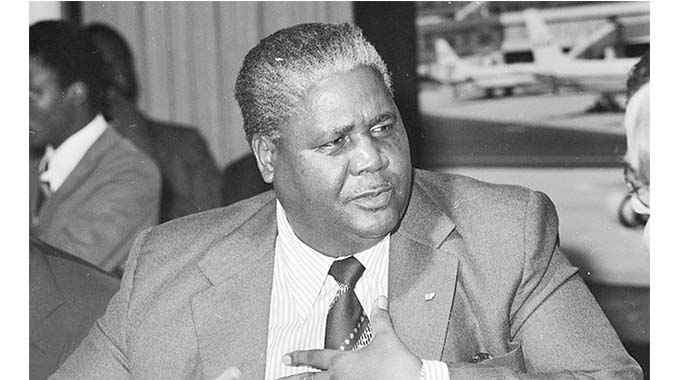
A good name is better than precious ointment, and the day of death than the day of birth ( Ecclesiastes 7:1). This seems to be the case with the Late former Vice President of Zimbabwe, Dr Mqabuko Nyongolo Nkomo, who died twenty-six years ago on July 1, 1999.
The weight of that loss continues to resonate across Zimbabwe. The man affectionately known as “Father Zimbabwe, Chibwechitedza, Umdala wethu” left behind a legacy that transcends political boundaries.
The title, “Father Zimbabwe” is neither casual nor informal; it denotes the belief that he guided the nation’s birth and forged national unity. Indeed, one chronicler notes that in life, Nkomo was a larger-than-life figure and “gentle giant” who put country over region.
Nkomo’s death marked the end of an era, but his vision for a united Zimbabwe endures. It demands recognition that July 1 should be formally declared a national holiday.
Nkomo’s founding role in Zimbabwe’s liberation struggle cannot be overstated. He established the Southern Rhodesia African National Congress in 1957, marking the birth of organised black nationalist resistance . When colonial authorities banned this movement in 1959, Nkomo founded the National Democratic Party in 1960. The pattern repeated itself with relentless determination – each ban was met with renewed organisation. In 1961, he established the Zimbabwe African People’s Union (ZAPU), which became the vehicle for armed resistance through its military wing, the Zimbabwe People’s Revolutionary Army (ZIPRA). More than anyone else, Nkomo was the father of the Zimbabwe liberation movement, an accolade that remains unmatched to this day.
The colonial regime recognised the threat Nkomo posed to white supremacy. They detained him for ten years from 1964 to 1974, removing him from active politics during crucial years of the liberation struggle. Yet even from detention, Nkomo’s influence persisted. His anti-tribalist approach to liberation earned him respect across the ethnic divide. Nkomo synthesised Kalanga, Venda, Tonga, Ndebele and Shona identities into national consciousness. This synthesis explains the apt title “Father Zimbabwe” – not merely as a political designation, but as recognition of his role in forging a unified national identity.
The true measure of Nkomo’s statesmanship emerged during Zimbabwe’s darkest post-independence period. The Gukurahundi massacres between 1983 and 1987 in Matabeleland and the Midlands. Nkomo, dismissed from government and placed under house arrest in 1982, fled to Botswana for safety. When the unity talks began in 1986, he demonstrated remarkable magnanimity. On December 22, 1987, Nkomo signed the Unity Accord with Robert Mugabe, effectively merging ZAPU with ZANU-PF. The Unity Accord represents Nkomo’s greatest contribution to national reconciliation. He sacrificed his political party and personal ambitions for the greater good of Zimbabwe. Critics within ZAPU saw this as capitulation, but Nkomo understood that peace required compromise. His decision to sign the accord demonstrated the same pragmatic leadership that characterised his approach throughout the liberation struggle..
The declaration of July 1 as a National holiday would complete the narrative of Nkomo’s contribution to peace and unity.
Comparative analysis reveals the precedent for such recognition across Africa. South Africa observes Nelson Mandela International Day on July 18, though it functions as a day of service rather than a formal public holiday. Tanzania honours Julius Nyerere with a national holiday on October 14, the anniversary of his death. Ghana celebrates Kwame Nkrumah’s birthday on September 21 as Founder’s Day. These commemorations recognise founding fathers who shaped their nations’ independence and post-colonial development. Nkomo never became the president of Zimbabwe, but there is no doubt that he was a founding father of Zimbabwe and championed the independence of Africa.
Zimbabwe’s current calendar of national holidays includes Independence Day on April 18, Heroes’ Day in August, and Unity Day on December 22. The absence of a specific day honouring Nkomo creates an imbalance in historical recognition. While Heroes’ Day commemorates all liberation war heroes collectively, no individual in Zimbabwe has the honour that Mandela, Nyerere, and Nkrumah enjoy in their respective countries. This gap is particularly glaring given Nkomo’s role as a continental figure who influenced liberation movements beyond Zimbabwe’s borders.
Public sentiment supports the declaration of July 1 as a national holiday. ZPRA veterans have repeatedly called for this recognition, arguing that Nkomo’s contribution to liberation cannot be disputed. The recent ZANU-PF National People’s Conference in October 2024 formally resolved that “July 1 of each year be declared a public holiday in honour of Father Zimbabwe.
Party Secretary for Legal Affairs Patrick Chinamasa announced this resolution to widespread acclaim, particularly in Bulawayo where residents have long advocated for such recognition.
Academic literature consistently emphasises Nkomo’s role in nation-building and post-independence politics. Scholarly assessments describe him as a “great synthesiser” who balanced competing ethnic and regional identities. His ability to transcend tribal boundaries while mobilising African traditional resources for nationalist purposes distinguished him from other leaders.
Nkomo’s approach to nationalism was inclusive, drawing from diverse cultural traditions to create a unified vision of Zimbabwe. The timing of such recognition carries symbolic weight. July 1, 2025, marks 26 years since Nkomo’s death – a full generation has passed without formal national recognition of his passing. Contemporary Zimbabwe faces similar challenges Nkomo facedin his lifetime.
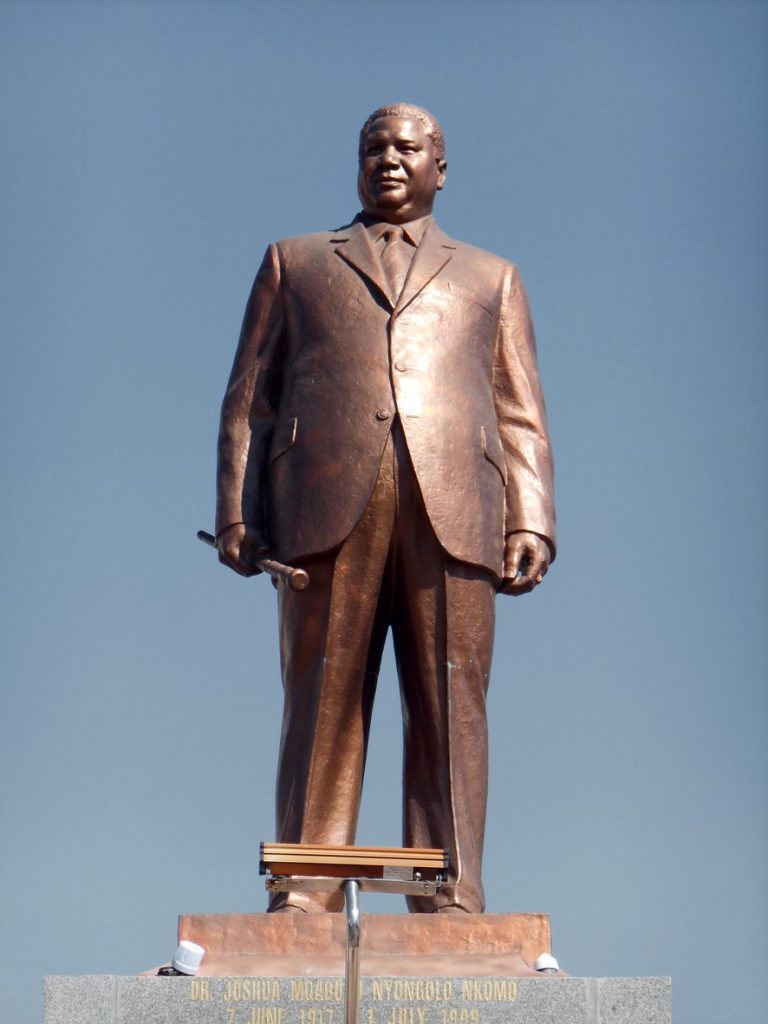
The economic argument for declaring July 1 a national holiday deserves consideration. Tourism to sites associated with Nkomo, including his statue on Joshua Mqabuko Nkomo Street in Bulawayo and the planned Nyongolo Village at his homestead in Kezi, could benefit from official recognition. The Bulawayo International Airport, renamed in his honour, already serves as a gateway for visitors interested in the liberation history of Zimbabwe and Africa. A national holiday would create additional opportunities for heritage tourism and cultural education.
Nkomo’s international stature justifies national recognition. His friendship with Nelson Mandela, forged during their studies in South Africa, linked him to continental liberation movements. His participation in the Lancaster House negotiations helped secure Zimbabwe’s independence while his approach to nationalism influenced liberation leaders across Africa. This continental significance positions Zimbabwe’s recognition of Nkomo within a broader African context of honouring founding fathers.
The practical implementation of July 1 as a national holiday requires parliamentary approval and presidential proclamation. The ZANU-PF resolution provides political momentum for this process.
Critics might argue that Zimbabwe already has sufficient public holidays or that Nkomo’s legacy is adequately preserved through existing monuments and institutions. However, formal recognition through a national holiday elevates commemoration beyond local or sectional interests. Joshua was a nationalist and the July holiday will be promoting the values he embodied: unity, reconciliation, and inclusive nationalism.
The declaration of July 1 as a national holiday would complete the recognition Nkomo deserves. Zimbabwe has the opportunity to join South Africa, Tanzania, and Ghana in formally recognising its founding fathers. July 1 should become a day when all Zimbabweans reflect on Nkomo’s legacy and recommit to his vision of unity, peace, and progress. The Father of Zimbabwe deserves no less than national recognition for his enduring contribution to the liberation and unity of his beloved country.
At CITE, we dig deep to preserve the stories that shaped us—ZPRA Liberation Archives, the DRC War, and more. These are not just stories—they’re our roots. We don’t hide them behind paywalls. We rely on you to keep them alive. Click here to donate: https://cite.org.zw/support-local-news/