

By Benny Moyo
Songs form an integral part of human existence, shaping our daily experiences and giving voice to our joys, sorrows, hopes, and dreams.
Throughout history, music has served not merely as entertainment but as a powerful catalyst for unity, resistance, and revolution. In Zimbabwe, particularly during the liberation struggle, songs became the lifeblood of resilience, echoing the cries for justice and freedom.
After the devastating Anglo-Ndebele War of 1893, the Ndebele people mourned their fate through poignant songs, capturing collective grief: “Sawela uTshangane saguqa ngamadolo, inkosi uLobhengula yasinyamalala” (We crossed the Tshangane River and fell on our knees as King Lobhengula disappeared). This song symbolized not just loss but also the enduring spirit of a people determined to keep their history and hopes alive through melody.
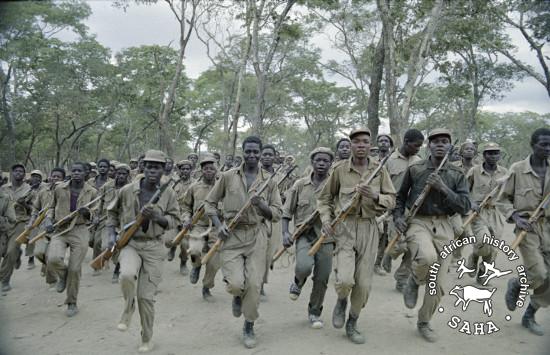
Within ZPRA training camps during the liberation war, music transcended cultural expression and became a powerful tool for motivation and morale. Central to this was the toyi-toyi, a revolutionary dance song developed by ZIPRA guerrillas. Ncube vividly describes its essence as a potent mix of dance, song, and fitness exercise that stirred deep emotions. The toyi-toyi became more than entertainment—it was a psychological weapon that instilled fear in the enemy while galvanizing fighters with courage, unity, and determination for victory. As Ncube notes, it was “a revolutionary warriors’ dance song of bravery and courage, a song of no surrender.”
Another profoundly influential song was Nkosi Sikelel’ iAfrika, composed by South African Enos Santonga and later embraced by ZAPU through nationalists who had worked in South Africa. Its widespread adoption at ZAPU rallies—even after the party was banned—symbolized the movement’s unity and resilience. Nkosi Sikelel’ iAfrika was so powerful that liberation movements across southern Africa embraced it as their anthem, with several later adopting it as their official national anthem upon gaining independence.
ZPRA songs were not just local—they carried a powerful international dimension of solidarity. Songs celebrating international revolutionary figures resonated deeply among guerrillas, capturing the global spirit of resistance: “Sikhomande Nkomo, Sikhomande use Cuba, Sikhomande use Russia, Sikhomande use Lusaka, Indizamtshina zawa” (Lead us, Nkomo, lead us from Cuba, lead us from Russia, lead us from Lusaka, until [the enemy’s] jets fall).
This powerful song about ZAPU president Joshua Nkomo underscored his effective and commanding leadership. Nkomo was such an imposing figure that his influence transcended borders—whether in Rhodesian villages or ZPRA camps in Zambia and Angola, his leadership was felt.
References to global revolutionaries like Fidel Castro and Ben Bella further reinforced the interconnected nature of anti-colonial struggles worldwide:
“Lesi sibhamu sala bafana, sesingikhumbuza uBrezhnev… sesingikhumbuza uBen Bella… sesingikhumbuza uFidel Castro” (This boys’ firearm reminds me of [then Soviet Union president] Leonid Brezhnev… reminds me of [Algerian revolutionary leader] Ahmed Ben Bella… reminds me of Fidel Castro).
ZPRA’s musical responses were also profoundly shaped by the political climate of the time, transforming songs into both communication tools and political commentary. For example, the infamous Smith-Muzorewa agreement of March 1978 triggered defiant songs that highlighted guerrilla identity and resistance to betrayal:“Mwana wani gandanga Muzorewa?” (Whose child is this thug, [Bishop Abel] Muzorewa?)
As the struggle intensified, especially after the failure of the Geneva Conference, songs echoed an increasingly militant stance: “Sizolithatha nge AK, ngoba inkulumo zehlula eGeneva” (We will liberate it with the AK rifle, the Geneva talks have failed).
Reflecting the ANC-ZAPU alliance, songs also celebrated the collaboration and collective sacrifice of liberation forces: “Thina lo Mkhonto, silobudlelwano obukhulu, eSipolilo kwasala amadoda” (ZPRA and Mkhonto are comrades; gallant men fell and shed blood in Sipolilo).
These songs were more than rhythmic chants; they were powerful statements of intent, sources of comfort in moments of despair, and catalysts for collective action. ZPRA guerrillas were also keenly aware of infiltration risks, captured in the cautionary lyric: “Abanye bakhonapha, zintatheli indaba” (Among us, there are some informers).
Ultimately, ZAPU/ZPRA songs encapsulated every aspect of the liberation struggle: sacrifice, resilience, unity, betrayal, and, ultimately, victory. They underscored the significance of music not merely as cultural expression but as an indomitable spirit driving a nation toward freedom. The legacy of these songs endures, reminding us that through melody and rhythm, the revolutionary heart beats loudest.
Benny Moyo is an educationist by training. Human rights activist. Revolutionary poet, academic, and writer. Research interests in ZAPU/ZPRA history and activities.
Although the article reflects events from our past during the liberation struggle, it also mirrors the current realities of modern-day Zimbabwe. The songs deeply resonate with the contemporary Zimbabwean experience. Thank you for your tireless efforts in preserving our history and educating the younger generation. May we, too, find the same courage to confront and challenge the present-day regime.