

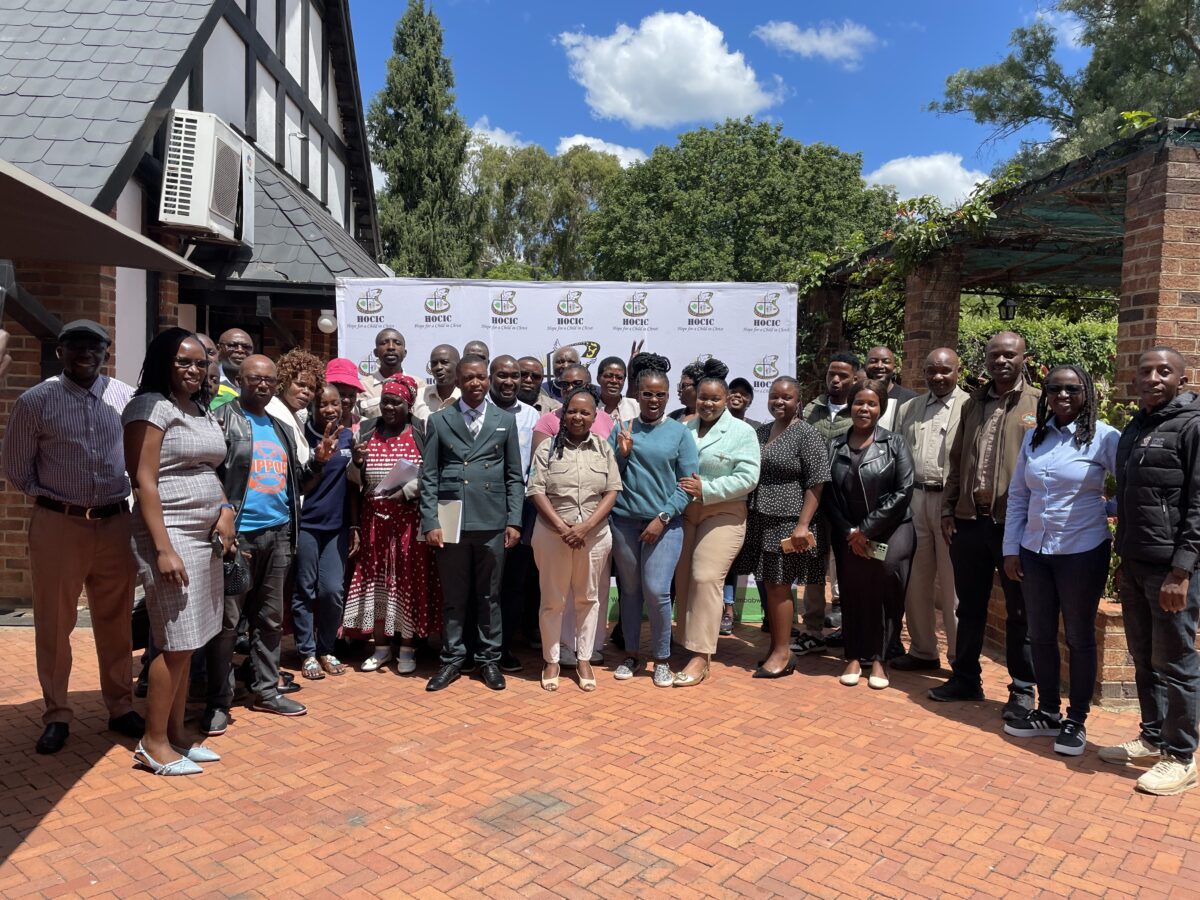
Farmers from Bulilima, Mberengwa, Buhera and Gutu are set to have improved access to local markets for their products, following the inception of Simbiso project, a program focusing on climate resilience through market systems.
Hope for a Child in Christ (HOCIC), hosted the inception meeting at a local hotel in Bulawayo on Friday, which was attended by farmers, private-sector actors, government representatives and various development partners.
HOCIC will implement the project in Bulilima, CTDO in Buhera while LID Agency will be in Gutu and Mberengwa.
The project, which will run under the theme “Empowering farmers for a climate resilient future through market systems,” comes at a time when rural families are struggling to cope with worsening climate shocks.
It will seek to enhance the ability of market players to offer effective adaptation solutions, boost local value addition and ensuring sustainable market access and to improve availability and reliability of weather and hydrological products and services.
Farmers who attended the meeting highlighted that the project is a great opportunity for them to sell their products, as they are already farming but struggling to access markets for their produce.
“I am a farmer from Ward 2 in Bulilima. This project may come in quite handy in helping us to identify potential markets, because as it is we are already farming, the products are there but we do not have access to the markets,” a farmer explained.
Another farmer said they end up running losses for some of their products as they struggle to access adequate markets.
“I have had encounters where I embark on projects but end up losing the stick because of lack of markets,” he narrated.
“I have done chicken products and after selling to local schools and a few other stakeholders, I remain with a certain amount, which I struggle to sell. I end up incurring losses.”
Another participant emphasised on the importance of value addition skills to help Bulilima locals to generate more income from mopane worms.
“There are natural resources that the people can benefit from. Mopane worms are abundant in Bulilima, if the locals are taught value addition skills, packaging and branding, they can make huge amounts of money from the product,” he said.
HOCIC Programmes Coordinator, Nhlonipho Ndlovu, explained that the project was necessitated by the impacts of climate change and extreme weather events such as heat waves, droughts, floods, and tropical cyclones.
Ndlovu said the increasing prevalence of climate-related hazards pose a significant threat to the country’s food and nutrition security, affecting mostly women, youths and other vulnerable groups.
“Women and other vulnerable groups bear the most significant burden due to structural inequalities and differential vulnerabilities,” Ndlovu said.
“Consultations with farmers in Buhera, Gutu, Bulilima, and Mberengwa districts identified key challenges, including recurrent droughts, water stress, increased incidences of crop pests and animal diseases, loss of biodiversity, and land degradation.”
He highlighted that the project will employ a three-pronged strategy, namely Market Systems Development (MSD), climate resilient agriculture and capacity building.
“MSD will address underlying causes why markets are not performing for farmers affected by climate shocks and poverty, identifying and working with key market actors to address constraints and capture opportunities,” he said.
“Climate resilient agriculture will include promoting regenerative agriculture, climate resilient agricultural technologies, agroforestry, and digital solutions while capacity building will focus on farmers, market actors, and other stakeholders to support climate resilient agriculture and market systems development.”
One participant hailed the project, citing its significance on analysing market demand patterns, which would help farmers to know what products to focus on.
“The project must also look at current market trends. In terms of food products, there is an increased demand for pasta products,” he said.
“There is a particular shop that is selling sweet potato pasta, which is coming in from China, but how much sweet potatoes do we produce locally.
“Our farmers need to have the knowledge of how to produce such products. Value addition to locally produced food items would be a good solution.”
He further implored HOCIC to incorporate financial capacity.
“This project will be have stakeholders from the private sector. There must be adequate financial capacity. There may be farmers who want to partake in the project but may be limited by financial constraints,” he noted.
“Most financial institutions shut out small holder farmers and other stakeholders in the informal sector, they prefer civil servants. There is need therefore to ensure there is financial capacitation for the targeted stakeholders.”
District Agribusiness Development Coordinator for HOCIC, Micheal Mhlanga, assured that the project will be guided by thorough market assessments. He added that a de-risking strategy was already in place to help farmers access loans and other financial services.
“The project will be mostly private sector-led and market-led. Thorough market surveys will be conducted to determine all factors involved. These surveys will assist in decision making processes,” he said.
“Earlier deliberations highlighted that most farmers were complaining that loans are too high for them hence there is a de-risking process that has been put in place to help farmers have access to assistance from financial institutions.”
Support CITE’s fearless, independent journalism. Your donation helps us amplify community voices, fight misinformation, and hold power to account. Help keep the truth alive. Donate today
I’m a farmer in Bulilima. How can we contact HOCIC?