

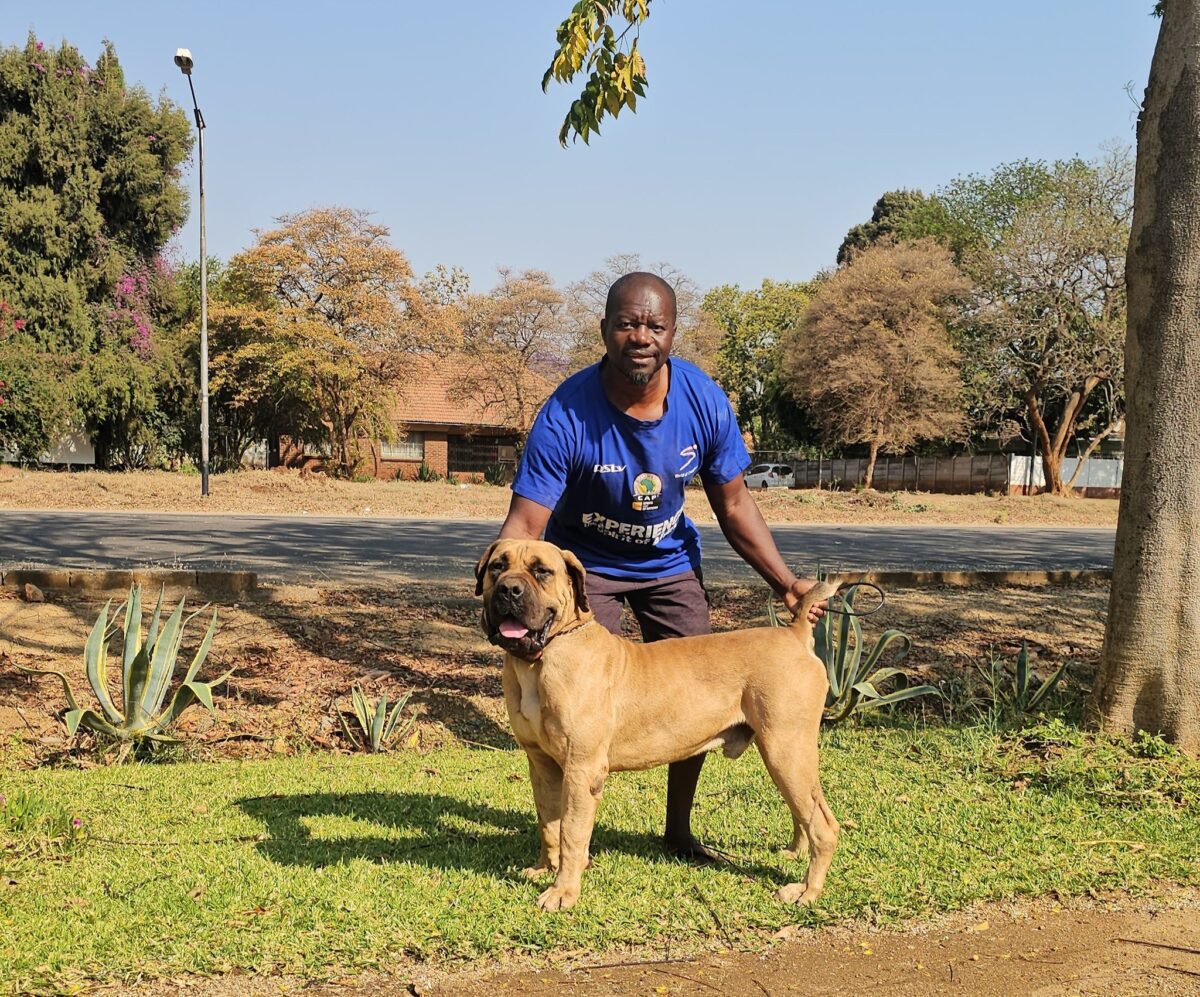
Dog breeding is a serious responsibility that requires knowledge, purpose, and commitment to animal welfare.
Experts say responsible breeding helps preserve the health and quality of different breeds while promoting safety, discipline, and harmony between pets and their owners.
Bulawayo-based dog breeder Nhlanhla Bahlangene Dube explained that dog breeding, like any other form of animal breeding, depends on the breeder’s objectives.
“Dog breeding in its essence is the same as any other animal breeding. It is led and determined by what you want to do, what dogs you want to breed, what you are breeding them for, and what characteristics you want to enhance,” said Dube.
He added that breeding is often done to preserve genetic purity and improve certain qualities such as temperament, physical structure, or purpose.
“You breed dogs to preserve and promote genetic purity. You learn about a dog’s qualities, whether it’s colour, hairline, bone structure, or temperament. You decide whether you want a family-friendly pet or a guard dog. Each type of dog has unique possibilities,” he said.
Dube said that over time, dogs have been bred for specific functions based on their nature and ability.
“With hunting dogs, people can also use them as racing dogs, like Greyhounds. There are tracking dogs that can identify where rodents are, farmers use breeds like Jack Russells for that,” he said.
He added that some dogs are trained for law enforcement or farming due to their intelligence and strength.
“You will find police and military dogs such as German Shepherds. There are also sheepdogs, which are excellent at herding and protecting flocks, and cattle dogs that work well with livestock,” Dube explained.
Dube, who has been breeding Boerboels for over 30 years, said he was drawn to the breed’s history and resilience.
“Boerboels are big, strong dogs with different traits, some have larger heads, others are taller. The name comes from ‘boer’ meaning farmer and ‘boel’ meaning dog, a farmer’s dog,” he said.
Describing the Boerboel as brave and loyal, Dube said it was ideal for farm work and protection.
“It’s a very strong and loyal dog, especially on farms. It can fight off hyenas, baboons, even lions, it’s a great working dog,” he noted.
Dube advised that Boerboels require proper care, space, and training.
“A Boerboel must be locked up during the day if you want to use it for security. It should only be fed by one person, either the owner or a trusted caretaker. Don’t feed it raw meat, as it could be poisoned by thieves,” he warned.
He said consistent training was essential for discipline.
“Train it with basic commands, how to sit, wait for food, walk on a leash, and stay in designated spaces. These routines help it stay obedient and calm,” said Dube.
Dube cautioned against keeping large dogs in confined urban spaces without adequate exercise.
“A Boerboel needs space to release energy. You can’t keep it in a small yard unless you are committed to daily walks and playtime to build its muscles,” he said.
He also reminded dog owners to follow local regulations on the number of dogs allowed in residential areas, stressing that responsible ownership is as important as responsible breeding.
Support CITE’s fearless, independent journalism. Your donation helps us amplify community voices, fight misinformation, and hold power to account. Help keep the truth alive. Donate today