

By Mandlenkosi Mpofu and Zenzele Ndebele
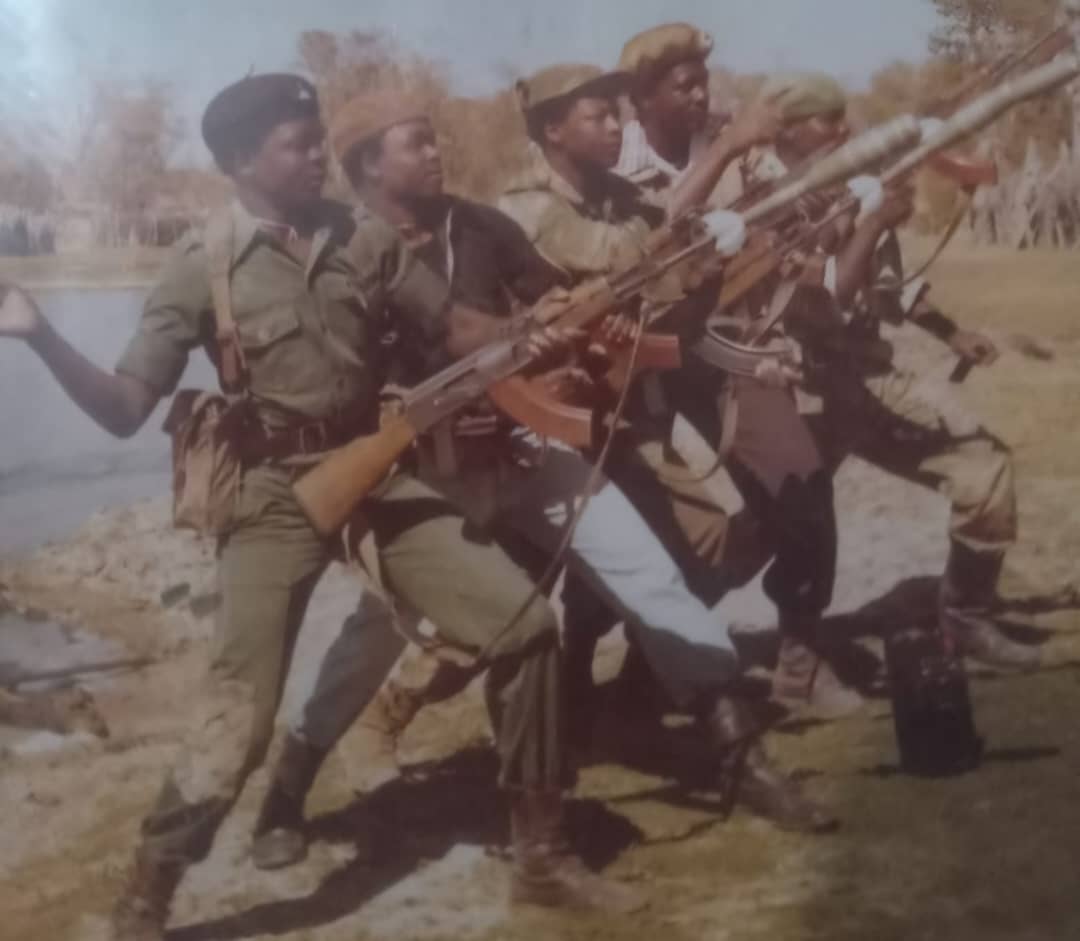
Yithi Laba is not just a magazine. It is a bold reclamation of the proud contributions and sacrifices of members of the Zimbabwe People’s Revolutionary Army (ZPRA), the armed wing of the Zimbabwe African People’s Union (ZAPU) in the liberation of Zimbabwe. The name comes from the iconic liberation song which for some became an anthem of the exploits and the identity of the guerilla movement.
The magazine is also an acknowledgement and a challenge of the systematic suppression of the role of ZPRA in the struggle that led to independence in 1980. It is also an ambitiousattempt to reclaim the dignity that state mistreatment, violence and other forms of humiliation undermined right from independence.
For decades, the narrative of Zimbabwe’s liberation war has been narrowly framed, often privileging one strand of the struggle while marginalising others. In the words of renowned historian Ian Phimister, Zimbabwean history has been methodically reduced to ‘a succession of chimurengas! never … umvukelas’. Protracted efforts and policies of the ZANU party-state succeeding in confining the country’s liberation struggles and heroes to ZANLA and even to one ethnic group, while other groups’ efforts were all but wiped out of history booksand popular cultural expression.
Zimbabwe’s official narratives are characterised by under-documentation, suppression and even deliberate distortion of ZPRA’s contribution. To counter this, Yithi Laba weaves through ZPRA’s military strategies, its sacrifices, internal debates and dynamics and even conflicts and crises. It also explores the organisation’s cultural life, besides stories of war and death. Inevitably, the persecution that its members experienced upon independence, as they were literally labelled enemies of the new state is a major concern for the magazine.
Yithi Laba! is therefore a plunge into contested terrain. It confronts the silences that are loud in Zimbabwe’s history and challenges the carefully choreographed, pro-establishmentlegacies of the liberation struggle. It also provides a direct platform to former ZIPRA combatants to narrate their own stories.
An Archive and Memorial
Yithi Laba is also a living archive and memorial. It gathers ZPRA’s scattered and destroyed memories and curates them as part of much other efforts by CITE to mainstream the organisation’s history.
The magazine recognises that the story of ZPRA is not a single, linear account but a mosaicof triumphs and defeats, unity and betrayal, crises, disappointments, and internal conflicts. Ultimately however, it is a story of human courage and sacrifice, of songs and slogans of hope and victory, and of defiance under some of the most harrowing experiences imaginable.
Although the editorial team has encountered many teething problems in the maiden year, many articles have been published which collectively underline the magazine’s archival mission. Some, such as “ZAPU and the Liberation of Zimbabwe: Setting the Record Straight”, situate ZPRA firmly within the broader nationalist struggle, challenging simplified binaries and reaffirming ZAPU’s foundational role in mobilising mass resistance against colonial rule. These pieces remind readers that the liberation struggle was never monolithic; it was shaped by ideological debates, regional dynamics and shifting international alliances.It was also shaped by many daunting challenges between the main protagonists, ZPRA and ZANLA, whose rivalry sometimes threatened to torpedo the whole liberation project.
The magazine’s team of researchers also continuously digs primary documents and speecheswhich articulated the mission and vision of ZPRA, many of which were destroyed when the ZANU government raided ZAPU archives in 1982. It is through such efforts that we managed to carry the re-publication and analysis of ‘The Turning Point Document by ZAPU’, which was personally launched Dr Joshua Mqabuko Nkomo in Lusaka in 1979. These texts allow ZAPU and ZPRA to speak in their own voice, restoring agency to historical actors too often spoken about in distorted narratives that deny their contributions and sacrifices.
Military Strategy Beyond the Stereotypes
One of Yithi Laba’s most significant interventions lies in its detailed exploration of ZPRA’s military strategy. Mainstream accounts, designed to ridicule water down ZPRA’s role, have frequently reduced it to a conventional army which had been organised to wait for a decisive confrontation with the Rhodesians, which is a distortion of the Operation Zero Hour. Such accounts deliberately undermine the sophistication and adaptability of ZPRA’s war machinery. More professional research reveals that ZPRA was a formidable, complex guerilla movement whose operations were backed up by clandestine intelligence networks and sophisticated relations with communities and community members which were underpinned by a level of respect for civilian communities scoffed at by rival groups.
“ZPRA’s Urban Warfare: A Strategic Masterpiece in the Broader Liberation Struggle”explores the meticulous organisational planning and the individual efforts and determination which saw the organisation transform urban spaces into critical theatres of resistance. More than many other operations, ZPRA’s urban warfare stretched Rhodesian Front resources to the limit, as operations designed to confront rural-based guerrilla units had to tackle another front.
“Deployment of ZPRA Regular Army and the End of the Rhodesian Bush War” revisits the final stages of the armed struggle and the ZPRA leadership’s plans to face the Rhodesian Front head on. The article not only highlights ZPRA’s preparedness for a conventional military showdown but also demonstrates how the leaders prepared for a post-independence scenario where dependence on inherited Rhodesian structures was a concern. Not only do these analyses correct the historical record; they also critically contribute to a deeper understanding of African liberation movements as dynamic and intellectually rigorous formations.
The magazine also pays close attention to intelligence work, often the most invisible dimension of armed struggle. The series on the revamp of ZAPU/ZPRA intelligence units and the birth of the National Security Organisation (NSO) demonstrate how ZPRA’s wartime intelligence structures and practices informed the post-independence Zimbabwean state’sstructures, at least initially. The stories on the NSO also raise difficult questions about continuity, power and betrayal as ZPRA’s more organised structures and units were ignored in the re-organisation of the security sector, to the detriment of Zimbabwe.
Culture, Song and the Inner Life of the Struggle
Yithi Laba refuses to confine ZPRA’s story to guns and battles alone. In “Songs of Freedom: ZAPU/ZPRA’s Melodic Fight for Liberation,” the magazine explores music as both morale booster and political education. Many pieces of poetry and songs are also reproduced in the magazine for archiving but also to help relive certain moments and memories.
Liberation songs are important archives that carry ideology, memory and hope across borders and generations with ease. Through song, fighters articulated longing, discipline and collective purpose, reminding us that culture was not peripheral but central to the struggle.Reliving and archiving them is important because after independence, ZPRA’s liberation melodies were suppressed on national platforms such as the Zimbabwe Broadcasting Corporation. Many of the musical groups that benefited from state patronage also ignored or dismissed ZPRA songs.
Instead, ‘national’ songs which extolled liberation heroes and were played repeatedly on various fora, almost exclusively focused on ZANLA/ZANU heroes, which must have been dismaying for ZPRA veterans and their families. Songs are therefore potentially the most important repositories of ZPRA’s history, since they could not be stolen or destroyed with written or tape-recorded archives.
The attention to the social and cultural life of combatants is also evident in pieces that recount experiences of imprisonment, exile and internal crisis. Articles on the ZIPA debacle, including the jailing of ZPRA cadres in Mozambique and Botswana, confront painful episodes of mistrust and repression within the liberation movement itself, pitting ZPRA and ZANLA in what was perhaps the harbinger of what ZPRA’s ex-combatants would endure at independence. These stories resist sanitised heroism, instead presenting liberation history as human, fractured and fraught with vulnerabilities.
Betrayal After Independence
Perhaps the most haunting threads running through Yithi Laba are those dealing with the post-independence persecution of ex-ZPRA combatants and ZAPU supporters. Reflections inspired by works such as Judith Todd’s Through the Darkness and David Coltart’s TheStruggle Continues underline that ZPRA was a target of state violence almost from the onset of independence. These contributions connect the dots between wartime rivalries, post-war power consolidation and the tragedy of the Gukurahundi genocide. They also underline the immense betrayal felt by ex- ZPRA fighters who were excluded from virtually all forms of state support, including employment and more painfully, were even prevented from running their own self-help programmes.
By revisiting these histories, Yithi Laba insists that reconciliation without truth and redress is hollow. The magazine does not merely catalogue grievances; it demands acknowledgement, justice and remembrance. In doing so, it aligns itself with broader continental and global efforts to confront violent pasts through documentation and public dialogue.
Unity, Debate and Unfinished Business
The question of unity between ZAPU and ZANU has occupied the attention of Zimbabwe since the signing of Unity Accord on 22 December 1987. Despite sustained efforts by state machinery, failure to address the plight and grievances of ZPRA’s ex-combatants are among the many reasons that raise questions about the much-hyped unity.
Yithi Laba does not offer easy answers. Instead, it creates space for debate, recognising that the liberation struggle’s legacy remains unfinished business. The magazine implicitly asks: what does genuine national unity look like when foundational histories are suppressed? What kind of future can be built on a selective memorialising that serves to tear the nation apart?
Why Yithi Laba Matters Now
The launch of Yithi Laba this year is both timely and urgent. As liberation war veterans age and archival materials risk being lost, the need for meticulous documentation of this aspect of Zimbabwe’s history has never been greater. At the same time, younger generations are increasingly questioning inherited narratives, seeking fuller, more honest accounts of the past.
In this context, Yithi Laba serves multiple audiences. For former ZPRA cadres and their families, it is recognition and restoration of dignity. For scholars and students, it is a resource that enriches the historiography of Zimbabwe and southern Africa. For the nation at large, it is an invitation to confront uncomfortable truths in the hope of building a more inclusive memory, one which does not further divide the national along regional and ethnic lines.
Looking Forward With Remembering
Yithi Laba is part of collective efforts, mainly from Matabeleland, that boldly declare that silence is no longer acceptable. By documenting the history of ZPRA in its complexity, military, political, cultural, moral dimensions, etc., the magazine challenges Zimbabwe to remember itself more honestly. It affirms that liberation history is not the property of the state or of a single narrative, but a shared inheritance that must be continually revisited. Already, we have seen efforts from some state entities to address some of the historical omissions, albeit belatedly and begrudgingly. Such endeavours are responses to Yithi Laba and other platforms in which CITE continues to play a leading role.
In saying Yithi Laba, the magazine does more than speak; it records, it preserves, and it restores. In doing so, it ensures that the men and women of ZPRA are not merely footnotes in someone else’s story, but central actors in their own and in the nation’s history. Their agency needs to be restored, and we all need to play a part in that, no matter how small or big.