

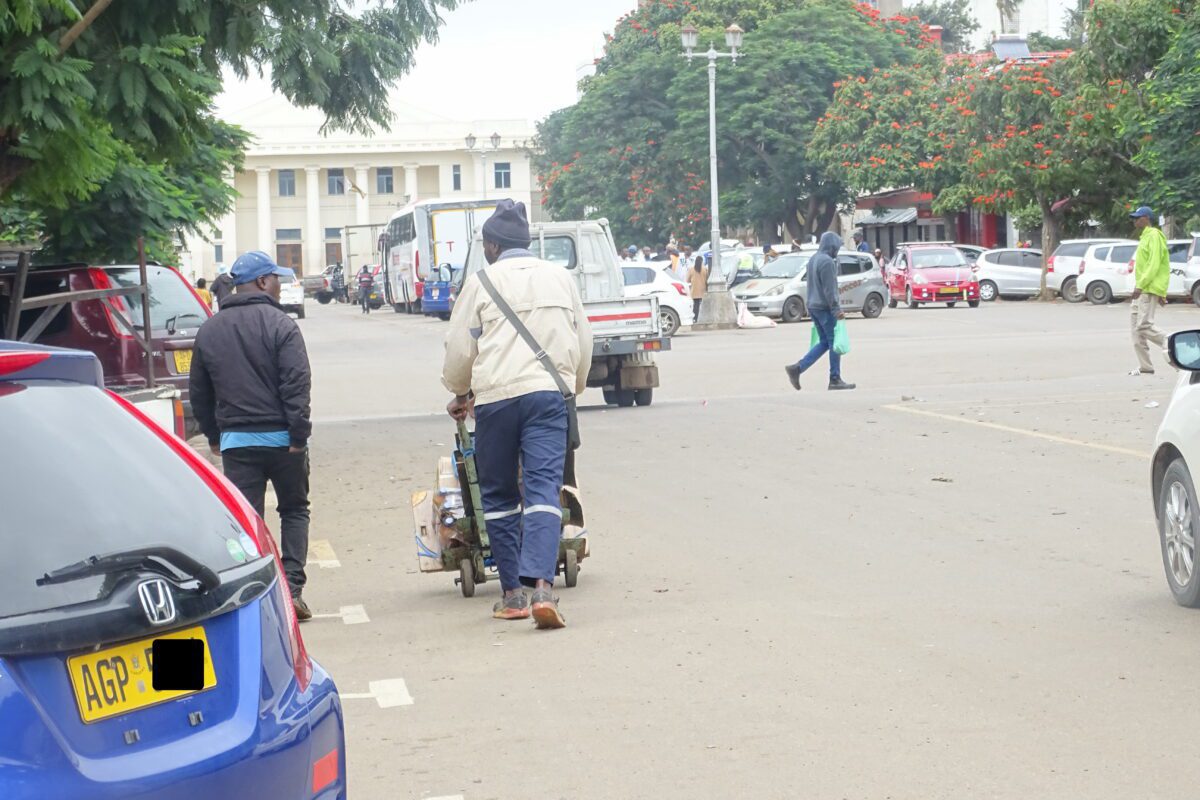
Some informal transport operators in Bulawayo have begun using wheelbarrows and small trolleys to move goods around the central business district (CBD) after the government approved by-laws banning pushcarts in the area.
The ban, introduced under Statutory Instrument 220 of 2023, City of Bulawayo (Clamping and Tow-away) By-laws prohibits the use of pushcarts within the CBD area bounded by Naison Kutshwekhaya Ndlovu Avenue, Lobengula Street, Joseph Msika Avenue and Robert Mugabe Way.
Since the regulation came into effect, municipal police officers have been moving around the CBD impounding pushcarts found operating within the restricted zone, leaving many operators without their main source of income.
In response, some traders and transporters have resorted to alternative equipment such as wheelbarrows and hand-pulled trolleys which they say allow them to continue working while avoiding confiscation of their pushcarts.
One operator, who identified himself as Mthokozisi Ndlovu said the shift was a survival strategy after his pushcart was seized by municipal police last month.
“They took my pushcart and I could not afford the fines to get it back. I have a family to feed so I started using a wheelbarrow because it is smaller and easier to move around without attracting too much attention from the municipal police,” he said.
Another operator, Thabiso Moyo said many workers in the informal sector had been forced to adapt quickly to the new rules in order to continue earning a living.
“Pushcarts were our main tools for transporting goods for shop owners and vendors but now they are banned in the CBD. Some of us are now using small trolleys or wheelbarrows just so we can continue working, even though they carry less load,” he said.
However, operators say the alternatives are less efficient and increase the time it takes to deliver goods.
A trader who now uses a wheelbarrow, Timothy Dube said the change had significantly reduced her daily earnings.
“With a pushcart I could move many boxes at once but with a wheelbarrow it takes several trips. It means I work longer hours but earn less money. Still, it is better than sitting at home with no income,” he said.
Under the new by-laws, anyone found violating the regulations risks having their equipment impounded and may face fines while unlawfully removing wheel clamps or vehicles from secure compounds carries penalties that include fines or imprisonment.
Despite the restrictions, informal operators say they will continue looking for ways to adapt in order to survive in a challenging economic environment.
Support CITE’s fearless, independent journalism. Your donation helps us amplify community voices, fight misinformation, and hold power to account. Help keep the truth alive. Donate today
Leave a comment