

By Pamenus Tuso
Mining communities across Zimbabwe continue to grapple with serious health and environmental challenges arising from extractive activities with residents in areas such as Mberengwa West and Bulawayo’s Pumula North suburb reporting escalating cases of dust pollution, noxious fumes and structural damage to homes caused by blasting.
Villagers living along Dwala Road which links Sandawana Mine and West Nicholson say heavy dust emitted by Chinese-owned trucks transporting lithium has become a daily health hazard, contaminating homes, water sources and crops.
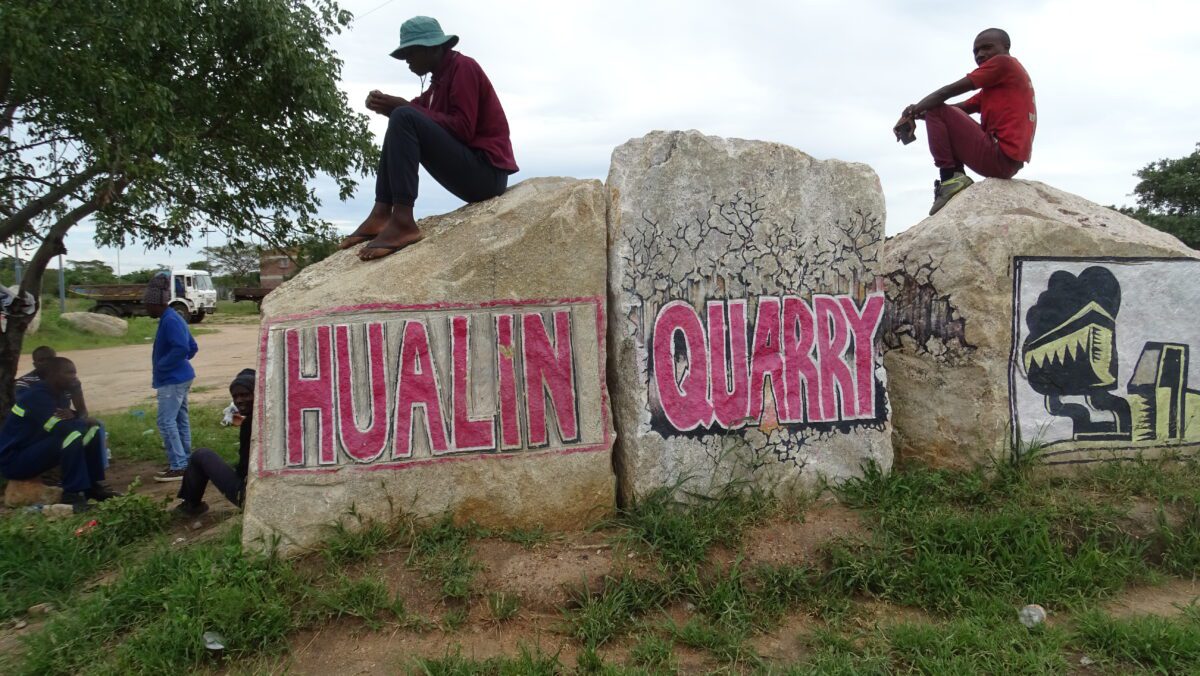
Similar concerns have been raised in Bulawayo where residents of Pumula North have lodged complaints with the Environmental Management Agency (EMA) against Hualin Quarry Mine, accusing the Chinese-owned company of discharging harmful dust and fumes while blasting activities have allegedly caused cracks in nearby houses.
EMA provincial spokesperson Memory Kapumha confirmed that the quarry’s Environmental Impact Assessment (EIA) certificate has not yet been renewed, pending investigations.
“A point to note for the public is that the environmental impact assessment certificate for Hualin Quarry Mine has not yet been renewed pending investigations of the issues raised by residents,” Kapumha said.
Against this backdrop of rising pollution-related health risks, government officials say the proposed National Health Insurance (NHI) could offer a lifeline to mining-affected communities by ensuring sustainable funding for healthcare services and treatment of pollution-related illnesses.
Speaking on the proposed health insurance scheme, Acting Policy and Planning Director in the Ministry of Health and Child Care, Tonderai Kadzere said the NHI would be a non-contributory scheme, largely funded through earmarked levies rather than direct monthly payments from citizens.
“The proposed National Health Insurance is a non-contributory scheme. People are not going to contribute directly like in other countries. Funding will come from existing levies such as airtime, sugar and fast food levies as well as excise duties on alcohol and tobacco,” said Kadzere in an interview with Cite.
Crucially, Kadzere said mining would also form part of the funding base, acknowledging its indirect but significant impact on public health.
“When we talk about mining, we are talking about activities that have a clear impact on people’s health,” he said.
“We feel it is important that sectors like mining contribute towards healthcare, especially considering the conditions that communities and workers are exposed to.
Kadzere also highlighted a largely unknown health component within third-party motor vehicle insurance which government plans to integrate into the national health financing system.
“Most people are not aware that when you buy motor vehicle insurance, whether third-party or comprehensive, there is a health component in it. If you are involved in an accident and receive medical treatment, the hospital is supposed to claim from that insurance,” explained Kadzere.
He said that poor coordination and lack of public awareness have meant that hospitals often fail to recover these funds.
“We are now looking at how that health component can be better coordinated so that it directly covers health bills. That money is already there but people do not know that it is meant to assist them in emergencies,” Kadzere further explained.
Local leaders say the proposed insurance scheme could help address the long-term health effects of environmental degradation caused by mining.
A councillor in Mberengwa West, Pardon Zhou whose ward includes areas affected by mining-related pollution, said communities had long borne the health costs of extraction without compensation.
“For years, our communities have suffered from dust, blasting and polluted environments, yet there has been no meaningful support for the health consequences. “If the National Health Insurance can channel funds from mining into healthcare, it will be a step towards justice for communities whose health is being sacrificed for minerals,” he said.
He added that the scheme could help residents access treatment for respiratory illnesses and other chronic conditions linked to mining pollution.
“Environmental damage does not end when mining trucks leave but it stays in people’s lungs and homes. A health insurance system that recognises this reality is long overdue,” noted Zhou.
Bulawayo-based development expert Effie Ncube welcomed the inclusion of a mining levy in the proposed health insurance but cautioned that transparency and accountability would be critical.
“A mining health levy is a necessity, especially for communities whose land, environment and health are being damaged by mining operations”
“Internationally, this is best practice .” said Ncube.
However, she stressed that the levy must not become another fund that fails to benefit affected communities.
“The real challenge will be ensuring that the money is used for its intended purpose of supporting the health needs of mining communities,” she said.
“If managed properly, it can both support healthcare and deter companies from polluting the environment.”
Ncube also emphasised that the health levy should complement, not replace, stricter environmental regulation.
“We still need tougher laws, stronger enforcement and clear obligations for companies to plough back into local development such as clinics, schools and clean environments,” she Ncube.
According to Kadzere, technical consultations on the National Health Insurance Bill have been completed, with cabinet having approved its principles.
The Bill is currently being drafted by the Attorney-General’s Office and is expected to be tabled in parliament following cabinet approval.
“The plan is that by 2026, we should be establishing the fund,” he said.
For communities living in the shadow of mining operations, the proposed health insurance represents cautious hope that the health costs of extraction will no longer be ignored and that industries benefiting from natural resources will finally contribute to healing the communities they affect.
Support CITE’s fearless, independent journalism. Your donation helps us amplify community voices, fight misinformation, and hold power to account. Help keep the truth alive. Donate today