

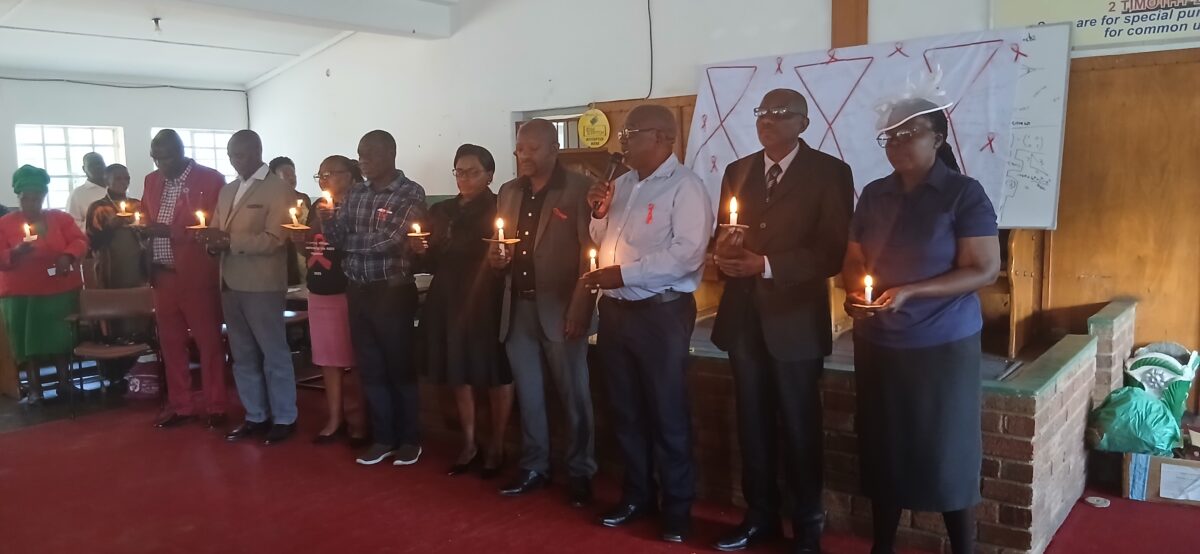
Calls for people living with HIV to adhere strictly to their treatment and avoid mixing antiretroviral therapy (ART) with alcohol took centre stage at this year’s Candlelight Memorial, where health leaders warned that risky behaviour continues to undermine progress in the fight against HIV and AIDS.
The commemorative event, held Thursday at the Church of Christ in Makokoba, Bulawayo, ran under the theme “We remember, we rise, we lead,” as communities gathered to honour those who died from AIDS-related illnesses and to support ongoing prevention efforts.
Benjamin Maseko from the Meaningful Involvement of People Living with HIV (MIPA) forum, one of the main speakers, said poor medication adherence remained a major challenge.
“We are encouraging people to take their medication consistently. Medication is free at Mpilo Central Hospital, but some people take their tablets and immediately go and drink alcohol,” said Maseko.
He said there was a need for continuous education on the dangers of taking ARVs alongside alcohol or other intoxicating substances.
Maseko also highlighted that part of Zimbabwe’s HIV response is supported through small taxes on popular goods.
“There is now a fast-food tax that contributes to the purchase of ARVs. If you buy from Chicken Inn, a percentage goes towards buying ARVs. Even sugar purchases contribute a portion towards the country’s ARV supply,” he said.
Mpilo Hospital’s nurse-in-charge of the Centre of Excellence (Opportunistic Infections Department) Brian Khumalo, said the memorial serves as an important reminder of the lives lost while reinforcing the need for vigilance.
Khumalo also spoke about past disruptions in global HIV financing.
“We came together to honour those who lost their lives to HIV and AIDS. Early this year when President Donald Trump entered office, he cut funding for HIV and AIDS medication. At that time we depended heavily on donors, but the government has since assured us that the pills are available,” he said.
He added that Zimbabwe continues to make progress and now approaches HIV as a manageable condition.
“We move forward with confidence. HIV is a manageable condition, not a death sentence, and everyone deserves access to care and support. Together, we can end AIDS,” said Khumalo.
National AIDS Council (NAC) Programmes Officer, Douglas Moyo, noted that Zimbabwe has made significant progress in reducing AIDS-related deaths.
“There are treatment strategies in place that have reduced the number of people dying from HIV/AIDS,” said Moyo.
He said the theme for World AIDS Day – “Overcoming disruption, transforming the AIDS response” – also addresses broader disruptions that impact health outcomes, including human rights and livelihoods.
“We experienced major disruptions due to Covid-19, but the good news is that the country responded positively to HIV prevention. Long-term planning is now a key focus and we have developed a sustainability roadmap to make sure that we do not lose the gains achieved,” he said.