

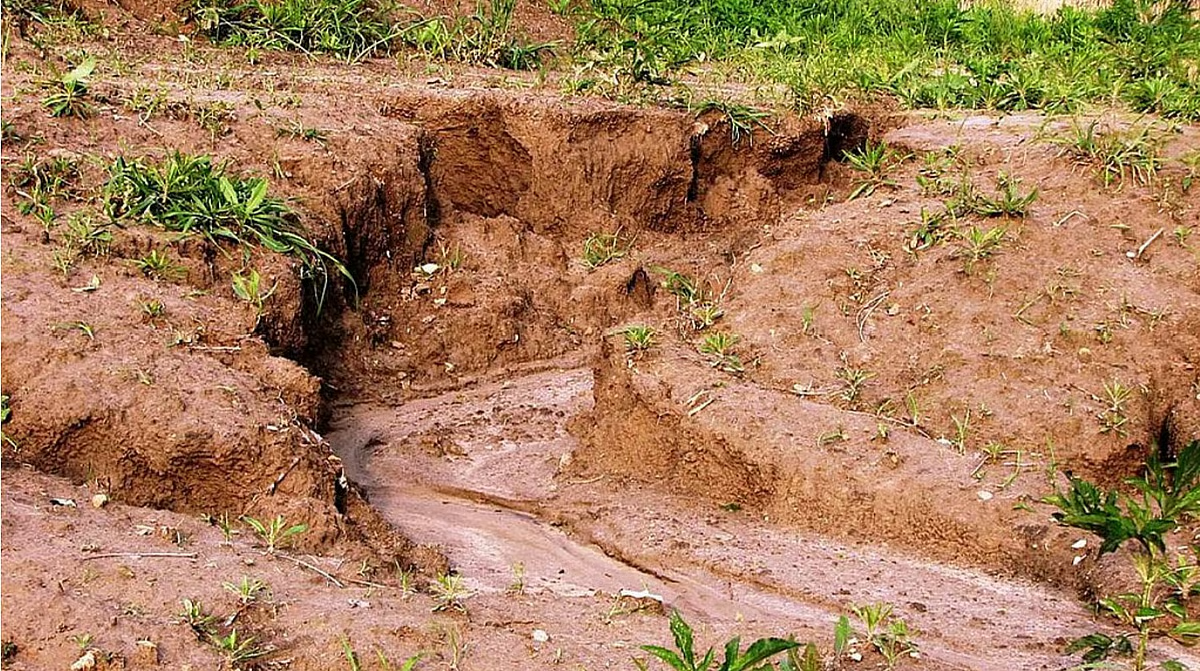
Ndzindzime Senior Village Head Agrippa Mfazo of Plumtree, Matabeleland South, has voiced concern over villagers’ hesitation to embrace the gully control method, a key soil and water conservation practice to curb gully erosion.
The gully control method is among the key climate change adaptation strategies, particularly important as rainfall patterns become increasingly erratic. It encourages water to infiltrate the soil instead of running off rapidly, thereby reducing erosion and land degradation.
Speaking on the sidelines of the Luswingo Cultural Festival, Mfazo said that while some villagers have begun embracing the method, many remain hesitant despite already feeling the effects of climate change.
“Climate change is really affecting us because we used to have the rains called imbolisamahlanga around July or August. We would have rains again in October and the second week of November, that is no longer there. In some years, we only get rains around late December, and this is affecting us a lot, even in our livestock. In 2023–2024 there was no rain; we lost a lot of livestock,” he said.
Mfazo noted that many villagers are now relying on the Intwasa method of farming, a government programme promoting conservation agriculture to improve food security for smallholder farmers.
“As a community, since 2019 when Intwasa was introduced, it’s been helping us. People are farming that way, and the number of villagers using this system of farming is increasing. It’s a way that helps us because the pits hold water, and as villagers, we manage to get food,” he said.
He also lamented that trees in the area are drying up and no longer bearing fruit, while several small rivers have stopped flowing in recent years.
“Some of our rivers are now dead as they can take up to three years without getting water. For big rivers, for instance, this year we had normal to above-normal rains, so there is a lot of sand, showing that for the past two years, when there was no rain, the cattle caused soil erosion. So when water comes, the dam gets filled with sand. Climate change is really affecting us,” said Mfazo.
To address these challenges, the community has been receiving training on water conservation methods aimed at preventing gully formation and protecting river systems.
“What we were taught by the farmers is the water conservation method, a way to block water from creating gullies along the way so that we can stop the washing away of soil into our rivers. They explained to us that when water has no flow direction, after some time grass grows, blocking the path where water flows into our rivers,” said Mfazo.
However, he said the major challenge remains the villagers’ reluctance to adopt these climate adaptation measures.
Support CITE’s fearless, independent journalism. Your donation helps us amplify community voices, fight misinformation, and hold power to account. Help keep the truth alive. Donate today