

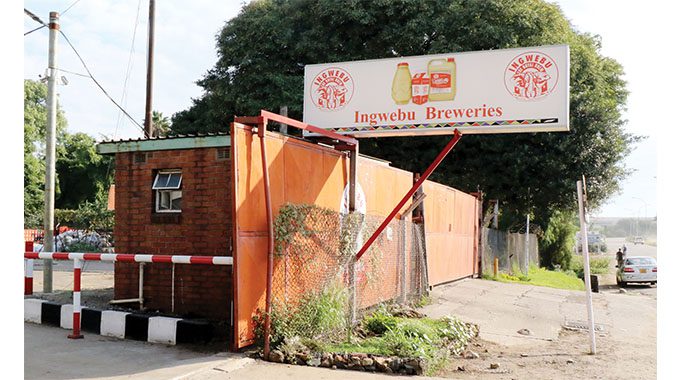
Ingwebu Breweries is facing mounting pressure after contract farmers in Bubi district said the company has failed to fully pay for sorghum delivered last year, while some workers claim they have gone for months without salaries.
Farmers under a cooperative in Siganda, Bubi, Matabeleland North, say Ingwebu still owes them thousands of United States dollars for sorghum delivered between June and July last year under a written contract farming agreement.
These delays, they say, have disrupted livelihoods, stalled their farming activities and left families struggling to pay school and college fees.
“We delivered the sorghum in July and Ingwebu promised to pay us half after two weeks,” said one female farmer, who will not be named for fear of victimisation.
“But two weeks became three months. We had to send a team to find out what was happening, but they came back with nothing.”
According to the farmer, the cooperative eventually travelled to Mhlahlandlela Government Complex in Bulawayo to seek intervention from a Small and Medium Enterprises department, after which Ingwebu paid a portion of the money owed.
“They only gave us a quarter of what they were supposed to pay. Our chairperson later went again and came back with US$5 000, but he was told the company would ‘look for the money’. As we speak, about US$13 000 is still outstanding from the US$30 000,” she said.
The cooperative delivered about 90 tonnes of sorghum under the agreement and payments to individual farmers depended on how much each had produced.
The farmer said she delivered three tonnes and was supposed to be paid US$1 000, but has so far received only US$500.
The delayed payments have had negative consequences.
“We failed to farm this season. We could not buy seed or hire tractors. Our children struggled to go to school because there was no money,” she said.
“Ingwebu keeps saying ‘next month’, but we are no longer sure. If these efforts fail, we will go to court.”
Bubi Member of Parliament, Simelisizwe Sibanda, confirmed the farmers’ claims, saying the matter had become a serious development setback in a constituency largely made up of resettlement areas.
“These are people who were resettled under the fast-track land reform programme to be self-sustaining through farming and livestock production,” Sibanda said.
“They survive by selling their produce, sending children to school and putting food on the table.”
He said the farmers entered into a contract farming arrangement with Ingwebu during the 2024/2025 season, under which the company supplied seed and collected the sorghum after harvest.
“They delivered produce worth about US$30 000 in June last year. According to the agreement, they were to be paid 50 percent after 30 days, then 25 percent the following month and the final 25 percent the next month,” Sibanda said.
“By October last year, that money should have been fully paid.”
However, Sibanda said payments did not follow the agreed schedule.
By the time he first raised the issue with Ingwebu, the farmers had received less than US$10 000.
“As of January 26, 2026 Ingwebu had paid about US$12 000. Schools have opened, colleges have opened, but parents have no money. Some farmers failed to plant this season because their money is still with Ingwebu,” he said.
Sibanda said he engaged Ingwebu board chairperson, identified as Moyo, who said he was unaware of the issue and promised to speak to management.
The MP was later referred to the Ingwebu finance manager, Moment Ncube.
“Both officials claimed the farmers ‘understood the situation’, but when I went back to the farmers they said that was not true,” Sibanda said.
“The only understanding they have is what is written in the contract, which is to deliver sorghum and be paid.”
He said tensions have since emerged within the farmers’ group, with some members accusing their committee of failing them.
“This is unfortunate because the committee entered the contract in good faith. Ingwebu is the one that failed to honour the agreement,” Sibanda said.
“This situation undermines the gains of land reform because you cannot take people’s produce and fail to pay them.”
The MP also suggested that should Ingwebu fail to honour its deal, he may take the issue up to the Minister of Local Government (Daniel Garwe).
“We understand Ingwebu is owned by the Bulawayo city council, the council being an entity under the Minister of Local Government. If we engage the council and find no joy we can then engage the Minister of Local Government , maybe something can come out of there,” he said.
“This impacts negatively on the land reform because the gains of land reform is production, this is about producing goods and selling, the one who buys, should pay.”
Farmers’ chairperson, Mbekezeli Tshongwe, said the cooperative had tried to be patient but was increasingly frustrated with the payment delays.
“We had a written agreement and Ingwebu said payment would be after delivery within a month, then they would pay half, then a quarter and the final quarter later, even if it was December, we would have accepted,” Tshongwe said.
“But it stayed too long without payment.”
Tshongwe said Ingwebu has so far paid US$8 000, then US$5 000 and another US$5 000, bringing the total paid to US$18 000 before deductions for seed supplied.
“There are 24 farmers under this arrangement. Some with smaller tonnage have been fully paid, but others like me are still waiting,” Tshongwe said.
“Ingwebu told us the company is not doing well financially.”
While Tshongwe said tensions had slightly eased, he admitted the finance manager had not committed to a date for settling the balance.
“I am trying to communicate with both sides. But explanations about delayed payments do not sit well with farmers who need money for work already done,” he said.
Ingwebu’s finance manager declined to respond substantively to questions about the outstanding payments.
“It is difficult. I cannot talk when I don’t have names. It is confidential information between me and the farmers,” Ncube told CITE.
“Go back to the farmers. You can have one side of the story, it’s okay.”
Ncube insisted Ingwebu had a “very good relationship” with the farmers and denied there were problems in Bubi.
“We are owning up to our obligations. The best person to talk to is the chairperson because he runs the admin. He is the one with correct information so you can know whether the problem is with us or with them. The chairperson is a very good person,” the finance manager said.
Meanwhile, Ingwebu is also facing allegations from workers who say they have not been paid salaries since July last year.
“They need to come and talk to workers directly, not send messages to WhatsApp groups,” said a worker, while another added: “Once you speak out, you become a victim. We have become slaves.”
Asked about the workers’ claims, Ncube said he was unaware of any salary arrears.
“I have no idea about that,” he said.
“When we arrange a proper appointment, maybe I can verify if there is anything, but I have no idea of anything like that.”
Support CITE’s fearless, independent journalism. Your donation helps us amplify community voices, fight misinformation, and hold power to account. Help keep the truth alive. Donate today
Leave a comment