

By Ruvimbo Muchenje
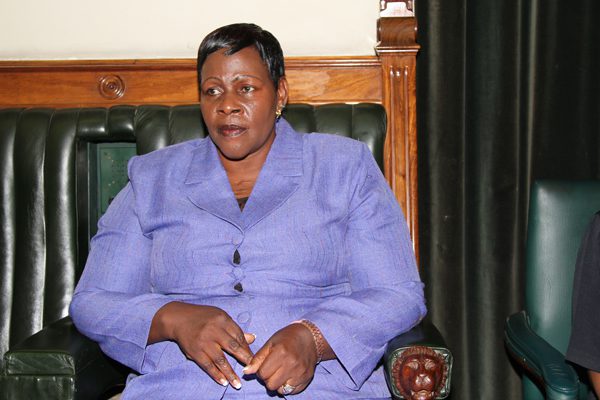
Parliament spent close to US$400,000 of public funds upgrading the private residence of Senate President Mabel Chinomona, purchasing luxury fittings including curtains, beds, kitchen appliances, vases and flower pots, in transactions that systematically bypassed tender procedures, an investigation by CITE has established.
Documents obtained by CITE show that the expenditure, amounting to US$372,260, was authorised through handpicked suppliers, despite multiple payments exceeding procurement thresholds that legally require open competitive bidding.
The spending was flagged by Auditor General Reah Kujinga in her 2023 and 2024 audit reports on parliament, which concluded that the transactions circumvented procurement laws and exposed parliament to financial abuse.
Former finance minister Tendai Biti has now called for a full forensic audit of parliament, warning that Zimbabwe’s key oversight institution is itself sinking into corruption.
“The question is, if parliament, the oversight body, itself becomes corrupt, who will then guard the guards?” Biti said.
According to the Auditor General, parliament processed five payments, each exceeding US$20,000, without inviting competitive bids, in clear violation of procurement regulations.
The most expensive transaction occurred between June 9 and August 8, 2022, when parliament paid US$116,000 for the demolition of an existing perimeter wall and construction of a new one at Chinomona’s Borrowdale residence.
The amount was well above the US$20,000 threshold, beyond which open tendering is mandatory.
In February and March 2022, another supplier was handpicked to provide furniture and fittings worth US$57,874, including chandelier lights, lampshades and decorative flower vases. The Auditor-General noted that the applicable procurement threshold for this category was US$10,000.
Parliament also sought Treasury approval to pay US$60,587 for bedroom upgrades, including two queen-size beds, one super king-size bedset for the main bedroom, four king-size pillow sets costing US$130 each and one standard pillow set costing US$109.
The invoices were settled on February 4 and March 7, 2022.
Further payments were made for kitchen furniture and appliances costing US$72,795, including washing machines, a microwave, three refrigerators, a rice cooker, a kettle and an air fryer.
Perhaps most striking was the US$64,000 spent on curtains installed in two lounges, five bedrooms, a home office, staff quarters, scullery and kitchen.
The Auditor-General again noted that the US$10,000 procurement threshold was ignored.
In a written response to the audit, 0arliament justified the direct procurement, claiming suppliers were chosen for “artistic and qualitative reasons.”
The Auditor-General rejected this rationale, warning: “Failure to invite bids or source for quotations restricts competition and may result in uneconomic procurement.”
After the audit reports were tabled in parliament, the Public Accounts Committee (PAC), chaired by Kuwadzana East MP Charlton Hwende, summoned senior parliamentary officials to account.
However, the officials initially resisted appearing. When they eventually did, they demanded that the media be barred from the hearings, claiming to possess “sensitive data.”
CITE has since obtained receipts for the flagged transactions and identified the companies handpicked for the renovations.
Biti, a former chairperson of the Public Accounts Committee, said the spending spree must be understood in a broader political context.
“A lot of money is being channelled towards parliament right now for one simple reason: Parliament will ultimately decide on the 2030 agenda,” he said, referring to efforts to extend President Emmerson Mnangagwa’s rule.
“Parliament has also become critical in hiding, obfuscating and preventing thorough investigations into massive corruption exposed by the Auditor-General, the Treasury Bills and so forth.”
He called for independent forensic audits of both parliament’s finances and the actions of officials who authorised the transactions.
John Maketo, executive director of the Zimbabwe Coalition on Debt and Development (ZIMCODD), said the findings severely damage public trust.
“Such findings destroy the reputation and credibility of our oversight institutions. Parliament must uphold the highest standards of integrity and comply with laws governing public financial management,” Maketo said.
Maketo praised the Auditor-General for continuing to expose systemic abuse of public funds despite political pressure.
Parliament’s procurement practices have previously drawn national outrage, most notably in 2022 when leaked official communication revealed that it had awarded Blinart Investments (Private) Limited a tender to supply 173 laptops for US$1,602,755.77, translating to US$9,200 per gadget.
Another company, Mid-End Computers and Hardware Ltd was awarded a tender to supply 79 desktop computers valued at US$3,000 each.
Both contracts were deemed too high by experts.
A subsequent PAC inquiry examined allegations of kickbacks to procurement officials after suppliers with significantly lower quotations were ignored. No action was taken.
The 2024 audit also revealed that senior parliament workers in Parliament Speaker Jacob Mudenda’s office were allocating themselves several hundreds of litres of fuel outside the authorised quantities.
CITE contacted Chinomona and Clerk of Parliament Kennedy Chokuda for comment. Both declined to respond.
Support CITE’s fearless, independent journalism. Your donation helps us amplify community voices, fight misinformation, and hold power to account. Help keep the truth alive. Donate today