

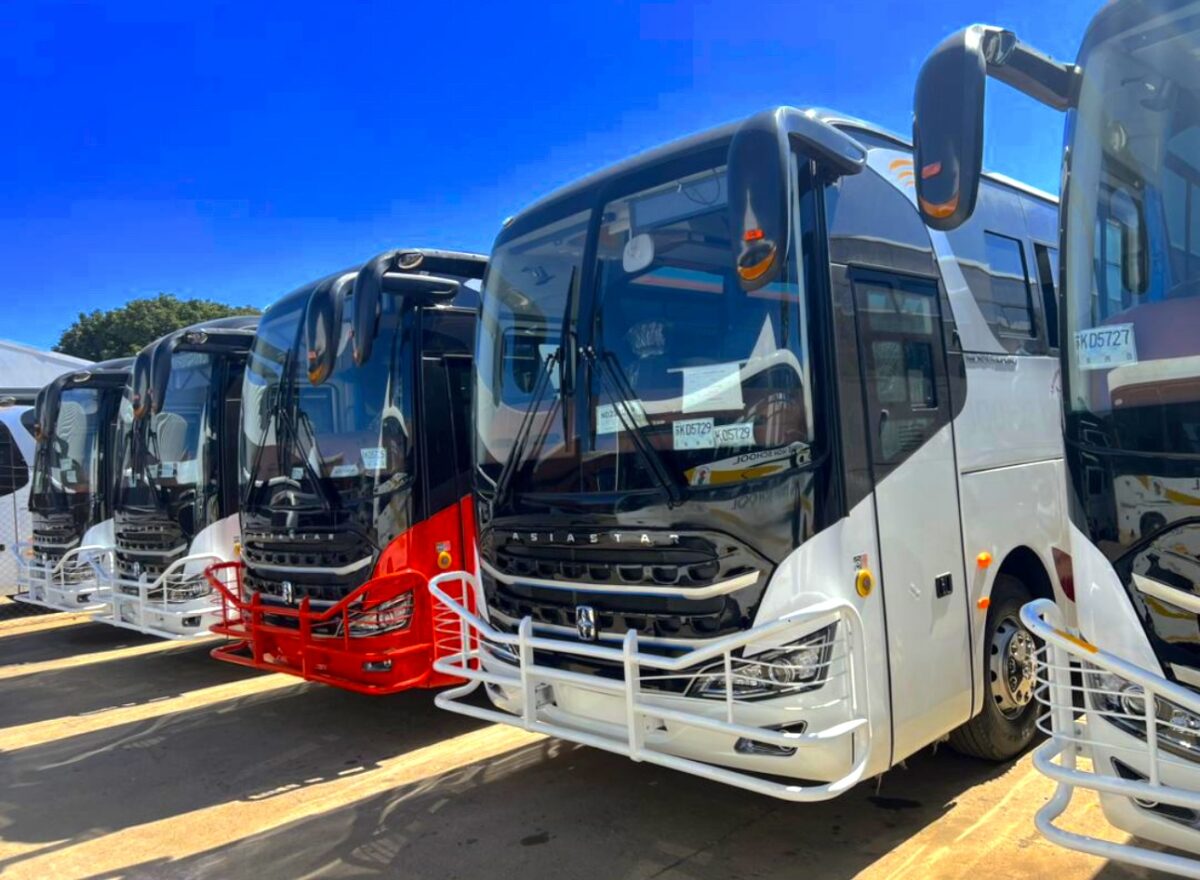
When parents and guardians at Mafakela Primary School protested a compulsory US$25 bus levy, they unknowingly uncovered the tip of a corruption iceberg.
The school had proposed that failure to pay the levy would result in pupils being barred from writing examinations in July, but this only served to further infuriate the parents and guardians.
As tensions rose, the parents’ resolve to dig deeper into what was going on only strengthened and now they have uncovered the scandal, which involves Vordim Trading, a Bulawayo-based company accused of bribing school officials, manipulating tender systems and inflating bus prices by hundreds of thousands of dollars.
These inflated prices reportedly fund kickbacks to school officials, including School Development Committees (SDCs), while parents and guardians bear the cost through levies to cover bank interest when schools take out loans.
At the centre of the alleged scheme is Vordim Trading co-director Kenias Papiro, a former Officer-in-Charge at Mzilikazi Police Station.
Whistleblowers and sleuths claim he has leveraged his influence and networks since leaving the service to establish a lucrative stranglehold on the education sector.
This has prompted calls from activists for urgent investigations into how Vordim’s operations have left schools saddled with bank loans and parents burdened with repayments.
Investigations confirm the loans are a major concern, with school bursars reporting that institutions are struggling to service the hefty interest rates.
One school reportedly pays as much as US$30 000 a term, forcing it to rely heavily on fees from parents or to drain other accounts to cover the costs.
How a protest over bus levy exposed this
The issue came to light after CITE reported a story of learners at Mafakela Primary who were barred from writing mid-term exams after failing to pay a US$25 bus levy in July this year although their tuition fees were up to date. Read more here
This prompted the Ministry of Primary and Secondary Education to intervene, with its Director of Communications and Advocacy, Taungana Ndoro reinforcing that no child must be excluded from school for non-payment of fees.
Ndoro cited Section 75 of Zimbabwe’s Constitution, which guarantees every child the right to education, the Education Act (Chapter 25:04), and Ministry circulars such as Secretary’s Minute Number 2 of 2024.
Two weeks later, Emakhandeni-Luveve MP Discent Bajila also visited the school and held a meeting to resolve the dispute, insisting no learner should be punished but also urged parents to pay fees on time. Read more here
Following the incident at Mafakela Primary, CITE received whistleblower reports revealing that the issue extended far beyond unpaid levies.
Sources alleged Vordim Trading was working with SDCs to secure contracts, then charging schools massively inflated prices for buses.
To afford these prices, schools took out substantial bank loans, passing the costs, including high interest rates, to parents through levies.
“The landing price for the bus was between $205 000 and $210 000 including the comprehensive insurance. We pay between $30 000 and $35 000 per term to the bank, ours is a 2-year bank loan. Some schools took three-year bank loans,” said an official from a school that purchased the bus from the company.
These bus purchases are then presented to parents at Annual General Meetings as essential for school development, without disclosing the true cost or whether proper procurement procedures were followed.
Even the MP who went to intervene at Mafakela Primary over the unpaid $25 bus levies, said he had not inquired about the total cost of the bus and when it was purchased.
“I didn’t check those details. My focus was on ensuring that defaulters don’t get deprived of exam time,” he told CITE.
According to school heads, Vordim Trading “aggressively” markets its services at school functions like conferences and sports days, setting up gazebos and distributing fliers.
Company officials then conduct follow-up visits to secure deals.
Meanwhile, a report filed with the Zimbabwe Anti-Corruption Commission (ZACC), which also includes emails seen by CITE shows the company buys buses from China for US$50 000 to US$60 000 and resells them to schools for US$180 000 to US$200 000.
“Vordim Trading engages with SDCs, heads, bursars and responsible authorities to offer kickbacks in exchange for awarding bus supply contracts. These bribes are funded from inflated sale prices and are designed to bypass proper oversight,” read the report.
The report indicated the profit margin is used to fund illegal facilitation fees and accumulate personal wealth, as one of the company directors, Kenias Papiro lives a “lavish lifestyle”.
It added that Papiro “owns a luxury residence in Hillside with a fleet of modern vehicles,” which raised eyebrows looking at his “previous public service background and limited official business footprint”.
The report said Papiro’s lifestyle appears “disproportionate to his declared sources of income”.
The report also claimed apart from colluding with SDCs, Vordim Trading officials bypass procurement laws including Procurement Regulatory Authority of Zimbabwe (PRAZ) guidelines.
Who is Vordim and who owns it
An official search at the Companies Registry in Bulawayo reveals Vordim Trading was incorporated in 2012 with three directors: Kenias, Kelvin, and Frank Kloppers Papiro.
Contacted for comment, the Ministry of Primary and Secondary Education acknowledged awareness of Vordim Trading as a bus supplier but said the ministry was not involved in procurement decisions.
“It is important to note that procurement of such assets is typically managed by the SDC or the responsible school authority in accordance with PRAZ guidelines and the Public Procurement and Disposal of Public Assets Act,” said Ndoro, the Director of Communications and Advocacy.
Ndoro said schools operate under an SDC framework and have delegated authority for procurement, exercised within the bounds of national laws and Ministry policies.
“Schools are expected to follow PRAZ thresholds and procedures for high-value tenders,” he said, adding that the ministry’s role is providing oversight and policy guidance while the responsibility for bringing value for money rests primarily with the school’s procurement committee and the SDC.
“Schools are expected to conduct competitive bidding processes and obtain multiple quotations to establish fair market pricing. We expect schools to adhere to principles of transparency, competitiveness, and value for money, and to be able to produce auditable records of their procurement decisions upon request by relevant authorities, including the Ministry’s audit and inspection teams.”
Ndoro said the ministry always reminds schools of procurement rules.
“The ministry, through circulars and training workshops for SDC members, continually emphasises the critical importance of due diligence, proper market research, and adherence to PRAZ regulations to prevent overpricing and protect parents from bearing unjustified financial burdens,” he said.
When informed that schools are taking out loans to purchase buses, costs, which ultimately fall on parents and guardians through levies and other charges, Ndoro said: “Parents agree to take bank loans, no one forces them. Parents agree at their AGM.”
He, however, admitted allegations of inflated costs pointed to a possible “breakdown in governance” at the school level, which he said the ministry is “determined to address”.
“Prior to the Mafakela allegations, the Ministry had not received a significant volume of formal, documented complaints specifically regarding inflated bus costs or corruption in bus procurement from parents. The recent allegations have, therefore, brought a new and serious issue to our attention,” Ndoro said.
In an interview with CITE, Kenias Papiro denied all allegations.
“We don’t approach schools. Schools approach us. Those who can afford, buy. Those who cannot, don’t. Does OK (Supermarket) approach customers? Customers approach OK, is it not so?” he said.
On allegations of overpricing, Papiro was defiant, saying his company was not the only supplier of buses and that schools went to them after doing their market research.
“What we are charging is the market price. You can check with other suppliers. Remember, we are also guided by the ministry. We go for tenders for these buses. To say we overprice is wrong. We don’t seek customers,” he said.
“Customers come, we tell them our prices. If they are comfortable with the prices they buy. If they feel we are expensive, they also check in the market and that’s how business is run. We don’t overprice because we don’t approach schools to say buy our bus. We don’t force schools to make decisions.”
When pressed on import costs, Papiro said if buses are imported at US$50 000, schools could import for themselves at that price
“We don’t force customers to buy from us. Those who feel they are comfortable with our terms and conditions, they buy from us,” he said.
“Maybe you are not privy to the market. We are not the only supplier of buses. That’s why you see other schools having Golden Dragon, Scania, some have different types of buses. Those that want to buy from us know that we give them the best service.”
Papiro refused to provide invoices or customs declarations, insisting such details were not for the media.
He also declined to state the payment arrangements for schools, saying schools dealt with banks independently.
“Schools look for their money from the banks. They arrange their money from the banks. There are banks which finance these buses. They are different depending on which bank these schools are banking from. These schools have different banks. So normally they get these loans from their banks. Then they buy buses,” he said.
“As the supplier, where do I come in? That’s why we cannot answer the source of income where the schools get their money. That’s not our area. Ours is just to sell buses.”
Papiro dismissed concerns that parents were unhappy with school bus purchases, saying such complaints should be addressed by individual schools and not suppliers.
He suggested those who were unhappy were perhaps “just a particular parent who doesn’t even want to pay school fees.”
“That’s an administrative issue with these schools, not us. Because I cannot answer for the parents, I don’t know. There’s no customer who comes to us and says, we want to buy a bus, but our parents don’t want to buy. Then if the parents don’t want to buy, why should they buy?” Papiro said.
“Remember, we are not only selling to government schools. We are even selling to private schools.”
He also deined that he was giving kickbacks to school officials.
“Which kickbacks? But do we have any proof of that? Everyone talks of corruption but if you tell them to provide the proof, you need the proof, there’s no proof. That’s why I’m saying, it would be maybe one parent who is not happy with whatever is happening at that particular school. Then he wants to go (say all this) But what we are saying is, I have answered you. We sell to the market. Whoever is happy with our services, buys. Who is not happy with our prices, doesn’t buy and we don’t have any problem that,” said Papiro.
Silent watchdogs and systemic flaws
ZACC and PRAZ did not respond to repeated inquiries from CITE before this story was published.
Transparency International Zimbabwe (TIZ) Executive Director, Tafadzwa Chikumbu, said the Vordim case exposes deep flaws in school procurement.
“I am really concerned about the case of Vordim, especially becoming an excessive financial burden to parents. Apart from just a policy pronouncement from the Ministry, there should be a clear framework to punish offenders, especially those that violate the specific rules and guidelines by the Ministry,” he said.
Chikumbu said of particular importance, particularly to TIZ, was the issue of public procurement, given that Vordim Trading is receiving tenders from the ministry through the various schools.
“Procurement should be done within the provisions of the Public Procurement and Dispossession of Public Assets Act, which provides how all the procurement that happens should be done in a fair, transparent, accountable and competitive bidding,” he said.
“If those processes are followed, we then need to interrogate and see if there isn’t any collusion with authorities given that this particular company is always having a competitive edge, in terms of either pricing or any other provision.”
The TIZ director said the issue of public procurement should be addressed in such a way that there is no particular company which has an advantage or a competitive edge over the rest.
“I do hope that school authorities and SDAs, which are responsible for the procurement and possibly the Ministry in terms of oversight, should also then do due diligence to find out who the beneficial owner of the company is,” Chikumbu said, questioning who “really owned” the company and why they were receiving the supply of bus tenders .
He added forensic audits should be done on all school bus purchases to check if there are any “suspicious transactions” to establish the extent of the irregularities that might be happening in the procurement of those buses.
Chikumbu said since the other concern involved schools accessing loans from the banks to procure the buses, according to the Public Finance Management Act, all state borrowings should be done in accordance with the Public Debt and Management Act.
“That specific piece of legislation provides that all government institutions, including parastatals and local authorities, should actually borrow with approvals from the Ministry of Finance. Our Zimbabwe Constitution states all borrowings should be guaranteed by the government and all those public borrowings should have been approved by the Ministry of Finance,” he said.
If these loans are not guaranteed by the government, the TIZ director said the education ministry should confirm whether the various schools are actually receiving that approval from the Ministry of Finance.
“The negative effect of getting into loans without seeking approval from the Ministry of Finance is if they fail to own their obligations to the financial institutions and banks, the burden also comes back to the Ministry of Finance where it then has to assume all the public debt, where you and I will then be responsible for paying for that particular debt.”
Despite whistleblowers sending detailed reports to ZACC emails, parents said they did not receive acknowledgement, making them fear the case may be ignored.
“Parents had taken it upon themselves to report to the ZACC offices in Chinhoyi, we are not so sure what became of the issue,” said whistleblowers.
Activists say the Vordim case reflects systemic corruption in procurement in Zimbabwe’s schools, where SDCs, often undertrained, control a lot of money in development funds with little oversight.
“SDCs have become gatekeepers for private companies. Without transparency, parents’ money will continue to be abused,” said legal practitioner, Dr Vusumuzi Sibanda.
Support CITE’s fearless, independent journalism. Your donation helps us amplify community voices, fight misinformation, and hold power to account. Help keep the truth alive. Donate today
I have long questioned the wisdom.of acquiring a school bus at a school that still uses blackboards and chalks to deliver lessons. Auditors should have long uneathed this scam.
Terrible mistakes by SDCs. Here is a lesson for SDCs.