

By Khumbulani Ndlovu
Early morning in Maphisa has its own kind of movement. Buses from the far reaches of Matobo roll through the town one after another, picking up passengers on their way to Bulawayo. Schoolchildren hurry along the streets in different directions towards the town’s schools, some laughing, others half-running to beat the bell.
Hawkers spread out vegetables, fruits and various wares along the roadside while shopkeepers sweep the dust from their storefronts, preparing to open for the day. On the edges of town, groups of artisanal miners quietly head along narrow paths towards the surrounding hills, beginning another shift before the sun climbs too high.
It is the rhythm of a rural town going about its business, steady and unhurried.
But this year, that rhythm carries an unmistakable sense of anticipation.
In the next few weeks, the quiet settlement of Maphisa in Matobo District will host Zimbabwe’s National Independence Day celebrations—an honour that will draw national attention to a town whose history stretches far beyond its modest size. In a place where generations have watched the seasons change across grazing lands and granite hills, preparations for the national event have sparked a sense that something historic is unfolding.
For many residents, the moment feels almost surreal. Yet the story of how Maphisa arrived here is rooted deeply in the long and layered history of Matabeleland.
Long before colonial surveyors marked their maps or prospectors sank mining shafts into the ground, the land that would eventually become Maphisa formed part of the Ndebele kingdom established by King Mzilikazi in the nineteenth century. The kingdom was organised through a network of chiefs and regimental leaders who administered different territories on behalf of the king.
Among those leaders was Chief Maphisa of the Fuyana clan, a respected traditional authority whose jurisdiction extended across the area that now carries his name. Oral traditions preserved within the community speak of his role in maintaining order and guiding the people under the Ndebele regimental system. Although the kingdom’s administrative structures were later disrupted by colonial rule, the memory of the chief endured.
Over time, surrounding communities continued to refer to the area as Maphisa, and the name survived even as new chapters of history unfolded around it.
The first major transformation of the landscape came with the discovery of gold.
In the late nineteenth century, prospectors working under the British South Africa Company spread across Matabeleland searching for mineral deposits. Evidence of ancient African gold workings in the region attracted their attention, and by the 1890s formal mining claims had been pegged in the area.
Commercial operations began in 1913 with the establishment of Antelope Gold Mine. The mine quickly drew workers and traders to the remote location, creating a small but active settlement around the mining shafts. The name Antelope Mine reflected the wildlife that once roamed the plains in abundance before settlement began reshaping the landscape.
Yet, like many early mining ventures in the region, the boom was short-lived. By 1919, operations had ceased, leaving behind abandoned shafts and a modest community that survived by serving nearby farms and communal lands.
Although the mine’s productive years were brief, its impact proved lasting. A settlement had taken root.
In the decades that followed, the area continued to attract workers and migrants in search of opportunity. During the 1950s, labour migration brought people from territories such as Northern Rhodesia (Zambia) and Nyasaland (Malawi) into the region. Many arrived as part of regional labour networks supplying manpower to mines and farms across southern Africa.
Some eventually settled permanently in the area, weaving new cultural threads into the community that had formed around the old mining settlement. Though still small, the area remained a vital rural service centre connecting surrounding communal lands with trading routes leading to Bulawayo.
The true foundations of modern Maphisa, however, were laid during the 1970s. At the time, the Rhodesian government launched an ambitious policy aimed at stimulating economic activity in rural African areas through the creation of planned settlements known as growth points. The programme was implemented through the Tribal Trust Land Development Corporation, widely known as TILCOR.
Maphisa was identified as one of the locations where this vision could take root.
Older residents recall that before construction began, the land where the town centre now stands was largely dense woodland used for grazing cattle. Bulldozers cleared the bush in the early 1970s, and planners began laying out streets, business stands and residential plots. Slowly, the first shops appeared. Teachers, traders and civil servants moved in as the settlement began to take shape.
The intention was to create a rural commercial hub capable of supporting surrounding communal farmers while providing employment and services to the district.
A central pillar of that vision was the nearby Antelope agricultural estate, supported by irrigation from Antelope Dam. After Zimbabwe gained independence in 1980, the estate came under the management of the Agricultural and Rural Development Authority (ARDA). Under ARDA’s stewardship, Antelope Estate became one of the district’s most significant economic engines. Vast irrigation schemes enabled large-scale cultivation of crops such as cotton and maize, while out-grower programmes brought communal farmers into commercial production.
During the cotton boom of the 1990s, thousands of workers found employment through the irrigation schemes and associated agricultural operations. The economic ripple effects were felt throughout the township as businesses expanded to serve the growing workforce.
At the same time, government investment led to the development of administrative offices, schools and residential areas such as Hlalanikuhle/Garikai, gradually transforming Maphisa into the administrative and commercial centre of Matobo District.
Like much of rural Zimbabwe, the town experienced another turning point in the early 2000s with the introduction of the land reform programme. Large-scale commercial farms surrounding the area were redistributed, reshaping the agricultural landscape and the local economy. Small-scale farming expanded across the district, while artisanal gold mining experienced a resurgence in surrounding areas.
With new farmers, traders and miners passing through its streets, Maphisa evolved into a busy rural marketplace where goods, services and opportunities converged.
Today the town hosts a growing network of businesses ranging from supermarkets and hardware stores to butcheries, transport services and fuel stations. Its role as the economic heartbeat of Matobo District has steadily strengthened.
One of the most striking drivers of the town’s recent transformation has come from far beyond Zimbabwe’s borders.
Over the past decade, members of the Maphisa diaspora have quietly reshaped the town’s physical and economic landscape. Many residents who grew up in the district now work in South Africa, Botswana, the United Kingdom and the Middle East. Rather than severing ties with home, they have increasingly channelled their earnings back into their community.
Modern houses have risen in a new suburb known as J Mafuyana, an area that stands as both a symbol of development and a tribute to history. The suburb is named after Johanna Mafuyana, the late wife of Father Zimbabwe, Joshua Nkomo. In that sense, the suburb represents a bridge between the past and the future, honouring a legacy while reflecting the aspirations of a new generation determined to build and invest in the place they still call home.
Across Maphisa and its surrounding villages, diaspora investment has fuelled the construction of new homes, retail businesses and small enterprises. The once-modest skyline now features a growing mix of traditional homes and double- and triple-storey buildings that are slowly reshaping the town’s appearance.
Recognition of this steady growth came in 2024 when the Government of Zimbabwe granted Maphisa town board status, acknowledging its rising population and expanding economic importance.
Now the town stands on the threshold of its most visible national moment.
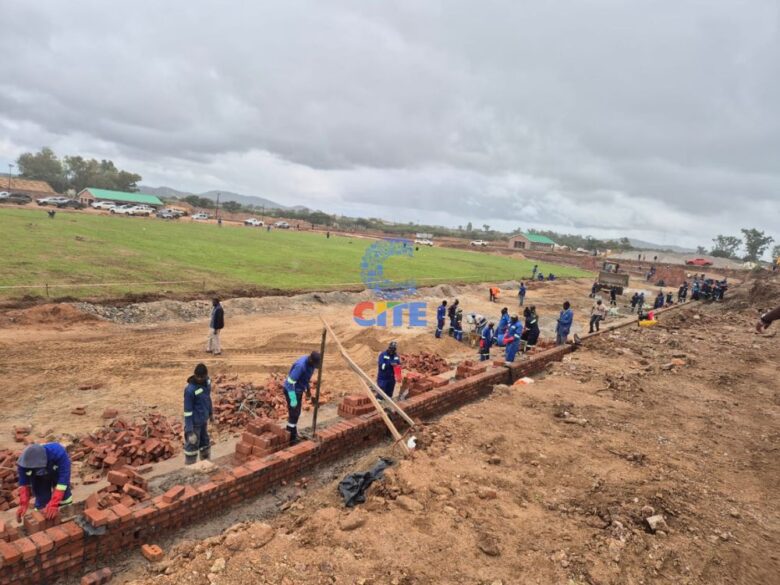
Hosting Zimbabwe’s Independence Day celebrations will bring unprecedented attention to Maphisa and the wider Matobo District. Preparations for the event are already accelerating infrastructure development, including road upgrades, renovations to public facilities and improvements in service delivery.
Local businesses are anticipating a surge in activity as visitors from across the country converge on the district for the celebrations. Transport operators, accommodation providers and traders are all preparing for the economic boost that accompanies a national event of such scale.
Beyond the immediate economic benefits, the celebrations are also expected to shine a spotlight on the region’s tourism potential. The nearby Matobo Hills, a UNESCO World Heritage Site renowned for its dramatic granite landscapes, rock art and historical significance, remain one of Zimbabwe’s most iconic natural and cultural treasures.
For many residents, the significance of the moment goes deeper than economics, it represents recognition.
What began more than a century ago as a modest mining outpost called Antelope Mine has evolved through many chapters, colonial mining, agricultural estates, growth point planning, land reform and diaspora investment, into a town now preparing to host a national celebration of independence.
When the national flag rises above Maphisa during the Independence Day commemorations, it will symbolise more than a moment of national pride. It will mark the arrival of a once-quiet settlement onto the country’s stage, a town shaped by history, sustained by resilience and carried forward by the enduring connection between its people and the land they call home.
Khumbulani Ndlovu is a proud son of Matobo and a resident of Maphisa.
ndlovuk2010@gmail.com
Leave a comment