

The National Railways of Zimbabwe (NRZ) claims it has significantly cut costs by producing its own ballast, saving nearly US$1 million annually that was previously spent on purchasing the material from local private suppliers.
Ballast are crushed stones used to stabilise railway tracks and since railway operations are capital-intensive, the rail organisation has innovated by producing ballast internally from its quarry processing plant in Shangani.
In an interview with CITE at its NRZ spot at the 65th edition of the Zimbabwe International Trade Fair (ZITF) in Bulawayo, Andrew Kunambura, NRZ’s Public Affairs and Stakeholder Relations Manager, said the state-owned rail operator was now relying on its own ballast produced from its Nalatale quarry processing plant in Shangani.
“In terms of saving we used to spend annually around US$1 million buying ballast but that cost is no longer there. The only cost we have now is of maintaining the plant and making sure the plant is in good working order,” said the PR manager.
“This is far less than what we used to spend from buying ballast from other private products in the country. We had contractors from blasting companies that used to make this ballast for us. We have since stopped that and moved to produce it on our own.”
The NRZ maintains over 260 kilometres of rail tracks across the country, requiring a steady supply of ballast to keep the infrastructure stable and weather-resistant.
“By ballast we refer to the quarry stones that you see on the railway line whose role is to stabilise the tracks so that the tracks are firm even against the elements of weather,” Kunambura said.
“We have put up this plant to meet our ballast requirement internally and we don’t have to buy as we used to do in the past. We have over 260 kilometres of rail tracks across the country that require us to produce as much ballast as possible to make sure we keep the tracks in good condition.”
Kunambura revealed the NRZ also had plans to expand the Shangani plant and eventually commercialise its operations.
“In the future we intend to expand this plant and go commercial and supply both these stones and smaller ones for the construction industry. Hopefully as we go on after fully reballasting our lines we can go on towards commercialisation of the plant,” he said.
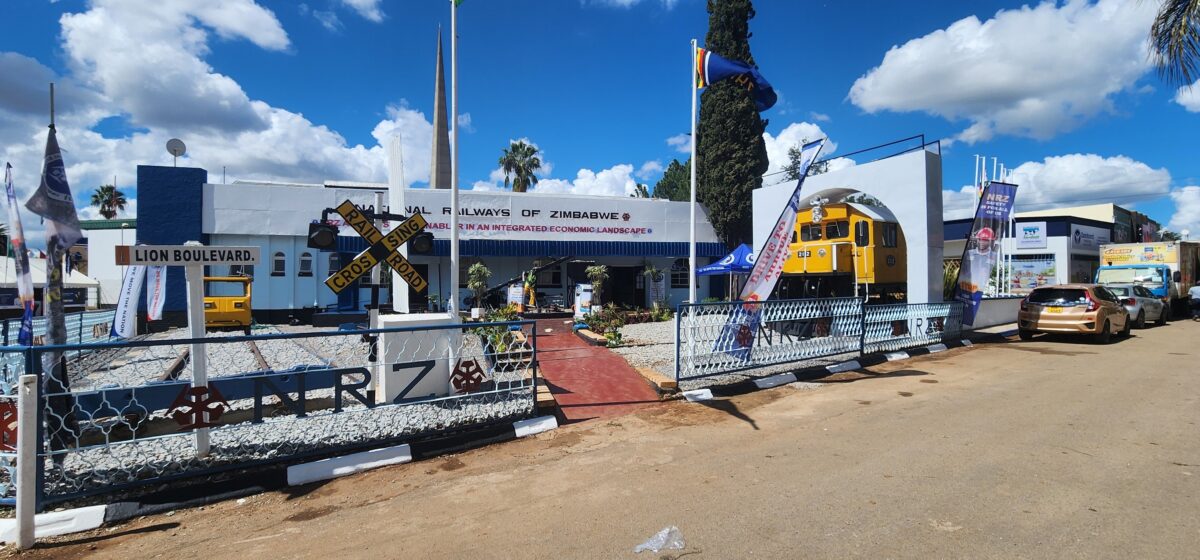
The PR manager added how NRZ’s move aligns with the ZITF’s 2025 theme: “Industrialisation: Crafting an Integrated Economic Landscape,” as it demonstrates how local production can reduce reliance on external suppliers and strengthen economic self-sufficiency.
“This is why we are showcasing our model of the Nalatale quarry plant, highlighting its role in modernising Zimbabwe’s rail infrastructure. We are here to exhibit our operations and demonstrate how we are leveraging innovation to cut costs and improve efficiency,” Kunambura said.
“The shift to in-house ballast production marks a key step in the NRZ’s efforts to optimise operations and reduce expenditure, so as to see the sustainability of Zimbabwe’s rail network.”