

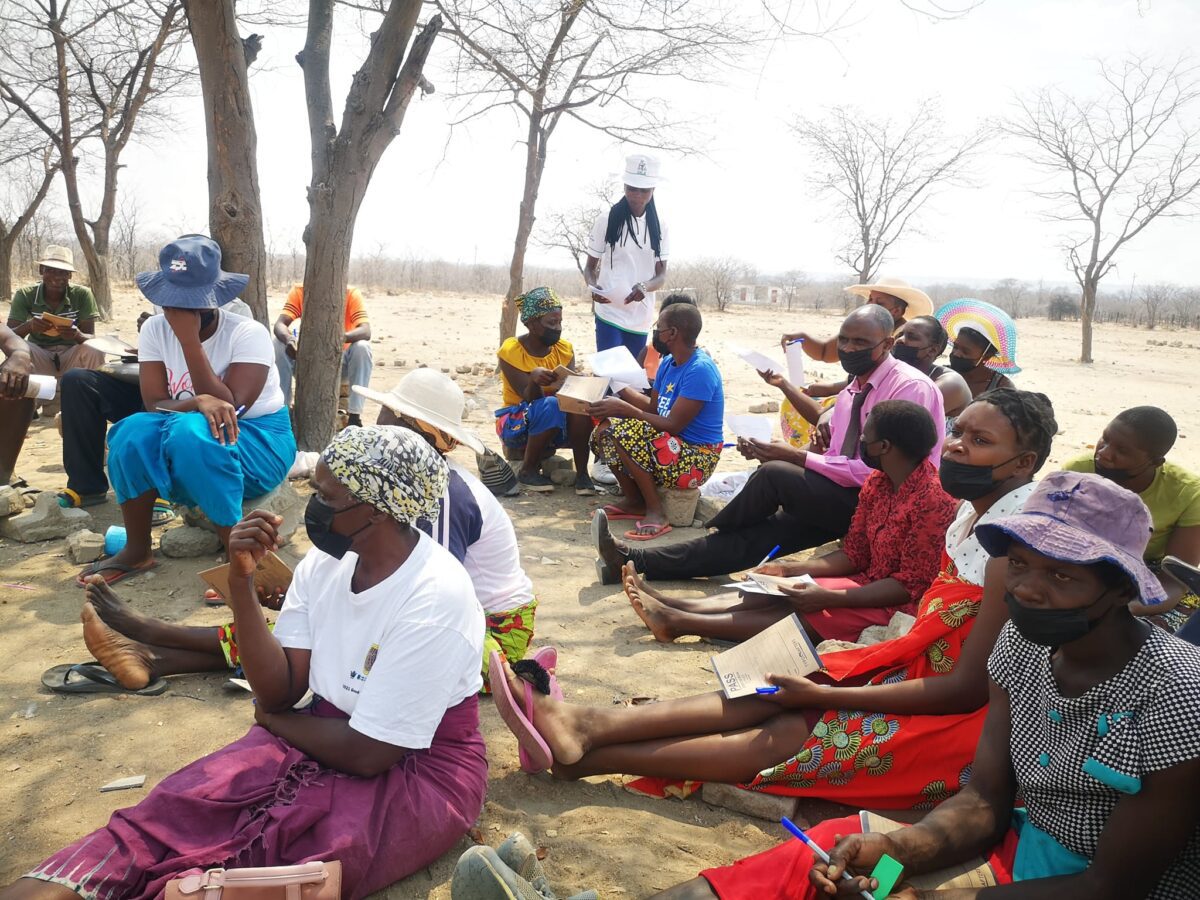
Communities in three Gwanda villages, Silikwe, Sukwe and Bhopoma are set to benefit from a new phase of the Promoting Equitable and Sustainable Natural Resources Management (ProNRM) project, launched by the Zimbabwe Environmental Law Organisation (ZELO) to empower locals, especially women and youth, in addressing drought, climate change, and resource governance challenges.
Phase 1 of the ProNRM project, which focused on strengthening governance frameworks for food security and climate resilience, yielded promising results.
Irrigation schemes in Silikwe, Sukwe and Bhopoma reported improved irrigation governance, reduced conflict and increased productivity, according to an end-of-term evaluation by external facilitators supported by ZELO teams.
However, the review also highlighted ongoing challenges such as weak market linkages and the underrepresentation of smallholder farmers in governance structures. These issues will now be a major focus under the next phase of the project.
The drought-prone Gwanda district continues to bear the brunt of erratic rainfall, which threatens livelihoods and food security.
With most of the population reliant on rain-fed agriculture, worsening dry spells have deepened poverty and pushed many into small-scale mining for survival.
Other districts set to benefit from the initiative include Gutu, Chiredzi and Bikita.
In an interview with CITE, ZELO Media and Communications Lead Batanai Mutasa said ProNRM seeks to strengthen sustainable and equitable natural resources governance and promote responsible business, investment and trade, particularly in mining, food security and climate resilience.
“ZELO was inspired to initiate this project after realising that communities across districts such as Gwanda, Gutu, Zvishavane and Chiredzi are grappling with the visible impacts of climate change,” said Mutasa.
“These areas, reliant on rain-fed agriculture and fragile ecosystems, are increasingly exposed to frequent droughts, unpredictable rainfall patterns and water scarcity.”
Mutasa noted that the El Niño-induced drought during the 2023/2024 season revealed the deep vulnerability of rural livelihoods, while human-wildlife conflict, especially in biodiversity-rich regions like the Mid-Zambezi Valley and Southeast Lowveld, continues to intensify as people encroach on conservation land in search of water and farmland.
To address inequality in environmental governance, ZELO plans to ensure that marginalised groups, particularly women, youth, and persons with disabilities, are included in all project stages.
“Marginalised groups face disproportionate impacts from unsustainable mining, climate change, and resource conflicts. These vulnerabilities often exclude them from decision-making and limit their access to resources,” Mutasa explained.
“For instance, women are often denied equal participation in community engagements, while youth lack access to training for sustainable livelihoods. The project will promote gender and social inclusion through community-led monitoring systems that prioritise the voices of women and marginalised individuals.”
ZELO will also work closely with key government agencies, including the Environmental Management Agency (EMA) and the Zimbabwe Investment and Development Agency (ZIDA), to enhance accountability and governance through research and training.
“This collaboration will be driven by annual research reports on responsible investments and the state of business and human rights, which will serve as advocacy tools for policy engagement,” Mutasa said.
“ZELO will also develop model frameworks for Environmental, Social and Governance (ESG) due diligence and provide technical support to regulators and investment authorities to strengthen their enforcement capacities.”
By the end of the project, ZELO expects local communities to play a more influential role in natural resource management and decision-making through inclusive platforms and policy dialogues.
“Success in 2028 would mean achieving climate justice for local communities, ensuring their rights are respected and their voices are included in decisions concerning the environment and natural resources that affect their lives,” said Mutasa.
He added that the project’s long-term goal is to build community resilience and sustainable livelihoods while promoting accountability for environmental harm.
“Our approach is rights-based, creating space for marginalised groups to amplify their voices,” Mutasa said.
“We’re institutionalising their participation through community monitoring and grievance redress mechanisms to ensure that their perspectives directly influence accountability and decision-making.”