

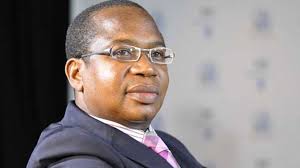
The Zimbabwean government’s proposed Cash Withdrawal Levy has ignited a wave of criticism, with citizens, analysts and opposition figures accusing Finance Minister Professor, Mthuli Ncube and Treasury Permanent Secretary, George Guvamatanga, of being dangerously disconnected from the realities of the country’s cash-dependent economy.
Speaking at a post-budget meeting held in Harare recently, Guvamatanga insisted the new tax on US dollar withdrawals would not discourage banking habits and was instead designed to stem the flow of cash into the informal sector.
“All the cash or most of the cash finding its way into the informal system actually emanates from the formal system. It’s coming from the banks, so when you say it would discourage banking, no, the money is already in the banks but it’s going out into the informal system and not coming back to the banks,” he said.
Guvamatanga defended the withdrawal thresholds, which exempt individuals withdrawing up to US$500 and corporates withdrawing up to US$5 000 per month from the levy.
“For individuals, if you withdraw US$500, there is no charge. For corporates withdrawing US$5 000, there is no charge. As a corporate, why would you want to withdraw more than US$5 000? Why would you want more than US$5 000 in cash?” said the Permanent Secretary, adding that banks already earned “20 percent of their total income from cash withdrawals.”
Guvamatanga suggested the government may need to “find a way… with the banks” to share this revenue but said the goal was “to discourage the migration of cash from the formal system into the informal system.”
The finance minister echoed this view, arguing the new levy was justified because physical cash originates from the formal banking sector.
“Really, we feel the source of all this cash is the formal sector in the first place, it is the banking sector. What we are taxing is money that is exiting, going one way, so we really feel this is indeed justified,” Prof Ncube said.
“At US$500, I don’t expect civil servants to spend a lot of time withdrawing their cash; they should keep their money in there, within that US$500 limit. Corporates, I’m thinking of corporates walking around with US$10 000 cash. What are they doing with it? You can see how we are thinking, that the way it is structured is ok; it’s consistent with normal transaction behaviour.”
However, analysts interviewed by CITE said the comments demonstrate a persistent disconnect between Treasury officials and the lived economic realities of Zimbabweans.
Analyst, Bernard Magugu, said both officials were correct that some cash originates in the formal sector, however their interpretation ignores the deeper structural reasons behind Zimbabwe’s overwhelming dependence on physical US dollars.
“These comments by the Finance Minister and Permanent Secretary reveal a deep contradiction at the heart of Zimbabwe’s financial system and highlight how policy continues to treat symptoms rather than causes,” he said.
“To be objective, yes, a significant portion of the cash circulating in the informal economy can originate from the formal banking sector. But that should now cover the structural reasons why that money leaves the formal system and does not return.”
Magugu said most Zimbabweans withdraw their entire salaries immediately because they do not trust the banking system.
“Salaries are deposited and people withdraw them immediately because of past episodes of bank erosion and loss of deposits, currency instability, perceptions that policy can shift overnight and preference for USD cash to store value,” he said.
“Until trust is restored, no level of withdrawal limits or incentives will meaningfully change behaviour.”
Magugu added that Treasury’s withdrawal assumptions were out of touch with how the informal economy operates.
“In reality, Zimbabweans use cash more for services. Most SMEs, vendors, transport operators, construction players and service providers operate almost entirely in cash,” he explained.
“Some service providers especially suppliers, artisans, transporters and casual labourers prefer cash and do not want electronic payments, often due to tax fears or transaction cost concerns. Cash is seen as the only reliable store of value at every level of the economy.”
Zimbabwe Communist Party (ZCP) General Secretary, Nicholas Ngqabutho Mabhena, said Guvamatanga’s admission that banks earn 20 percent of their revenue from withdrawal fees exposes structural weaknesses in the financial sector.
“For a modern financial system, this is worrying,” he said.
“It shows there is low uptake of savings and credit products, few long-term financial instruments and a system surviving on transactional charges instead of productive lending.”
Mabhena argued banks were “profiting from a broken system, not driving investment or savings,” while the government continues to frame the informal sector as a leakage instead of the reality that it is the backbone of the economy.
“The policy direction still treats the informal sector as a leakage, and the government is framing the key problem as ‘migration of cash from the formal system into the informal system,’” he said.
Instead, he argued, policy should focus on building incentives for informal businesses to formalise, lowering transaction costs and restoring confidence.
“Policy should be grounded in how businesses actually function, not in how the government wishes the economy operated,” said Mabhena.
In a reaction posted on X, advocate Fadzayi Mahere questioned why Treasury scrutinises the cash needs of ordinary citizens while ignoring the cash-heavy activities of political elites.
“Surely this can’t have been a serious submission?” she wrote.
“Do you ever ask these political elites why they need US$100 000 in cash? Do you ever inquire how it was withdrawn? What is stopping political elites from using the banking system when they distribute their loot? Why is it always cash? First answer that before asking us why a corporate needs to withdraw $5 000 of its own money.”
Mahere added that the rapid rise in taxes and levies was forcing citizens to avoid banks altogether.
“These dubious taxes and levies are why people end up resorting to cash deposit boxes and safes,” she said.
“Your system is selective, irrational and rotten.”
Under the proposed Cash Withdrawal Levy, individuals withdrawing monthly amounts between US$1 and US$500 will not pay the levy.
Withdrawals between US$501 and US$1 000 will attract a two percent tax and anything above US$1 001 will attract three percent.
Banks already charge three percent on all withdrawals.
Corporates can withdraw US$5 000 tax-free but pay between two and three percent on amounts above that.
The finance minister said ATM withdrawals averaged US$265. 8 million per month between April 2024 and June 2025, peaking at US$353 million in June 2025, placing pressure on banks to keep nearly US$1 billion in cash reserves.
Support CITE’s fearless, independent journalism. Your donation helps us amplify community voices, fight misinformation, and hold power to account. Help keep the truth alive. Donate today