

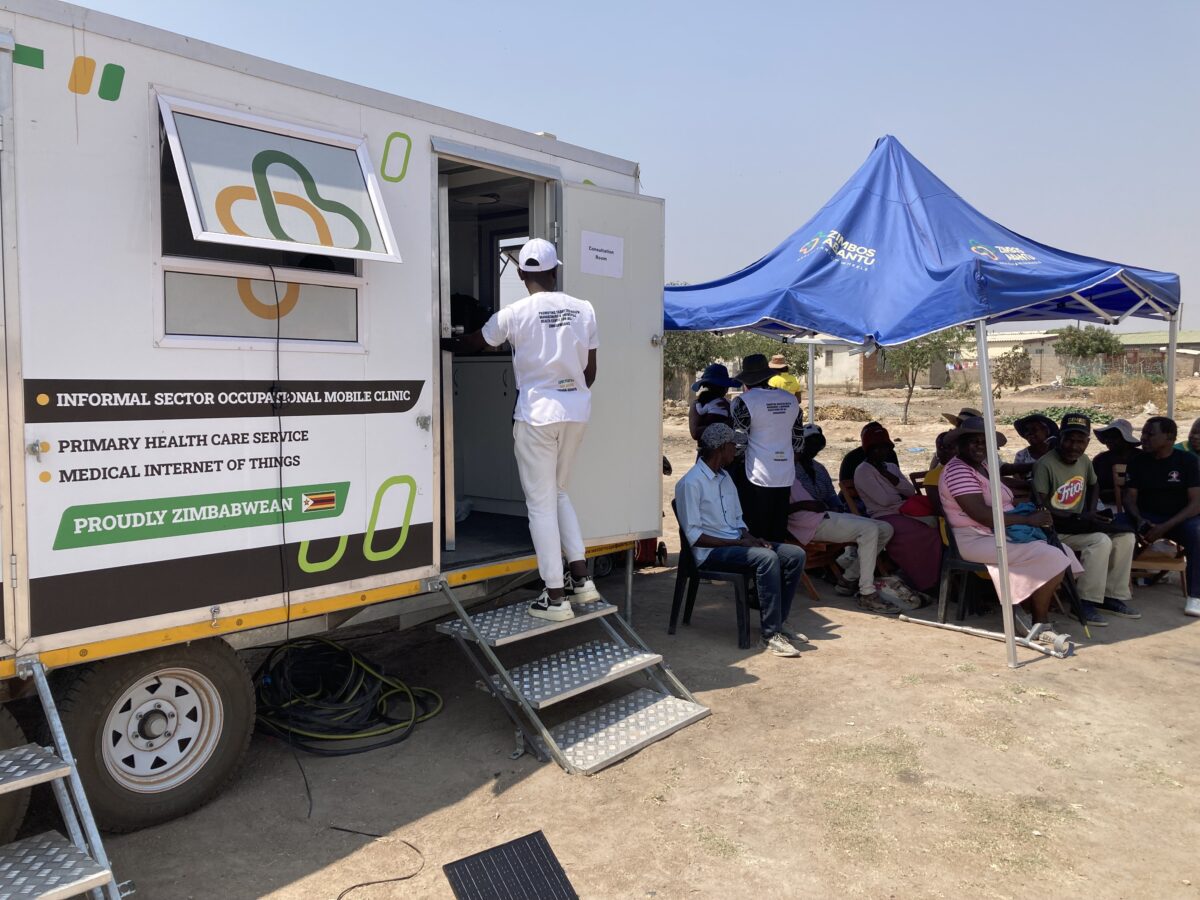
The National AIDS Council (NAC) has expanded its social contracting initiative to Bulawayo, engaging Zimbos Abantu to run two mobile clinics in Emganwini and Cowdray Park, under the banner Health Care on Wheels.
The programme is expected to bring vital services closer to communities, including HIV testing, STI screening and treatment, prostate cancer screening and general consultations.
For Bulawayo alone, NAC has set quarterly targets of 5 000 people for HIV testing, 250 for STI screening and treatment, 200 for prostate cancer screening, and 2,180 for general consultations that Zimbos Abantu must meet.
Explaining the concept, Bulawayo province NAC acting Provincial Manager, Douglas Moyo, said social contracting is central to Zimbabwe’s fight against HIV.
“Social contracting is a government strategy, which is employed to make sure that as a country we meet the 2030 goal of ending AIDS as a public health problem. In the HIV field, coordinated by NAC, each province identifies organisations with a comparative advantage in implementing programmes,” he said to journalists during a media tour on the HIV and AIDS related prevention, treatment care and support interventions in Bulawayo province.
“In Bulawayo, Zimbos Abantu is one such organisation, contracted at national level and assessed for capacity, to expand their reach across provinces.”
Moyo said social contracts are performance-based and subject to annual review.
“If whatever they are implementing shows a lot of value and progress towards the three 95s and the 2030 goal of ending AIDS, then definitely this will be reviewed. The contracts run for one year and are performance-based. These organisations submit plans to NAC, which approves them. They are supervised at provincial and district level, and programmes must be implemented within the scheduled reporting period,” he said.
Moyo stressed accountability, given the funds come from the AIDS levy, collected from taxpayers’ money.
“This is the AIDS levy, which is budgeted for annually. So at the end of each financial period, we should make sure that the funds are utilised as per approval of the NAC budget for that particular year.”
NAC Bulawayo Monitoring and Evaluation Officer, Primrose Dube, explained the rigorous oversight for social contracting.
“For all our social contracts, they submit reports on a monthly basis, showing their targets for the month and their performance. Attached to the reports, they must acquit the money they received for that month. Disbursements are staggered across the year, only after acquittals with all paperwork attached, registers, paysheets, receipts, even fuel. Monitoring is very vigorous, month to month,” she said.
Dube added that Zimbos Abantu’s Bulawayo pilot phase began in August this year and runs until December, whose contract would be reviewed on performance and projected funding.
Zimbos Abantu Founder and CEO, Tawanda Mushawedu said they have targets they are supposed to reach in the community and would have to rely on word of mouth and through community mobilisers, as the health sector is restricted from advertising.
The Zimbos Abantu Founder said the organisation currently operates 11 mobile clinics, five funded by Swiss City Foundation.
“Bulawayo just has two, but others are in Harare and Mashonaland East. Our vision speaks to 150 mobile clinics by the end of 2027, and we should be on course. We don’t have a funder for medical drugs, so what we carry, we sell mostly on a cost-recovery basis. Sometimes organisations sponsor free medication for children,” he said.
“We provide male cancer screening, especially prostate, though cervical cancer is not pre-funded by NAC. But we still plan Pink October campaigns with local councillors for women.”
Mushawedu highlighted that mobile clinics bridge gaps in healthcare access.
“Whilst there are public clinics, the issue of medical supply is a teething issue. Someone may get a free consultation, but spend $4 on transport and $1 on drugs. Our model tries to make medication more accessible. We dispense over-the-counter and C-level drugs, refer where necessary, and work with doctors who prescribe medication. We aim to be holistic.”
He also noted job creation as a key benefit of NAC’s social contracting, as Zimbos Abantu Bulawayo coordinator, Charmaine Dube, said their team consists of two site supervisors, two nurse aides, one relief nurse aide, eight mobilisers, two security staff plus relief, five nurses, and a rotating doctor.’
“Like last weekend, we went to the King Mzilikazi ceremony and offered services to 169 people. We also conduct outreaches and partnerships, such as the upcoming cancer campaign in Cowdray Park,” Dube said.
Mushawedi added that by regulation, they cannot discriminate if people come from other areas, “naturally, we serve anyone who comes.”
He said they work closely with local and national health systems such as Bulawayo City Council, as they have to submit monthly statistics on HIV, STIs, and prevalence.
“We also have an MOU with Population Services Health to provide ART and PrEP from our mobile clinics. So it’s not just NAC’s consumption, it’s a multi-partner approach,” he said.
Support CITE’s fearless, independent journalism. Your donation helps us amplify community voices, fight misinformation, and hold power to account. Help keep the truth alive. Donate today
We as citizen are grateful to have health collaboration that makes our health life easy.