

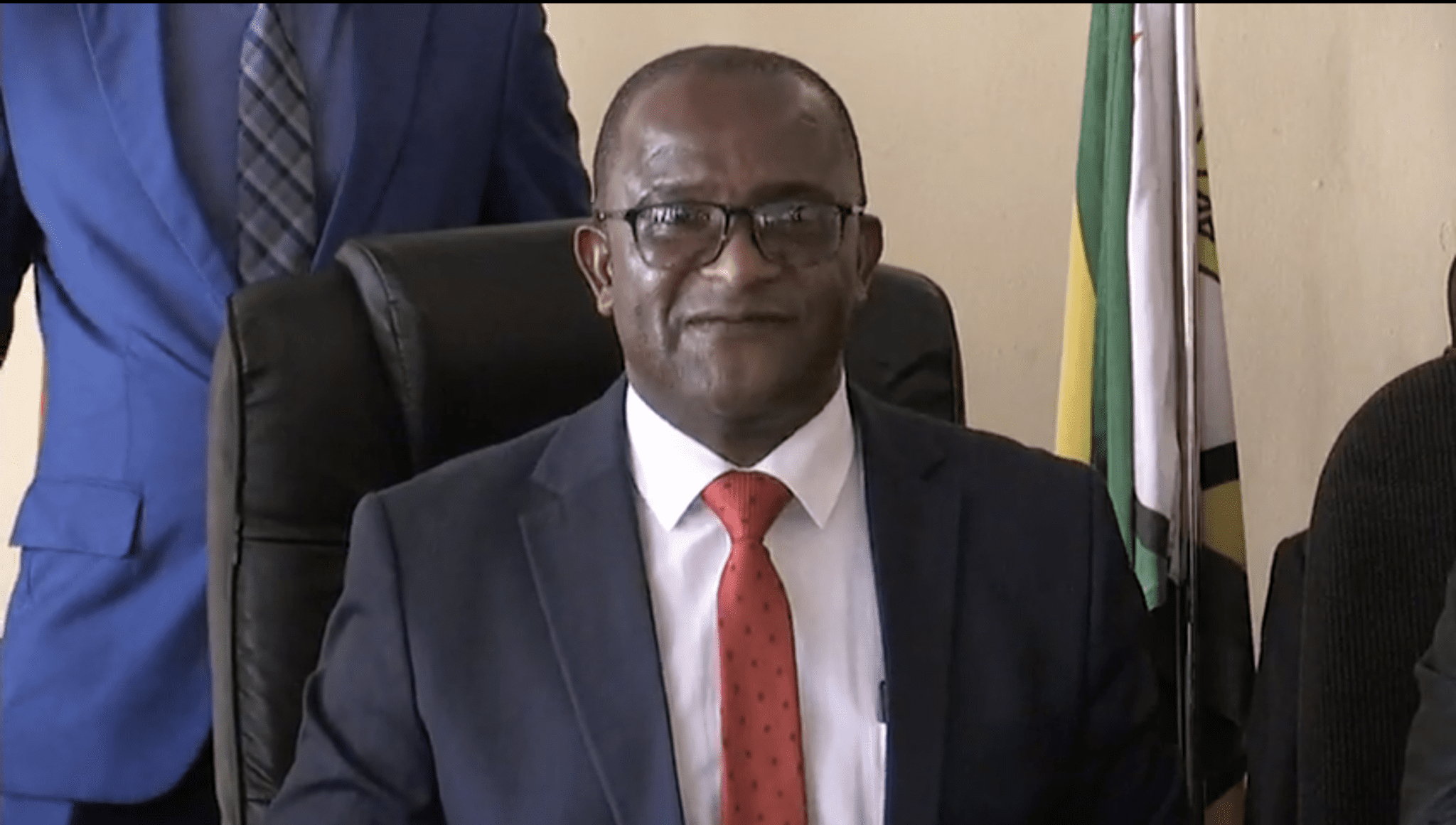
The MDC led by Douglas Mwonzora, has challenged Zimbabweans to reject the government’s proposed Constitution of Zimbabwe Amendment Bill, 2026, urging them to consider how history would judge their response if nothing is done to fight the amendments.
He cited how the new Amendment Bill was a calculated political manoeuvre rather than constitutional reform, pointing out that presidential powers were “never meant to be exercised by someone without a fresh, direct mandate from the people.
Mwonzora said the legitimacy of presidential powers flows from the ballot. “Remove the ballot and you remove the legitimacy,” he said, referring to the proposal to remove the direct popular vote for the presidency, replacing it with a system in which the President would be elected by Parliament.
The amendment proposal says the Constitution will be amended to extend the term of office of the incumbent from 2028 to 2030.
The proposed changes have ignited national debate, with people arguing they would fundamentally alter the source of executive authority in Zimbabwe and concentrate power in the hands of the political elite.
Mwonzora warned that the country was facing what he termed an “existential crisis” caused by calculated political manoeuvres.
“A small elite group is inches away from depriving an entire nation of 15 million people of their sovereign right to choose their President. This is not routine legislation,” he said.
“This is not an administrative adjustment. This is an assault on the very foundation of our constitutional democracy.”
The MDC leader noted that “Zanu PF has remained undeterred in its pursuit of the 2030 agenda,” which is why he asked citizens to “call it out, clearly, boldly, and without apology.”
“Today Zimbabwe stands at the precipice of a constitutional cataclysm.”
Mwonzora argued that the new Amendment Bill is a shift that strikes at the heart of constitutional legitimacy.
“That right, sacred, hard-won, and non-negotiable, is being quietly stripped away,” he said, referring to the right to vote directly for the Head of State.
Beyond the change in the method of election, the MDC leader raised alarm over provisions that would grant the President additional powers to appoint ten more unelected members into an already elected Parliament.
“We now face an existential crisis in which immense executive authority is intended to be retained by one individual without the people’s renewed consent,” Mwonzora said.
“Even more alarming, the proposed amendment would grant the President additional powers to appoint ten more unelected members into an already elected Parliament. This is not democratic reform. It is democratic regression.”
The Bill, he said, seeks to avoid a referendum, despite altering what he described as the core architecture of presidential power.
“That fact alone exposes its intent,” he said.
“The Constitution is being amended by those who stand to benefit from the amendment, and it will be assented to by a President who is its direct beneficiary. That is a fundamental conflict of interest dressed up as governance.”
Mwonzora, who participated in the drafting of the 2013 Constitution during the Government of National Unity, insisted that its framers deliberately made it difficult to tamper with executive power.
“When we drafted the Constitution in 2013, we deliberately placed the people of Zimbabwe as the ultimate custodians and final line of defence. That is why fundamental changes require a referendum,” he said.
“It was never meant to be easy to alter the architecture of presidential power. It was designed that way to prevent exactly what we are witnessing today.”
He called on President Mnangagwa to uphold Section 90 of the Constitution, which obliges the Head of State to “preserve, protect, and defend the Constitution.”
“That duty is not ceremonial, it is binding,” Mwonzora said.
“It is equally the duty of Parliament to protect this sacred charter, not mutilate it for political convenience.”
Mwonzora also pointed to what he described as a “particularly troubling clause” in the Bill that would remove the explicit constitutional obligation of the uniformed forces to defend the Constitution.
“One is left to ask: Why?” he said.
“What possible justification exists for weakening the Constitution’s guardians?”
In a pointed warning, Mwonzora added that if the Constitution ceases to be the country’s moral compass, “we risk becoming a directionless nation, governed not by law but by ambition.”
He argued that the government’s choice of the general amendment procedure demonstrates that the Constitution remains robust but is under manipulation.
“The general amendment route was designed to address socio-economic and political needs, not to fundamentally alter how a President is elected. It was never meant to entrench power. This Bill is outrageous in both substance and intent,” he said.
Mwonzora contrasted the political energy devoted to the amendment with pressing humanitarian issues.
“If urgency were truly their concern, the general amendment mechanism could have been used to address the plight of thousands of families in Hopely evicted and left without shelter, food, sanitation, or dignity,” he said.
“Children and mothers sleep in the open air as the rains fall. That is where constitutional urgency belongs.”
Instead, he accused the ruling elite of prioritising self-preservation over national welfare.
“We see a political elite consumed by self-preservation, seeking to massage their egos while sacrificing a nation’s democratic future,” he said.
Framing the debate as one that moves past party lines, Mwonzora appealed to broad sectors of society.
“This is not about one man. It is not about one party. It is about the soul of our Republic,” he said.
“We call upon the people of Zimbabwe, civil society, churches, labour, students, business leaders, war veterans and every democratic stakeholder, this is the defining moment.”
He challenged citizens to consider how history would judge their response.
“History will record what we do now. Will we surrender the ballot in silence? Or will we defend it with conviction?”
Mwonzora vowed to resist the proposed changes through lawful means.
“Let it be known, clearly and unequivocally, that we will oppose this unconstitutional agenda through every lawful, democratic means available to us. Zimbabwe belongs to its people and the people must decide,” he said.
Support CITE’s fearless, independent journalism. Your donation helps us amplify community voices, fight misinformation, and hold power to account. Help keep the truth alive. Donate today