

By Ndumiso Tshuma
The National Railways of Zimbabwe (NRZ) has attributed a recent collision involving a luxury tourist train near Gwanda to a communication failure within the rail network, raising fresh concerns about safety on the country’s ageing railway infrastructure.
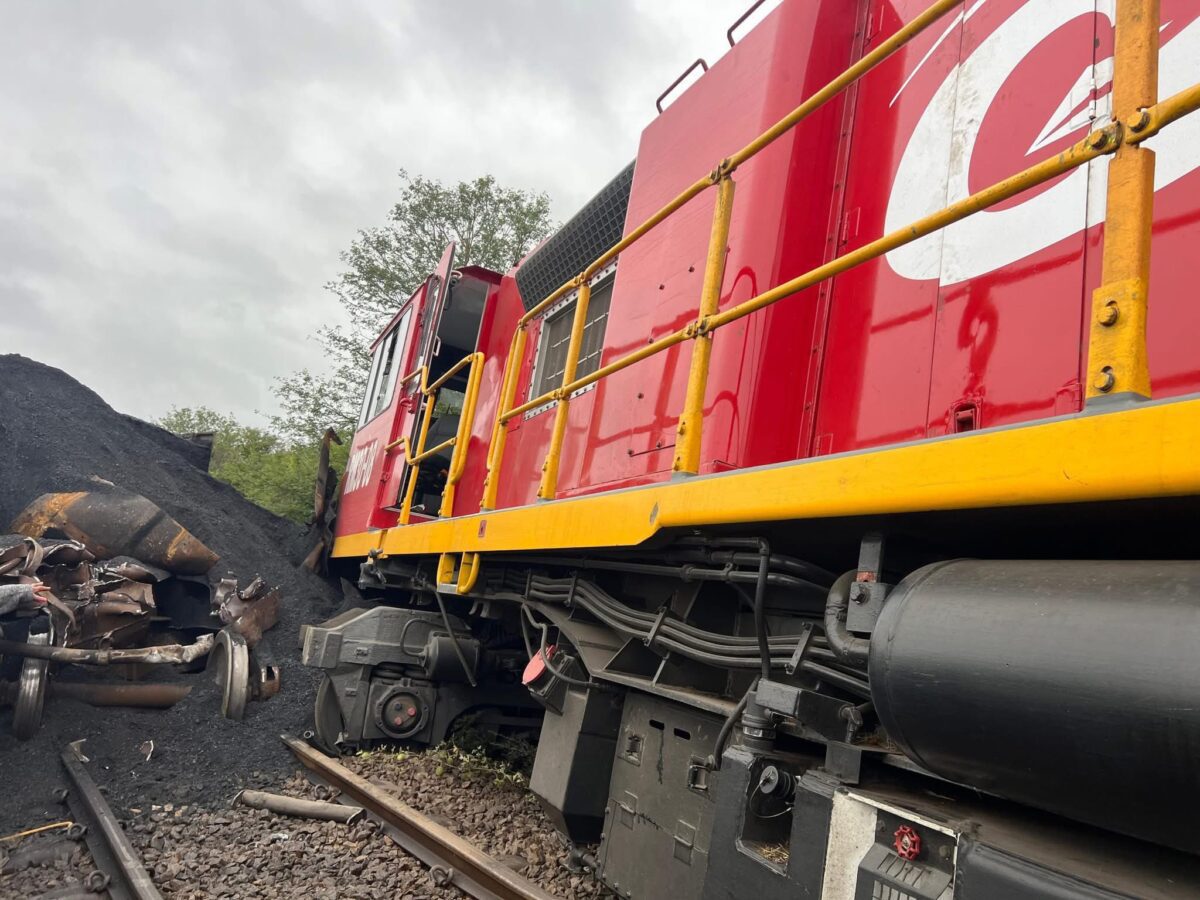
The April 2025 accident involved a Rovos Rail luxury passenger train and a freight train operated by Bulawayo-Beitbridge Railway (BBR). Several crew members and passengers were injured in the crash.
NRZ spokesperson Andrew Kunambura, speaking on This Morning on Asakhe, an X Spaces current affairs programme by CITEZW, said preliminary investigations pointed to a serious lapse in operational coordination.
“The investigation revealed that a BBR goods train was mistakenly allowed onto the line while the Rovos Rail train, which had derailed earlier, was awaiting rescue. This miscommunication led directly to the collision,” Kunambura explained.
While the luxury train was stationary due to the earlier derailment of a rail roof component, the incoming freight train was cleared to proceed, an error Kunambura described as a breakdown in communication protocol.
The collision sparked concerns about rail safety in Zimbabwe, a country grappling with decades-old infrastructure and limited resources. However, Kunambura was quick to defend NRZ’s safety record.
“This is the first incident involving two trains in over two decades,” he said. “The last major collision of this kind was in 2003. That speaks volumes about the general safety and reliability of our systems.”
In a separate incident days later, a coal train transporting fuel to Zambia caught fire in the Hwange area of Matabeleland North Province. The fire, which broke out between Kalala and Matetsi sidings, was traced to a faulty fuel tank.
“There were no injuries in the Hwange fire. Our teams managed to contain the blaze in time,” Kunambura said.
Beyond internal rail operations, NRZ is increasingly concerned about accidents involving the public, particularly at level crossings and near tracks in urban areas.
“One of our biggest safety challenges remains the interaction between trains and motorists at level crossings. Too often, drivers underestimate the speed of an oncoming train and try to beat it across the tracks, with tragic results,” Kunambura said.
He also highlighted risks posed by pedestrians wearing earphones near train lines.
“We had a fatal case in Rusape where a young man jogging with earphones couldn’t hear the train coming and was struck. These are preventable tragedies,” he added.
Kunambura called for increased public awareness and urged both motorists and pedestrians to respect railway safety rules. NRZ, he said, has stepped up education campaigns across the country to reduce accidents.
“Trains cannot stop as easily as cars. Once a driver sees someone on the tracks, it’s often already too late,” he warned.
It’s very important to tell the reading population , the Truth. The Heany -Junction to Beit Bridge line/ section is operated by BBR, on a BOT agreement, in other words, ALL operations on that section, are solely BBR,s responsibility. How then does NRZ get involved in a section. Operated by a private Rail company BBR? I,m told according to sources, communicating systems, which used to be Radio operated, was withdrawn, in favor of Cellphone, system, which I,m told, it’s not efficient, due to Network problems. From experience, the Token system, which was used in conjunction with Radio, was more efficient, than the Radio. There is quite a number of questions, which can be asked, from the controlling Tower, the operator who was on duty, the time and day of such an accident , happening. There were ONLY two Trains in that particular section and the two were later involved in that accident, which I feel , could have been avoided, if any of the operating crews, were alert enough. Heads must just roll, to prevent such accidents occurring, in future.