

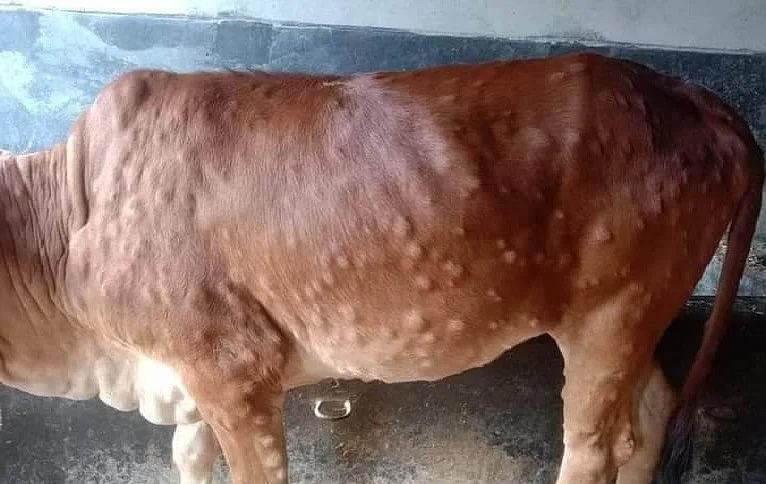
An outbreak of lumpy skin disease has killed about 15 cattle in Robert Sinyoka, a peri-urban area of Ward 17, causing major concern for residents.
Lumpy skin disease is a viral infection of cattle caused by the lumpy skin disease virus and is primarily transmitted through the bites of insects such as mosquitoes, flies and ticks.
Leader of the local Anti-Stock Forum, Mandlenkosi Gumunyu, told CITE that climate change is worsening the crisis by creating ideal conditions that favour the spread of the virus and its insect carriers.
“We have water shortages in our area. Our livestock walk about 4km in search of water in Khami. They also face challenges as they get trapped in the mud and we have lost several cattle last year,” said Gumunyu.
“This year there is no grass and our livestock are now drinking burst sewer water. Because of that, there is now an outbreak of lumpy skin disease. At present, the statistics show that people have lost 15 cows due to the outbreak.”
Gumunyu said the situation is worrying as most peri-urban residents depend on their livestock for their livelihoods.
“We have a community borehole, so if we can have a water trough there, it would help. We can’t rely on livestock walking four kilometres to drink water because they still have to walk back without finding any food. As it is, the rains are starting, but some cattle are not strong, so we might lose even those,” he said.
As part of local efforts to address the outbreak, Gumunyu said community members have pooled resources to buy vaccines.
“We came together to buy the combined Black Quarter vaccine, which protects against lumpy skin and black leg. What makes this lumpy skin spread so fast is that there is no vaccine that can immediately treat it,” he explained.
He said villagers are still relying on the old dipping system to control ticks, which spread the disease.
“It only has to undergo the 5-4 dipping sessions, they have to dip after every five days for four times, then you can go back to the semester. As you can see, the grass is white, so the tick eggs are hatching. The challenge is that even the Veterinary Department is still using the old system of dipping twice a month. When the disease is already affecting the livestock, it becomes hard for them to recover quickly,” said Gumunyu.
Another community leader, Michael Maseko, said the Member of Parliament for Pumula Constituency, Sichelesile Mahlangu, had promised to solarise the borehole through the Constituency Development Funds (CDF).
“Maybe as a community we could be able to construct a trough on our own, but up to date, that promise has not been fulfilled,” said Maseko.
Leave a comment