

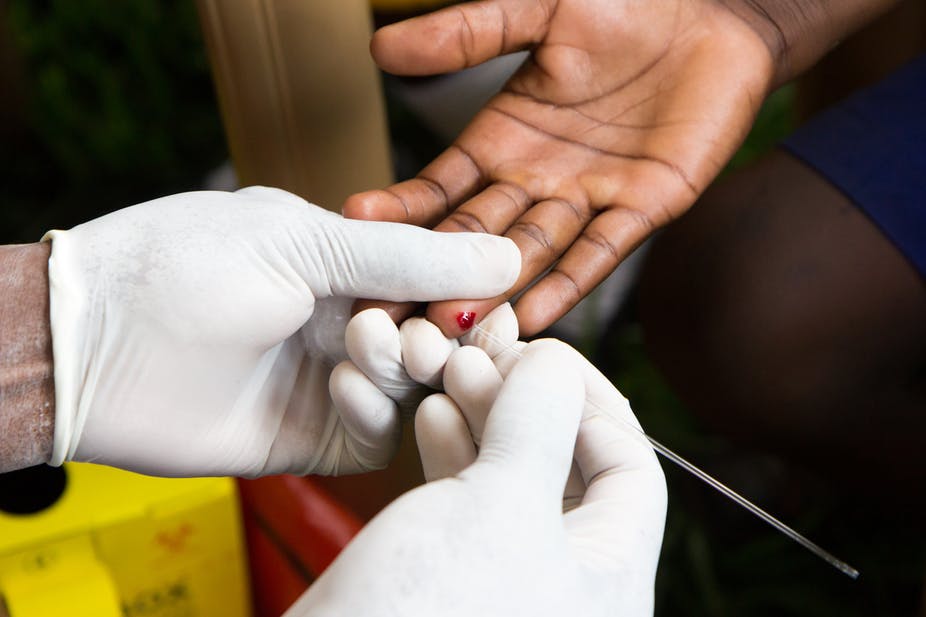
The latest HIV programme data for Bulawayo has exposed a critical and widening gender gap in testing uptake, coupled with a concerning rise in the HIV positivity rate among men and young people, prompting urgent calls for targeted intervention and behavioural change.
Despite continued efforts to expand access to services, the National AIDS Council (NAC) said the latest figures show a pressing need for Bulawayo’s HIV response to deploy innovative, male-focused strategies that address both the barriers to testing and the drivers of new infections, while reinforcing prevention messaging for all, regardless of status.
Presenting the city’s third-quarter programmes update to the media recently, Bulawayo NAC Programmes Officer, Douglas Moyo, explained that HIV Testing Services (HTS) remain the indispensable entry point for care.
“Then coming to HIV testing services (HTS), which we still emphasise that this is the gateway to access any other service. And HTS is one of those models that will assist us achieve the first 95,” Moyo said, referring to the UNAIDS target that 95 percent of people living with HIV know their status.
Detailing the figures, Moyo revealed a significant testing imbalance:
“When it came to HTS in the third quarter, you can see the number that was tested. 22 241 people were tested. Of those that were tested, 16 468 were females and the males were 5 673.”
He expressed deep concern over the disparity, which indicates broader issues in male health-seeking behaviour.
“When it comes to HIV testing, men are always lagging behind. Of course we are not talking about couples that the numbers for males and females should match. But if you look at the difference, 16 000 against 5 000. That already tells you that in terms of motivation to get tested for HIV, we still need to do more for men.”
More alarming than the testing gap is the trend in positivity rates, said the NAC programmes officer.
While the overall city positivity rate stood at four percent, which Moyo stressed is “still very high”, the data revealed that for men it was higher.
“For males, the positivity is six percent. For females it was three percent. We are seeing this phenomenon where the positivity rate for males is actually increasing in Bulawayo. Why it is increasing is something that is subject to research. We still need to find out why all of a sudden we are seeing male positivity rate actually increasing.”
This rising positivity among men, combined with lower testing rates, suggests a larger pool of undiagnosed HIV infection within the male population, posing a significant risk to the province’s epidemic control efforts.
Moyo also highlighted a proactive shift in programming, focusing on those who test negative.
“Then high-risk HIV-negative clients were identified and referred for services. The approach that is there now is that even those that test HIV-negative, they actually are linked to services. So that we make sure that they don’t continually expose themselves to HIV infection.”
He said NAC had also intensified efforts to ensure that people who test HIV-negative, particularly those at high risk, were linked to prevention services.
He critiqued a potentially dangerous mindset among some frequent testers, linking it to ongoing risk behaviour.
“I have heard people who boast about testing for HIV regularly, saying, ‘I test every three months’ and boasting about it in public. For me, when you boast about that, it is telling me or showing me that here is somebody who continuously exposes themselves to risk. Which means we need to do something about this person,” Moyo asserted.
“So this is one thing that we need to talk to people about the risk of HIV infection. You cannot continuously expose yourself and then think about your next visit to have another HIV test. We need to talk about issues of behaviour change. We need to talk about issues of using preventative measures to protect ourselves.”
The data trend of low male engagement, worryingly, appears to be established early at a young age.
Analysing youth services for ages 10 to 19, Moyo pointed out that the gender disparity in testing access is already entrenched.
“This is the age group 10 to 14. Does it mean that the low participation for men is inherited? Why is it starting at this age? Is it inherited? Are we missing someone, Why is it so? At that age, 10 to 19, they are already not taking up the services. What if they graduate into adulthood? What is going to happen?”
The NAC programmes officer issued a direct challenge to families and communities, framing the issue as a collective responsibility.
“We need to continuously encourage ourselves to motivate our children, our grandchildren, to participate in these programmes. What are we doing about our children? What are we doing about our grandchildren? This is the statistics that is speaking to us. Because these children are under our care, isn’t it? These grandchildren are under our care if they are not accessing services,” Moyo said.
Leave a comment