

Bulawayo’s efforts to eliminate mother-to-child transmission of HIV face serious challenges, with low antenatal care (ANC) booking rates and late HIV testing among pregnant women emerging as major risks to achieving national and global targets by 2030, the National AIDS Council (NAC) has said.
Giving a Bulawayo Programmes Update to the media recently, Bulawayo NAC Programmes Officer, Douglas Moyo, said close monitoring of the Prevention of Mother-to-Child Transmission (PMTCT) programme was critical if Zimbabwe was to meet its long-term HIV goals.
“It is very critical as we journey towards 2030 Hence, we need to closely monitor this PMTCT programme. If we are seeing some gaps in this programme, that means we might even fail to meet our 2030 goals,” Moyo said.
He said data collected across the city showed worrying gaps at different stages of the PMTCT cascade, starting with ANC booking.
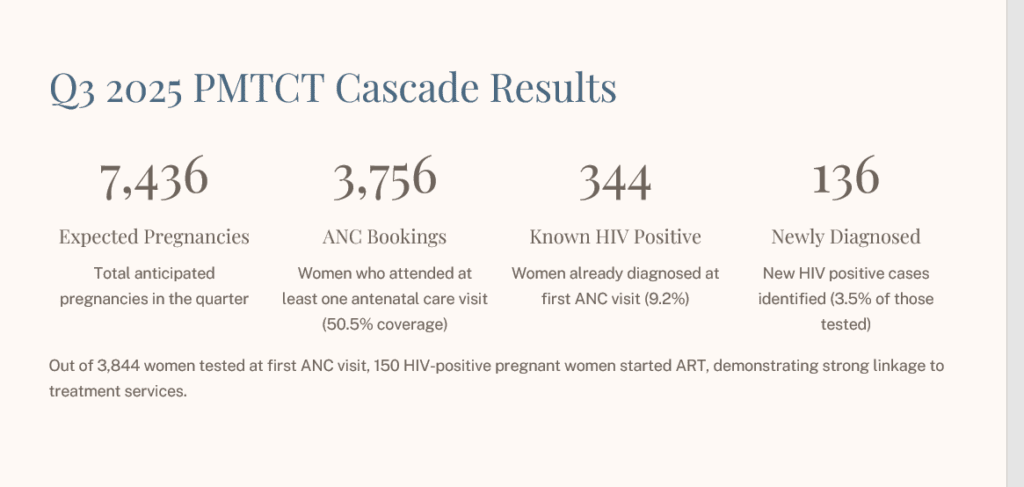
“According to the data that we collected, against the expected number of pregnancies, in the whole of Bulawayo, you can see that we had 50.5 percent booking for ANC,” said Moyo.
He said while some women booked early and already knew their HIV status, a significant proportion were still being diagnosed during pregnancy or even at delivery.
“And then out of those, we had women who were actually booking with a known HIV status. 9.2 percent of women became pregnant when they already knew their HIV status,” he said.
However, Moyo said the most worrying group was women who only tested for HIV once they were already pregnant.
“Then we have the last part of that cascade, which is worrisome when we talk about the PMTCT, which is the newly diagnosed women. These are women who are testing for HIV when they are already pregnant. As you can see, it says new HIV positive identified 3.5 percent, which is worrisome,” Moyo said.
The NAC programmes manager explained that this pointed to a broader challenge of women not accessing ANC services early or at all.
“If you look at that cascade, it is telling us that we have quite a number of women who do not go for ANC or book for ANC when they are pregnant. These are the women who would actually walk into a labour ward, already in labour, to deliver,” said Moyo.
Moyo said the core concern within the PMTCT programme lay in primary prevention, particularly making sure women of childbearing age knew their HIV status before pregnancy.
“But our main worry with the PMTCT programme is the primary prevention where we are saying these women of childbearing age should know their HIV status before getting pregnant,” he said.
He stressed that early knowledge of HIV status allowed women to make informed reproductive decisions and reduce the risk of transmission to their babies.
“So that when women get pregnant, when they make that decision to get pregnant, even if they are HIV positive, then they are educated, given the right information on what it means to get pregnant when you are HIV positive than someone who gets pregnant when they don’t even know their HIV status,” said Moyo.
Moyo also highlighted concerning figures from labour and post-delivery HIV testing, which he said reflected missed opportunities earlier in pregnancy.
“So here is that emphasis there. So labour and post delivery testing, you can see, it says among those tested for HIV in labour and delivery and post delivery, 431 received results with 35 testing positive. Just imagine,” he said.
He said these were women who had “never” tested for HIV during pregnancy and only found out their status when they arrived at health facilities in labour.
“And these are the women that I was referring to That they would get pregnant before knowing their HIV status. They walk into the labour ward, already in labour pains. They did not test for HIV. So the positivity rate, as you can see, 8.1, that is very high,” he said.
Despite this, Moyo said most women who tested positive were successfully linked to treatment.
“After testing ART initiation, you can see it was 82.9 percent for the positive cases. and the 29 individuals, we actually started on treatment,” he said.
He said while this showed effective linkage to care, it also exposed weaknesses in follow-up systems.
“So results highlight effective linkage to care while underscoring the need for improved follow-up to ensure all HIV positive individuals receive timely treatment. Now that then depends on where this woman is coming from,” said Moyo.
He explained that Bulawayo’s figures were complicated by population movement, with many women coming from outside the city to deliver.
“We have women that come and deliver in Bulawayo who come from outside Bulawayo but because they have a relative in town, when they are staying they would come and stay with the relative in town,” he said.
“They will deliver using that address. After that, they leave, go back to wherever they stay,” he added.
Moyo said some women also opted to deliver outside Bulawayo despite seeking care in the city, while others only presented themselves for testing after delivery.
“Or we have some then who would not book for ANC in town. And then opt to go and deliver elsewhere. And these are the women who would actually pop in, in whatever facility, post-delivery, they are walking in, they don’t know their HIV status whether in town or outside Bulawayo in their rural areas,” he said.
He said this was the area that required urgent attention through awareness campaigns and information dissemination.
“So that’s the part which really we are most worried about which we require a lot of information dissemination to reach these women so that they realize the danger or the risk that is there of transmitting HIV to their unborn child if they get pregnant without them knowing their HIV status,” said Moyo.
Despite the challenges, Moyo said overall PMTCT coverage remained strong.
“In terms of coverage, for PMTCT we are doing very well as a province, as also at national level. You can see that by the end of last year we had 92.55%,” he said.
However, he noted that Bulawayo’s coverage figures fluctuated due to its geographical position and cross-border movement.
“But for Bulawayo our coverage, as I indicated, is affected by the districts that go to Bulawayo,” he said.
“You realise that Bulawayo shares boundaries with Umnguza actually, Bulawayo is surrounded by Umguza district which is Matabeleland North. To the southern side, we are bound by Matabeleland South,” Moyo added.
He said daily movement of people for work and family reasons made it difficult to maintain consistent coverage statistics.
“So you find that our coverage is not consistent and fluctuates because of this movement of people across borders,” said Moyo, stressing that strengthening early testing, ANC booking and community awareness would be key to closing gaps and protecting infants from HIV infection.