

By Mandlenkosi Mpofu
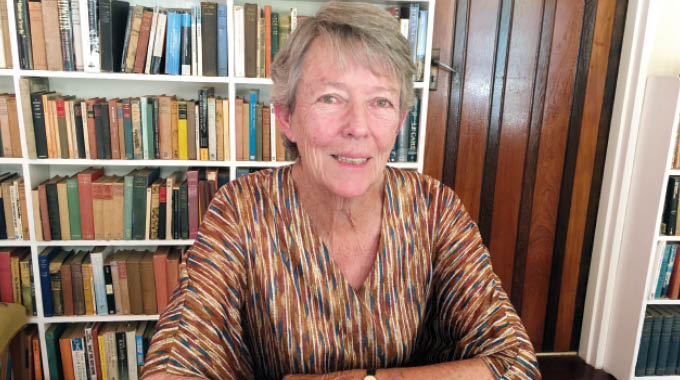
Judith Todd’s depiction of ZPRA veterans in her memoir Through the Darkness powerfully highlights the level of the betrayal suffered by these courageous fighters for Zimbabwe’s independence, at the hands of the victorious ZANU leadership shortly after the country gained independence.
Central to the suffering of ZPRA ex-combatants was ZANU-PF’s push for a one-party state, which Prime Minister Robert Mugabe deemed a ‘necessity’ for the newly independent nation. To solidify this vision, any potential sources of opposition had to be eliminated. The contributions of ZAPU and ZPRA to the liberation struggle were deliberately erased from both history and public discourse, as part of a larger effort to establish ZANU as the undisputed liberator of Zimbabwe.
This strategy seemed to include actively undermining the prospects of ZAPU’s former freedom fighters in the new country, and sparing no effort to prevent them from thriving after their demobilisation.
Todd had a privileged view of political events in Zimbabwe during the first decade. Soon after independence, she was appointed the director of the Zimbabwe Project, a London-based organisation that had been formed by Catholic priests to help mitigate the plight of refugees from the Rhodesian conflict in the 1970s. Furthermore, her father Garfield Todd was a former prime minister who had cordial relations with members of the new administration. Todd Snr also served as a senator in Zimbabwe’s first parliament, which gave the family further access to the corridors of power.
The Zimbabwe Project moved its offices to the capital Salisbury soon after independence, at the behest of members of the new government, who asked the organisation to assist in resettling ex-combatants. This transformed the Zimbabwe Project into one of the leading local arms for the coordination and supervision of demobilisation programmes for all of the country’s former liberation fighters, with focus on supporting self-help schemes and related projects in which the aim was for the beneficiaries to become self-sufficient.
According to Todd, ZAPU was determined to help ex-ZPRA veterans with various projects in order to ease their reintegration to normal society. Through its welfare department and Nitram, a commercial arm which had been formed to look after its ex-fighters, ZAPU desperately tried to cater for its former fighters, with barely any help from the state. With the government itself admitting that there were no funds to provide social welfare or relief for the nearly 30,000 fighters that had been demobilised, the choice was either to leave them to fend for themselves or for their political parties to step in and provide assistance or guidance. Moreover, the years spent in the bush meant that combatants from both ZPRA and ZANLA had no skills to compete in the stiff job market, where unemployment was quite high.
Many of the combatants had no life to return to after they were released from demobilisation centres. Todd recounts that soon after independence, a group of around 200 disabled former ZPRA fighters took residence at Lido Hotel, a disused abandoned hotel along Airport Rd, just outside the city of Bulawayo, where they desperately tried to eke out a living. More than many others, this group became a stark representation of the plight of many war veterans who found themselves destitute after they were demobilised, with nowhere to go or to call home. Todd captures the dire situation when she first met the group:
The building was crammed with beds arranged side by side, one thin mattress and a blanket on each, no sheets or pillows. Discipline was obviously good, as the place was clean and tidy. Electricity had been cut because of non-payment, which meant the men had to cook outside, and firewood was a problem. … There was no hot water and no option but to go to bed when darkness fell. The men had been there for more than a year and conditions were deteriorating daily. Food was the greatest problem. Since they had all received their terminal demobilisation payment, rations from the Department of Social Welfare had stopped and they now depended on whatever could be found for them by Zapu. In the mornings they had a cup of tea without sugar and milk, and then they ate sadza twice a day, sometimes with cabbage and occasionally with pork. … The sewerage system had been vastly overloaded, Lido was now a serious health hazard and the Bulawayo city council wanted to close it down.
These deplorable conditions, which would have deterred stronger men, did not dampen this group’s spirit. With the help of well-wishers and officials from ZAPU – such as Lookout Masuku, Dumiso Dabengwa and Callistus Ndlovu – some of these former cadres managed to move into farms where they started profitable self-help projects and began to raise families.
But their joy was short-lived. In January 1982, after PM Mugabe’s dramatic announcement about the ‘discovery’ of arms caches on ZAPU properties – which would later prove to be a ruse to provide a scapegoat for deploying the genocidal Gukurahundi – the government closed Nitram and seized all its properties.
Across the country, self-help projects run or owned by ex-ZPRA fighters were seized or taken over to be destroyed, including Simukai Collective Cooperative, which was based on a farm on the outskirts of the capital city. Lido, in which the group of disabled veterans had become a family was among the first victims. Efforts to provide alternatives for the group and to cater for many ex-ZPRA fighters whose lives had been disrupted were further hampered when the government swiftly arrested ZAPU leaders and former ZPRA commanders across the country.
The crackdown quickly extended across all communities in the Matabeleland provinces as well as in parts of the Midlands provinces. Still nursing fresh wounds from the protracted war with the Rhodesian Front government, communities in Matabeleland were confronted with the brutality of the new ZANU-led government, which was intent to crush any forms of dissent in order to establish long cherished dreams of an unrivalled one-party state.
Apart from Todd herself, among the people who were the first to raise the alarm over the atrocities taking place in Matabeleland were her father, Garfield, and the Bishop of Bulawayo, Henry Karlen.
Judith Todd’s memo is a beautiful weaved account which gives us a glimpse into how things quickly went wrong soon after independence. Many of the experiences that members of ZAPU and also communities in Matabeleland went through during the first decade of independence have narrated in various works, but not much has been written about the plight of former veterans of ZPRA.
Much of the focus has been on the suffering endured by former commanders like Lookout Masuku and Dumiso Dabengwa. This book provides insights into the treatment that ordinary former ZPRA fighters received from the state.
Todd’s account aligns with well-known experiences of ex-ZPRA members in the early 1980s, as now documented by CITE and other organisations. Former ZPRA guerrillas, who had been integrated into the national army, endured some of the most horrible injustices when they thought they had just seen Canaan. In February 1982, 250 ex-ZPRA fighters were dismissed from the army in Gutu (Masvingo province) by Josiah Tungamirai, a former ZANLA commander who became one of the senior officers in the newly formed Zimbabwe National Army. Tungamirai accused them of being dissidents. Cyprene Ndiweni was the most unfortunate in the group, as he was reportedly shot and killed. In November 2022, the survivors of this group were awarded a settlement after taking the case to the Zimbabwean High Court. Many other former ZPRA members were similarly dismissed from the army without due process. Many more simply vanished, and it is not hard to imagine what possible happened to them.
*Judith Todd, Through the Darkness: A life in Zimbabwe, was published by Zebra Press in 2007.
I also personally experienced this brutality and even now like many ZPRA Cdes we are still persecuted economically and our properties are still in the hands of the grandplanners
Surely Judith Todd is an extraordinary woman, a highly respected principled freedom fighter and formidable human rights Activist who takes after her great dad, the former Rhodesian PM Sir Gaffield Todd. Great people. They Juddy and dad remind me of another illustrious son of the soil, Guy Clutton Brock. These are hightly principles people who stand in and for Truth no matter what and they see no colour in dealing with situations of gross injustice to the extent where they were imprisoned and vilified by their own kith and kin. That is truly amazing. I would vote Juddith as my Zimbabwean President today and go back home to develop the country. Zapu will soon be looking for a President. The problem is that the general population does not know Judith Todd. Maybe we can vote her in as VP then later on President when people know her. The problem is that she is advanced in age. Her tenure won’t be long enough to sort out the mess Zimbabwe is in now for 40 years.
I love Judith. I would very much like to meet her. I live in the UK. Please send me her contacts those who have. Mandlenkosi ngicela ii contact baba nxa ulazo.
Oh cry the beloved President we never had.
It’s heartwrenching to hear what the comrades went through after sacrificing their lives to liberate their country. Shame shame to the powers that be