

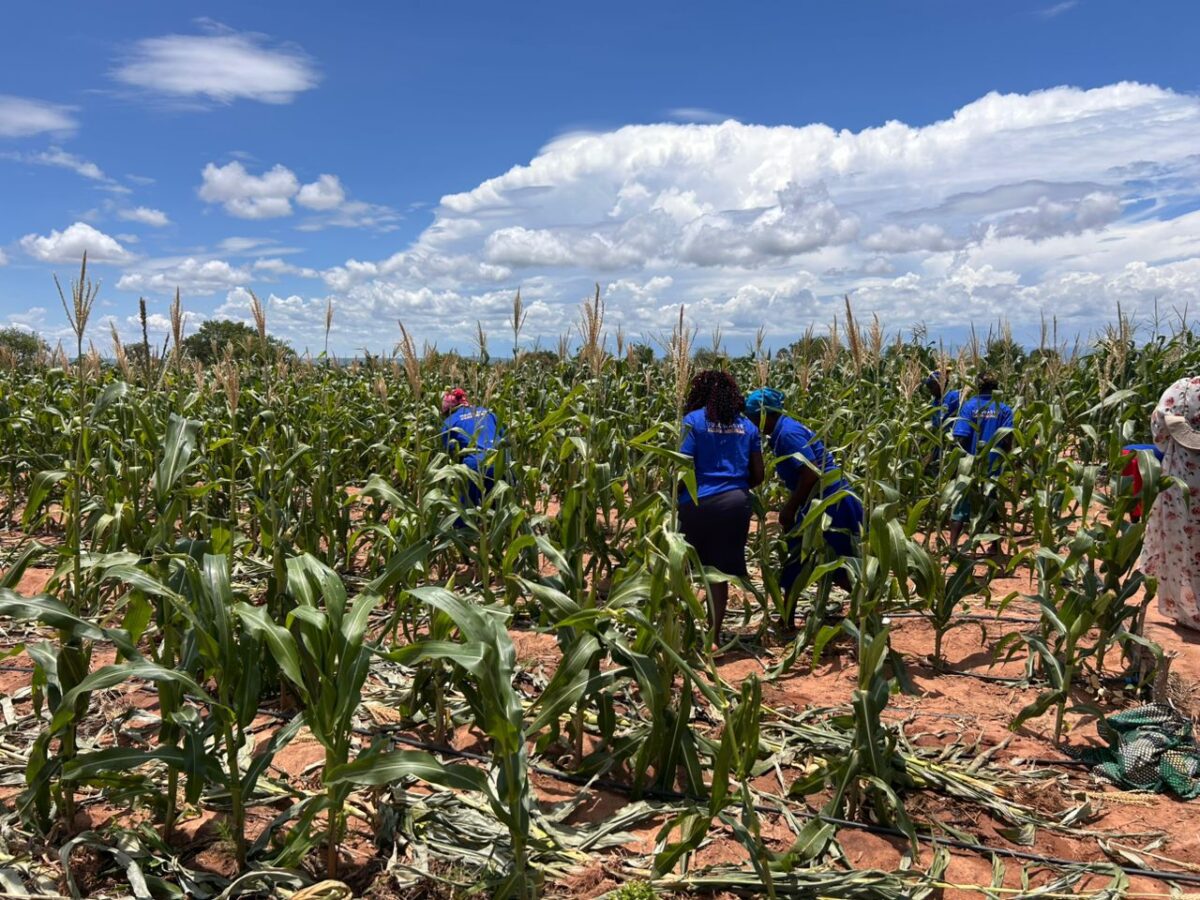
For many years, families in Saba village in Binga’s Ward 13 depended on unpredictable rainfall to grow food, often facing poor harvests and recurring hunger in the drought-prone area. With crops failing frequently, households relied mainly on small grains and seasonal yields to survive.
The situation has begun to change following the introduction of the SABA Irrigation Scheme, which is enabling farmers to access reliable water from the Zambezi River and produce crops throughout the year, easing food shortages and improving livelihoods in the community.
At the centre of this transformation is the SABA Irrigation Scheme, a 20-hectare project established in 2023 under the Climate Adaptation, Water and Energy Programme (CAWEP). The scheme consists of 15 hectares under centre pivot irrigation and five hectares under drip irrigation and currently benefits 64 families.
Implemented by the Government in partnership with the United Nations Development Programme (UNDP), with support from the Foreign Commonwealth Development Organisation, the three-year initiative forms part of efforts to strengthen climate resilience in drought-prone communities.
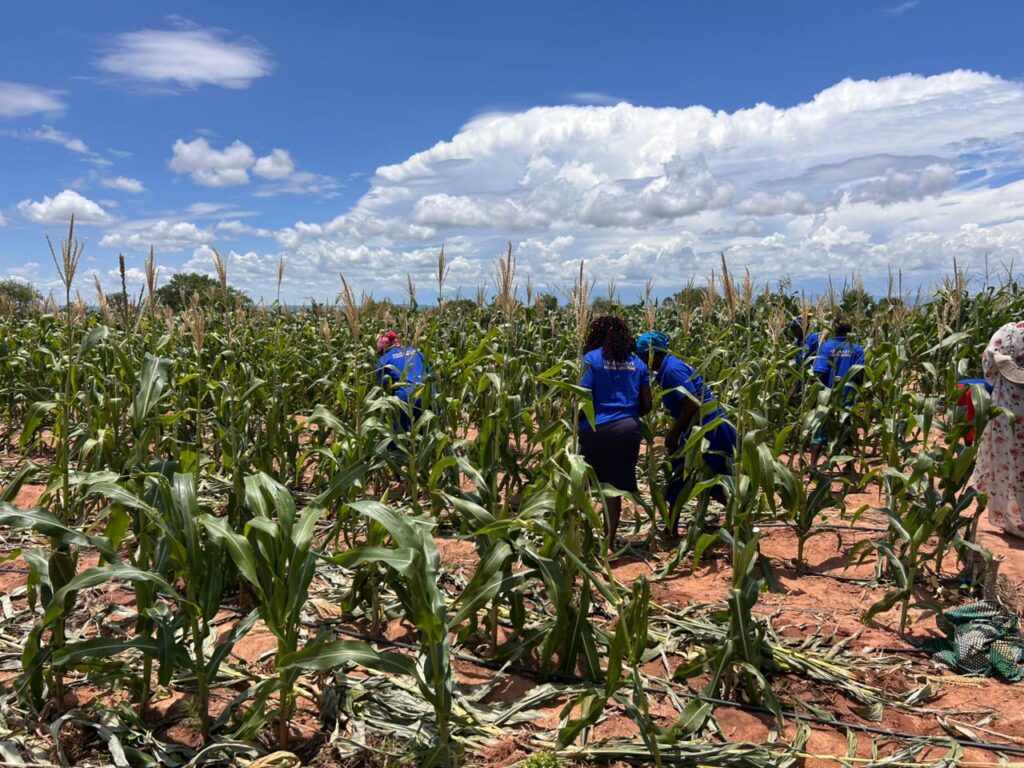


The irrigation scheme has enabled farmers to move away from exclusive reliance on rain-fed agriculture. Where households once depended mainly on small grains, they now grow a variety of crops including maize, sugar beans and chilli, which farmers say is in high demand and provides income for the community.
Chairperson of the scheme, Luckson Muleya, said the project marked a turning point for an area long associated with hunger.
“This establishment of the irrigation scheme is a miracle, as we used to rely on growing small grains only. Now we are growing maize, sugar beans and chilli.
“Our lives have improved as this is a dry area characterised by hunger. We work as a cooperative and all the income earned through this scheme belongs to the entire community,” he said.
Muleya said challenges were initially experienced during harvesting seasons when elephants invaded the fields and destroyed crops, a common problem in communities located near wildlife corridors. He said UNDP had since erected an electric fence around the scheme to reduce crop damage.
Farmers say access to reliable water has changed daily life in the community. Monica Mupambe said the scheme has made continuous production possible.
“We now have plenty of water to grow crops any time of the year and this has improved lives in our community,” she said, appealing for the provision of farming tools to enhance productivity.
Another farmer, Richard Munkuli, said the impact of the project was visible in household nutrition.
“This irrigation project has changed our lives. Our children are now eating fresh and healthy food because of this scheme,” he said.
Local leadership has welcomed the development, with Ward 13 councillor Boniface Munkombwe saying the scheme had reduced farmers’ dependence on rainfall.
“The coming of this scheme has enabled farmers to grow crops continuously rather than waiting for the rainy season,” he said.
“This has improved the livelihoods of local villagers and we hope the scheme will expand to other areas so that every family in this ward can benefit.”
Traditional leaders echoed the sentiments, with Chief Saba, Charles Mudenda, describing the project as a major boost to development in his area.
“The coming of this irrigation scheme by Government through UNDP has greatly improved this community,” he said.
“We used to grow small grains only, but now we can grow maize, chilli and sugar beans. When this project was introduced, I accepted it because I knew it would bring development to my area.”
However, Chief Saba appealed for the provision of basic farming tools, noting that farmers were currently hiring equipment from neighbouring areas, which was delaying operations.
Agritex officer Tendayi Msasa said the scheme had had a particularly positive impact on women.
“In Saba village, people used to rely on small grains because of erratic rainfall, but through CAWEP, farmers can now plant different crops continuously,” she said.
“The scheme has mainly helped women, who previously survived by picking wild fruits, but can now spend their time productively in the gardens.”
Support CITE’s fearless, independent journalism. Your donation helps us amplify community voices, fight misinformation, and hold power to account. Help keep the truth alive. Donate today
Leave a comment