

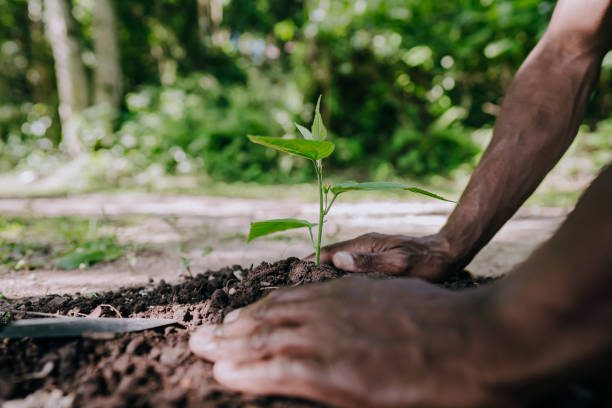
As temperatures continue to rise in one of Zimbabwe’s hottest districts, the Hwange Local Board (HLB) is intensifying tree-planting efforts, positioning urban greening as a frontline response to climate change.
HLB Acting Director of Spatial Planning and Land Management, Themba Sibanda, says continuous environmental regreening is no longer optional but essential in safeguarding communities against the growing impacts of climate variability.
“Planting trees is a critical natural strategy in the fight against climate change, as it offers both mitigation and adaptation benefits,” Sibanda said.
“In hot areas such as Hwange, trees act as natural and sustainable air conditioners, helping to lower local air temperatures and reduce surface heat beneath their canopy.”
Hwange, located in Matabeleland North Province, is characterised by high temperatures and periodic droughts, conditions that scientists say are being exacerbated by global climate change. Zimbabwe has, in recent years, experienced more frequent heatwaves, erratic rainfall patterns and prolonged dry spells, trends linked to rising global temperatures.
Experts note that urban centres like Hwange are increasingly vulnerable to the “urban heat island” effect, where built-up infrastructure such as concrete and asphalt absorbs and re-emits heat, making towns significantly warmer than surrounding rural areas. Trees help counter this by providing shade and releasing moisture into the atmosphere through transpiration, cooling the environment naturally.
Against this backdrop, HLB has integrated tree planting into its governance framework, making it a key performance indicator (KPI) for senior management. The initiative is aligned with Zimbabwe’s National Development Strategy 1 (NDS1), which emphasises environmental protection, climate resilience and sustainable urban development.
“This year we have already planted 20 trees and intend to plant at least 10 more before the end of the first quarter,” Sibanda said.
“This will see us surpass the target set under the Town Secretary’s performance contract.”
He added that the local authority is working with stakeholders to scale up the programme throughout the year, particularly during national commemorations such as World Tree Planting Day.
In December last year, one of HLB’s partners, the Hwange Electricity Supply Company, planted 159 trees, including the indigenous sausage tree, as part of its contribution to the initiative.
Sibanda said council ensures that all planting programmes are guided by provisions of the Urban Councils Act and environmental management policies, to promote sustainability and proper land use planning.
Support CITE’s fearless, independent journalism. Your donation helps us amplify community voices, fight misinformation, and hold power to account. Help keep the truth alive. Donate today