

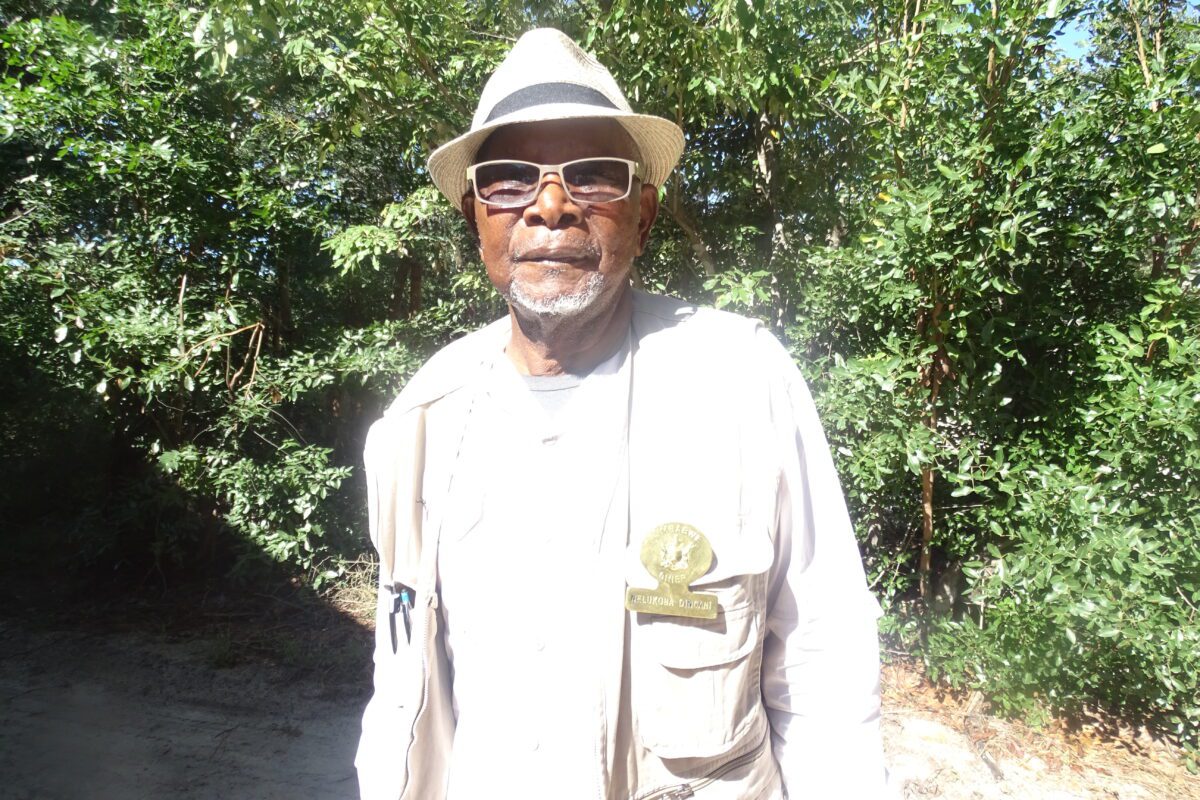
Chief Nelukoba of Hwange is spearheading plans to establish a communal wildlife conservancy along the Gwayi/Shangani corridor, a ground-breaking initiative aimed at reducing human-wildlife conflict while delivering tangible benefits to local communities.
Land for the proposed conservancy has already been identified and a nine-member committee chaired by the chief has been set up to drive the project.
The committee includes local headmen and key stakeholders as well as a renowned conservationist serving in an advisory capacity.
In an interview with CITE in Hwange Thursday, Chief Nelukoba said the initiative is at an advanced stage with the committee scheduled to meet officials from the Zimbabwe Parks and Wildlife Management Authority (ZimParks), including Director General Professor Edson Gandiwa in Harare next week.
“This is a community-driven initiative that is long overdue. We have already laid the groundwork and what remains now is to engage with ZimParks to finalise the operational framework,” said the chief.
The conservancy, believed to be the first of its kind in Zimbabwe will allow the community to directly benefit from natural resources.
Under the proposed model, the community through the committee will be allocated fishing and cruise quotas at the planned Gwayi/Shangani dam, ensuring sustainable utilisation of the area’s wildlife and water resources.
Importantly, proceeds from the project are expected to fund development initiatives both locally and across the province.
“This project is not just about conservation. Revenue generated will be channelled towards improving livelihoods, supporting community infrastructure and contributing to broader provincial development,” said the Chief.
A community consultation meeting is scheduled for March 19 at Cross Mabale where residents are expected to provide input and shape the direction of the initiative.
The chief highlighted that the conservancy is also a direct response to increasing cases of human-wildlife conflict in the area which have severely affected local livelihoods.
“We are facing serious challenges with wildlife. Since the beginning of the year, more than 40 cattle and goats have been lost to animals such as lions and jackals,” he said.
Chief Nelukoba added that he has personally suffered losses, underscoring the urgency of finding sustainable solutions.
“I have not been spared either. I have lost livestock myself. There is a dam near my homestead and wild animals frequently come there to drink but in the process, they end up attacking our livestock,” he said.
Despite the challenges, the chief urged communities to adopt a balanced approach to coexistence with wildlife.
“There is no running away from nature. We must learn to live together harmoniously with wildlife. Initiatives like this conservancy are key to address these conflicts while ensuring that communities also benefit,” he said.
If successful, the project could serve as a model for other rural communities across Zimbabwe, demonstrating how conservation and development can go hand in hand.
Support CITE’s fearless, independent journalism. Your donation helps us amplify community voices, fight misinformation, and hold power to account. Help keep the truth alive. Donate today
Leave a comment