

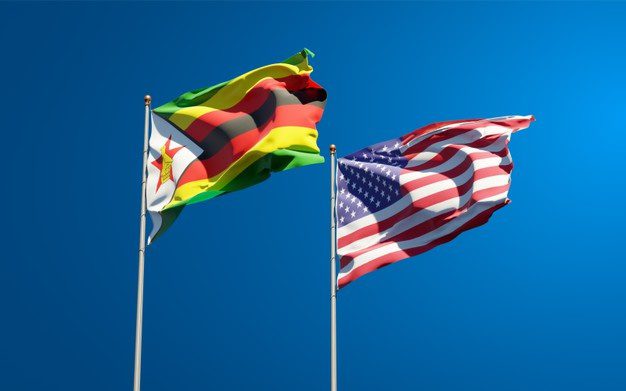
The Zimbabwean government’s abrupt decision to suspend negotiations on a bilateral health Memorandum of Understanding (MOU) with the United States (US) has sent shockwaves through the country’s health sector, with civil society organisations warning the move could jeopardise the lives of over 1.3 million people living with HIV and reverse three decades of public health gains.
The proposed five-year health assistance package valued at US$367 million would have supported Zimbabwe’s priority health programmes, including HIV and AIDS treatment and prevention, tuberculosis, malaria, maternal and child health, and disease outbreak preparedness.
As the stalemate continues, health stakeholders are anxious, hoping for a resolution that protects both national sovereignty and the health of millions of Zimbabweans who depend on sustained international support for their survival.
The Zimbabwe National Network of People Living with HIV (ZNNP+), representing over 1.3 million people living with HIV, expressed deep concern over the potential consequences of the funding impasse.
“ZNNP+, representing the voices, lives, and health interests of over 1.3 million people living with HIV in Zimbabwe, expresses concern regarding the impact of the recent decision to discontinue negotiations and potentially reject the estimated $350 million health funding MoU with the US on the People living with HIV in Zimbabwe,” the organisation stated.
While acknowledging the importance of national sovereignty, ZNNP+ warned of potentially catastrophic consequences.
“For decades, international health partnerships including those with the US government through initiatives like PEPFAR and USAID have been the backbone of Zimbabwe’s successful HIV response,” ZNNP+ said.
The organisation added that such partnerships have made sure Zimbabwe has had a consistent supply of life-saving Antiretroviral Therapy (ART), facilitated viral load monitoring, provided increased Advanced HIV Disease (AHD) coverage and supported the integrated management of opportunistic infections.
The network also highlighted four primary concerns, stating there would be interruption of treatment, erosion of gains, vulnerability of the most marginalised, leading to a chain reaction.
“Any disruption in the funding of the health supply chain may likely put lives at risk of treatment interruption. For PLHIV, consistency is life, any break in ART may lead to drug resistance, opportunistic infections, and increased mortality,” ZNNP+ said.
“Zimbabwe has been a global leader in the 95-95-95 targets. Withdrawing threatens to reverse over thirty years of progress in reducing HIV related deaths and new infections.”
“Health funding does not just buy pills, it supports the community health workers, rural clinics, and community support systems that the most vulnerable rely on.”
“The rejection of USG funds can break trust with larger funding streams where USG indirectly supports such as the Global Fund, UN and EU, among others and potentially damage future partnership opportunities on non-USG support.”
ZNNP+ issued an urgent appeal to the government to “keep your promise to PLHIV” and place lives at the centre of diplomatic negotiations.
The organization also called for re-engagement in dialogue and a clear contingency plan detailing how the US$350 million funding gap will be covered by domestic resources.
Executive Director of the Community Working Group on Health (CWGH), Itai Rusike, offered a detailed analysis of the situation, acknowledging both the government’s sovereignty concerns and the practical realities of health financing.
After noting the government’s recent decision to discontinue negotiations on the proposed bilateral health MOU with the US government, Rusike explained that the US Government launched the America First Global Health Strategy late last year, which emphasizes supporting partner countries to advance toward health systems strengthening, increased domestic co-investment, and self-reliance.
Rusike acknowledged a fundamental problem that “unfortunately for far too long, Zimbabwe has been heavily reliant on external support provided by donors to fund programmes in the health sector and for humanitarian assistance.”
He also painted a grim picture of the potential consequences stating that without funds rapidly mobilised to fill the gap left by the US withdrawal, the effect on the health of millions of Zimbabweans is at stake.
“Failure to prevent new infections for HIV and AIDS, TB and malaria and the threat of drug resistance developing because of disrupted treatment will have far reaching consequences,” Rusike said.
“It’s going to be a struggle for the ordinary person, many will die because of lack of medication unless there is sufficient domestic resource mobilisation for the health sector to cover the gap.”
Rusike called for high-level political commitment to increase the health budget allocation, improve efficiency, provide equity and strengthen governance.
He also advocated for establishing independent funding mechanisms for health to reduce donor dependency, noting that donors “can pull out anytime should their interest change.”
Both ZNNP+ and CWGH expressed hope that negotiations could be revisited with compromises from both sides.
“We still believe these negotiations can be revisited with compromises from both ends,” Rusike said.
“The negotiations needed to have had both a humanitarian and a security, economic lens, and then compromise. We think restructuring the negotiating teams would help. It’s prudent to also involve non-state actors including other technocrats in such negotiations.”
Rusike highlighted the importance of broader expertise in future negotiations.
“At the end of the day, it comes down to protecting the interests of our people. Because you need other players that see things differently, that propose and analyse different options. The expertise is available, and players could have helped analyse every letter, word, line, paragraph, in the MOU in real-time and feedback to the negotiating team.”
Meanwhile, the Zimbabwean government has defended its position, stating that negotiations were halted after discovering problematic clauses in the proposed agreement.
“What we found out in the MOU or negotiations was that the relationship was not reciprocal in the sense that some pathogenic data and some samples were supposed to have been provided by the government of Zimbabwe obviously from the citizens which would go to the US for production of vaccines and other products for fighting some pandemics,” said
Minister of Information, Publicity and Broadcasting Services, Zhemu Soda recently.
The Minister expressed concern that Zimbabwe would not benefit from innovations derived from its own data or biological samples.
“The samples, including the products that would be obtained from Zimbabwe were not going to benefit Zimbabwe even from further innovations done using the data or products going to be produced. We felt it was unfair and in any case every MOU must be based on mutual benefit from parties involved,” he said, adding that this decision was made “in the interests of protecting the sovereignty of our state and also the health of our people.”
United States Ambassador to Zimbabwe Pamela Tremont responded with disappointment, announcing the difficult decision to begin winding down health assistance in Zimbabwe.
She highlighted the significance of the proposed investment, describing it as “the largest potential health investment in Zimbabwe by any international funder.”
The MOU was built on a co-funding model designed to make sure there is sustainability and a path toward self-reliance, asking Zimbabwe to gradually increase its own health funding alongside US support.
Ambassador Tremont noted that the proposed assistance built on more than US$1.9 billion in U.S. health support to Zimbabwe since 2006, which she said is “directly responsible for Zimbabwe reaching the UNAIDS 95-95-95 goals.”
She also contextualised Zimbabwe’s decision against broader regional trends, revealing 16 African countries had signed health collaboration MOUs with the US, which represents over $18.3 billion in new health funding including more than $11.2 billion in U.S. assistance alongside $7.1 billion in co-investment from recipient countries.