

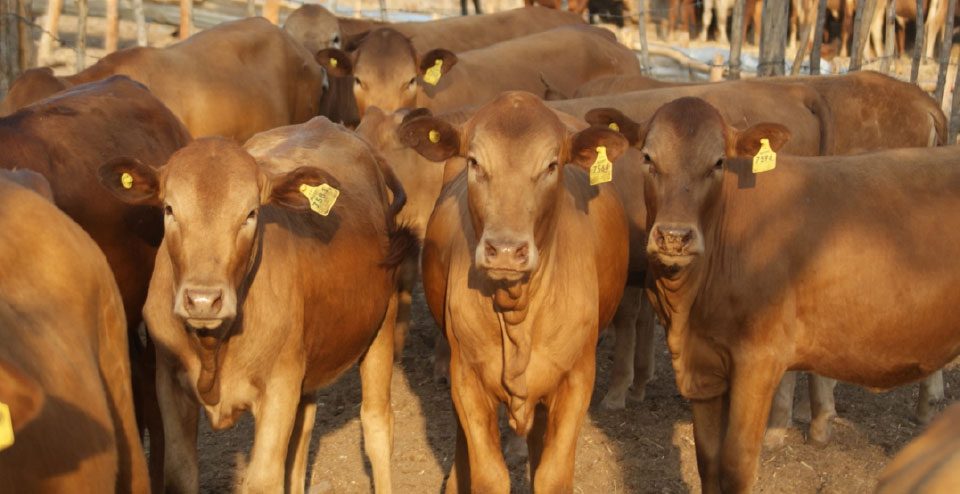
Councillors at Gwanda Rural District Council (RDC) have raised strong concerns over a new government directive abolishing cattle levy collections, warning it could cripple council revenues and disrupt livestock management systems.
The concerns follow the introduction of Statutory Instrument 41 of 2026, which bars local authorities from collecting cattle levies and livestock movement clearance fees, a key income stream for many rural district councils.
Speaking during a recent full council meeting, Gwanda RDC Chief Executive Officer Ranganai Sibanda said rural district councils were no longer permitted to collect the levy.
“There is the new SI 41 of 2026 which has abolished the cattle levy, meaning we are no longer collecting this levy as a local authority because there is now a law that stops us from doing so,” he said.
“While that is the position, the Agricultural Marketing Authority has advised on how cattle sales should be conducted,” he added.
The directive is linked to a new decentralised livestock marketing framework spearheaded by the Agricultural Marketing Authority (AMA). The model seeks to reform cattle sales by introducing structured rural auctions aimed at improving market access and pricing transparency.
Council treasurer Sicelesile Ncube confirmed receiving official communication dated 26 March 2026 outlining the decentralised livestock marketing auction model.
“The meeting, attended by several sector stakeholders, including the Association of Rural District Councils of Zimbabwe, deliberated on the implementation of a decentralised livestock marketing auction model in line with AMA’s mandate under the Agricultural Marketing Authority Act [Chapter 18:24]. The discussion aimed to revitalise and scale up livestock auctions to enhance market access, promote fair livestock pricing and establish a transparent price discovery mechanism,” the letter read.
Ncube said the letter also stated that the model would leverage drought mitigation centres, dip tanks and other rural infrastructure to strengthen grassroots trading platforms.
“To this end, AMA is piloting the initiative in selected provinces in collaboration with local authorities, private auctioneers, buyers, farmers’ associations, veterinary services, community leaders and the Zimbabwe Republic Police. The pilot introduces a service fee, agreed upon by stakeholders and payable by buyers, to cover operational costs such as animal grading, weighbridge services, auction facilitation, pen access and security,” she said.
“Upon successful validation of the pilot, multiple service agreements will be formalised to guide the national rollout of the model. We appreciate your ongoing support and partnership as we develop a sustainable livestock marketing framework that benefits both producers and buyers,” the letter added.
However, councillors argued that the shift sidelines local authorities and communities that have historically invested in and maintained cattle sale infrastructure.
One councillor expressed frustration at what he described as a lack of consultation.
“We cannot be taken for a ride. This is for the people. It is like a donor constructing a school for the community and then someone wants to repurpose it without consulting them. What is that? The auction site belongs to the people,” he said.
Another councillor questioned the sustainability of the new model.
“We can talk all we want, but when the Government has passed it, there is little we can do. My question is: who is going to maintain the structures, and what will happen to stray cattle?” he said.
Councillors also raised concerns about the potential loss of revenue previously generated through livestock sales.
“We invested a lot in these cattle sales, maintaining and upgrading them. What is going to happen now? We are allowing people to come and operate and take the money without consultation. These cattle sales belong to the council. We used to receive a percentage from sellers. What will happen to that?” another councillor asked.
Gwanda Rural District Council chairperson Mphathiswa Ncube said that while the directive may not be favourable, it was likely backed at the highest levels of government.
“This will not be easy for us as Gwanda RDC. Even though we are not entirely happy with the arrangement, if something has been passed by Cabinet, then the Minister of Local Government was likely engaged and is part of the process,” he said.
He added that any formal challenge would need to be pursued collectively through national structures.
“If we want to lobby or challenge the decision, it must be done through the Association of Rural District Councils so that we speak with one voice. I do not think we can win this as Gwanda RDC alone,” he said.
Despite the changes, Ncube said the council would retain some involvement in livestock trading.
“The RDC will, however, continue collecting a percentage from those selling at auctions. The cattle levy has been removed, meaning we are no longer allowed to charge a levy when someone sells their cattle. But as long as we do not collect the levy, we can still facilitate the auction process,” he said.
Support CITE’s fearless, independent journalism. Your donation helps us amplify community voices, fight misinformation, and hold power to account. Help keep the truth alive. Donate today