

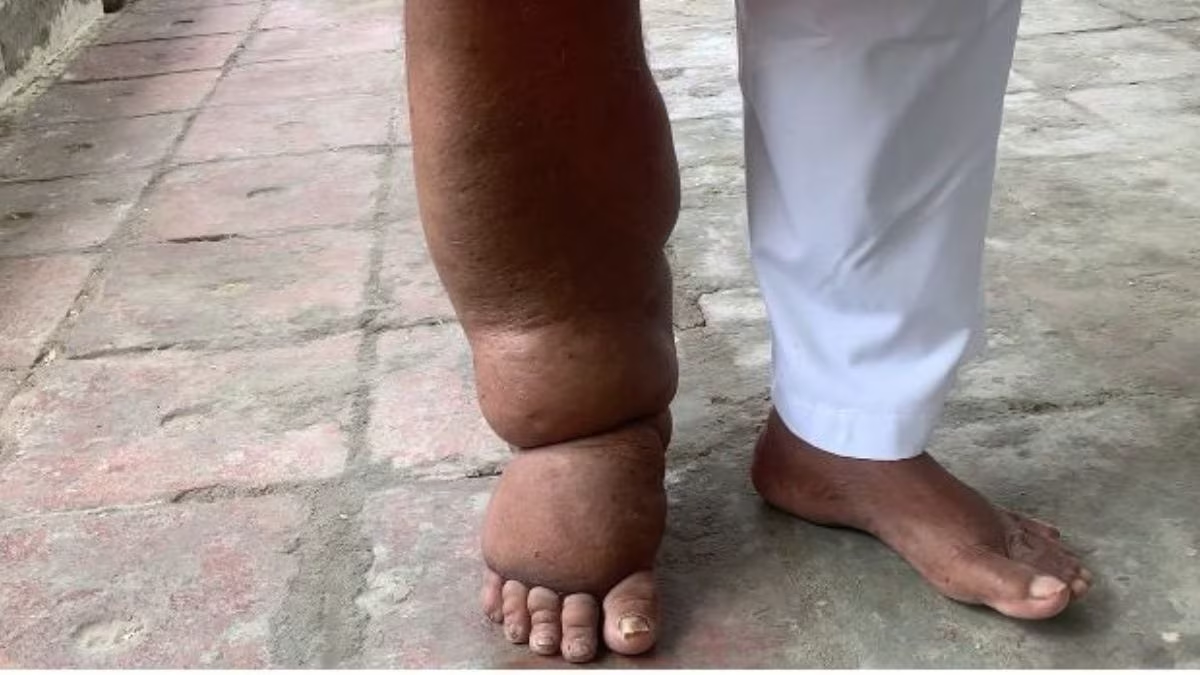
The Gwanda Rural District Council (RDC) is preparing to roll out mass drug administration and vaccination programmes aimed at combating elephantiasis and measles in the community.
The elephantiasis campaign, led by the Ministry of Health and Child Care, will run from 13 to 23 October 2025 and target seven districts across Zimbabwe, including Gwanda. The disease, formally known as lymphatic filariasis, is caused by parasitic roundworms transmitted through mosquito bites. It leads to painful swelling of the limbs and genitals, often resulting in disfigurement and disability.
During the campaign, residents will be given de-worming tablets, with doses determined by height. Gwanda District Health Promotion Officer Siqalisile Masuku said the aim was to protect communities before they fall sick.
“We will be giving people tablets for those who have it and those who don’t. For us to eliminate this disease we have to deworm, because the parasites are carried by mosquitoes and multiply in the body after bites,” Masuku explained.
She added that while mosquito nets and spraying were previously part of prevention programmes, funding cuts have left mass drug administration as the most cost-effective alternative.
At the same time, Gwanda District will conduct a measles-rubella vaccination campaign from 6 to 10 October 2025, targeting children aged nine to 59 months. The programme will also include Vitamin A supplements for children aged six to nine months.
Masuku stressed the importance of high uptake. “What is important is to vaccinate against measles because it spreads quickly and children might die. We are aiming to vaccinate 95 percent,” she said.
Vaccinations will be available in clinics, schools, creches, hospitals and other community points. Parents have been urged to bring children’s clinic cards to ensure accurate record-keeping.
Environmental Health Officer Nichola Khumalo warned that low uptake could undermine the campaign. “One unvaccinated child can affect 95 percent vaccinated children. Mobile teams will be there to try to reach all areas,” she said.
Council officials urged local leaders and councillors to encourage villagers to participate in both campaigns to prevent outbreaks and protect vulnerable populations.
Support CITE’s fearless, independent journalism. Your donation helps us amplify community voices, fight misinformation, and hold power to account. Help keep the truth alive. Donate today
Leave a comment