

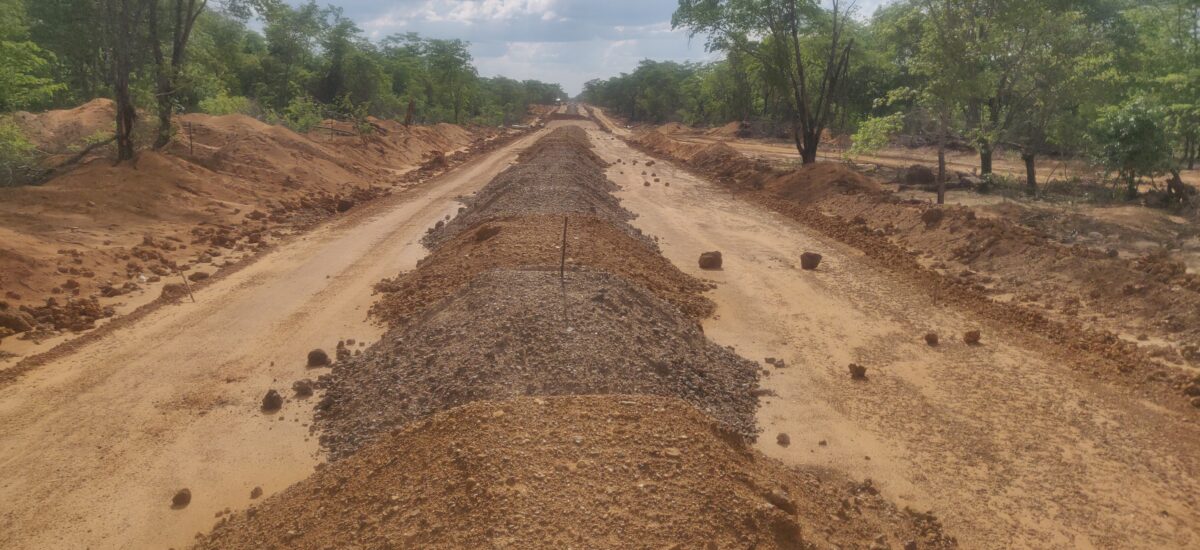
The Permanent Secretary for Transport and Infrastructural Development, Engineer Joy Makumbe, has appealed for patience from the public as the government works to rehabilitate the Bulawayo–Victoria Falls Road, one of the country’s busiest and most deteriorated highways.
Speaking during a media tour last week, Eng Makumbe addressed mounting concerns over the slow pace of the rehabilitation project, which is being carried out by eight contractors. She said the delays reflected the scale and complexity of the work required to produce a durable, long-lasting road.
“You see the level of dumping and excavation, it is real work,” she said. “If you want to do quality work, contractors must excavate to reach stable ground, import materials, stockpile, grade. There are many processes involved. It’s not that people are sleeping, and no one can do 10 km overnight if they are doing it the right way.”
Makumbe said the Ministry was committed to ensuring that the project meets international standards.
“As the Ministry of Transport, we want to do things right. Give us time so that we connect Zimbabwe, kilometre by kilometre, with world-class roads. That is our mandate and our aim,” she said.
She also highlighted that the rehabilitation works are being led by local engineers, describing this as a significant milestone in building national capacity.
“This is 100 percent Zimbabwean content. We are capacitating our own engineers. They now have dumpers, tippers, graders — all the equipment needed for road construction,” she said. “Whenever we want to rehabilitate roads across the country, they are there. We no longer need to look to the UK or South Africa for talent.”
Makumbe said the Ministry was also exploring alternative financing models to speed up infrastructure development, including Public-Private Partnerships (PPPs) that allow investors to recoup costs through toll fees.
“The private sector funds the infrastructure. Investors assess the cost of the road and recover their money through toll plazas,” she explained. “Government, ZIDA and Treasury determine how long it should take for the investor to recoup the funds. After that period, the infrastructure fully returns to government.”
She said such arrangements allow development to proceed even when government lacks immediate capital.
“These innovative models mean government does not need all the money upfront. Investors can move in and complete the work while government pays over time,” she said.
Support CITE’s fearless, independent journalism. Your donation helps us amplify community voices, fight misinformation, and hold power to account. Help keep the truth alive. Donate today