

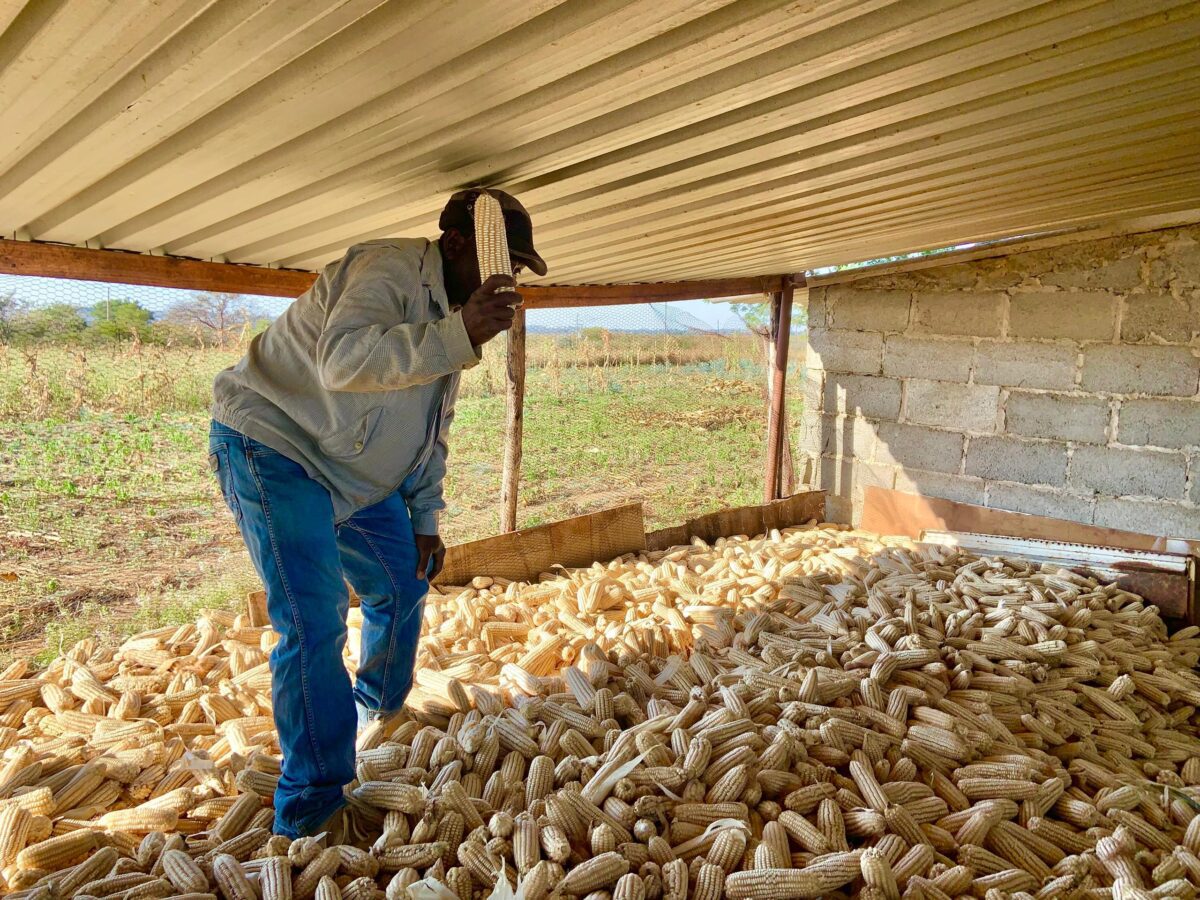
The government has stepped up efforts to assist smallholder and subsistence farmers to adapt to climate change and the resultant droughts that have gripped the Matabeleland region in the past few years, government officials have said.
The officials said they are empowering rural communities, particularly village-based farmers, with the necessary knowledge, tools and modern agricultural techniques to help them withstand erratic rainfall, declining soil fertility and other challenges brought about by climate change.
According to the World Bank’s Climate Change Knowledge Portal, Zimbabwe receives between 2mm and 160mm of rain per month, averaging only 670mm annually.
Matabeleland falls in Natural Region 5, characterised by annual rainfall of less than 650mm. Most areas now only receive rainfall for roughly 50 days between October and March, posing serious threats to agriculture and food security.
In response, the government, through its various agencies, is attempting to reverse this trend.
Presenting a report on the inquiry into the operations of the Agricultural and Rural Development Authority (ARDA), Chairperson of the parliamentary Lands, Agriculture, Water, Fisheries, and Rural Development Committee, Felix Saul Maburutse, said the agency is currently prioritising the distribution of presidential agricultural inputs to vulnerable communities.
“By directly overseeing the distribution of these inputs, ARDA aims to empower vulnerable households, enhance agricultural output, and promote sustainable rural livelihoods,” Maburutse said.
He added that ARDA’s approach goes beyond just handing out inputs.
“It also includes technical assistance and agribusiness advice to farmers. This ensures not only improved production but long-term sustainability,” said the chairperson.
ARDA has introduced scientific tools such as mandatory soil testing to improve efficiency in the distribution of inputs and to reduce reliance on blanket fertiliser application.
The committee recently visited ARDA’s Antelope Farm in Maphisa, which spans 3 000 hectares, 700 of which are used for arable farming.
“The farm has planted 550 hectares for both seed and consumption crops, including 140 hectares of seed maize,” said Maburutse.
“There’s also seed wheat and potatoes. The farm is targeting yields of 7 metric tonnes per hectare for maize and wheat and 60 metric tonnes per hectare for potatoes.”
A contract with Simbisa Brands provides a stable market for the farm’s potato output, guaranteeing financial security and reducing the risk of post-harvest losses.
“The collaboration gives the farm access to inputs such as seeds and fertilisers under the Presidential Input Scheme, alongside expert agricultural advice,” Maburutse added.
In Matabeleland North Provincial Agronomist, Zenzele Ndlovu, noted that local farmers have begun adjusting their agricultural practices in light of the new climate reality.
Strategies include diversifying crops, changing livestock practices, and seeking alternative income sources.
“Farmers are selling livestock to buy food and inputs such as chemicals to save their families and other animals,” Ndlovu said.
“We’re also seeing increased interest in poultry and goat farming, as these require less water.”
She noted a significant shift from maize, the traditional staple in Matabeleland towards traditional grains and succulents, which are more drought-tolerant.
“These crops are better suited to short rainfall seasons. There’s been a gradual move to grow sunflower and cotton, though cotton is still grown on a small scale,” she explained.
To maximise yields in limited rainfall windows, farmers are now adopting short-season crop varieties and changing planting calendars.
“For instance, pearl millet is now planted before the rainy season starts, known as dry planting,” Ndlovu said.
“When the first rains come, the crop is already in the ground. Even if there’s a mid-season dry spell, the crop can rejuvenate when the rains resume in December.”
To survive, many farmers are also turning to alternative livelihoods such as casual labour, fishing, and selling wild fruits.
“Farmers are encouraged to drill their own boreholes and rehabilitate irrigation systems. Water-intensive crops like maize or soya beans can only be grown sustainably if irrigation is available,” she said.
Agritex Officer for Umguza Ward 17, Nozinhle Nyoni, echoed similar sentiments and highlighted the importance of practical methods such as applying fertiliser early, planting multiple crops to reduce total loss, and investing in crop and livestock insurance.
“One of the crucial practices we stress is timing,” Nyoni said.
“Digging planting holes should be done immediately after harvesting so that by the time the rains come in September or October, the manure and fertiliser are already in place.”
This article was published under the Voluntary Media Council of Zimbabwe Investigative Journalism Fund with support from the Friedrich Naumann Foundation.